Droid Platform, Browning Machine Gun and Logistics NRK-Kamikaze: How the 5th Assault Brigade Replaces Infantry with Robots
The 5th Separate Assault Kyiv Brigade demonstrated two types of combat application of unmanned robotic complexes: the Droid combat platform stopped a night assault by an MT-LB, while a logistics robot delivered explosives and destroyed an enemy position. The brigade has been implementing unmanned robotic complexes since 2023 — among the first in the Armed Forces of Ukraine.

By Tetiana Suchkova-Ladik
May 20, 2026 · 2 min read
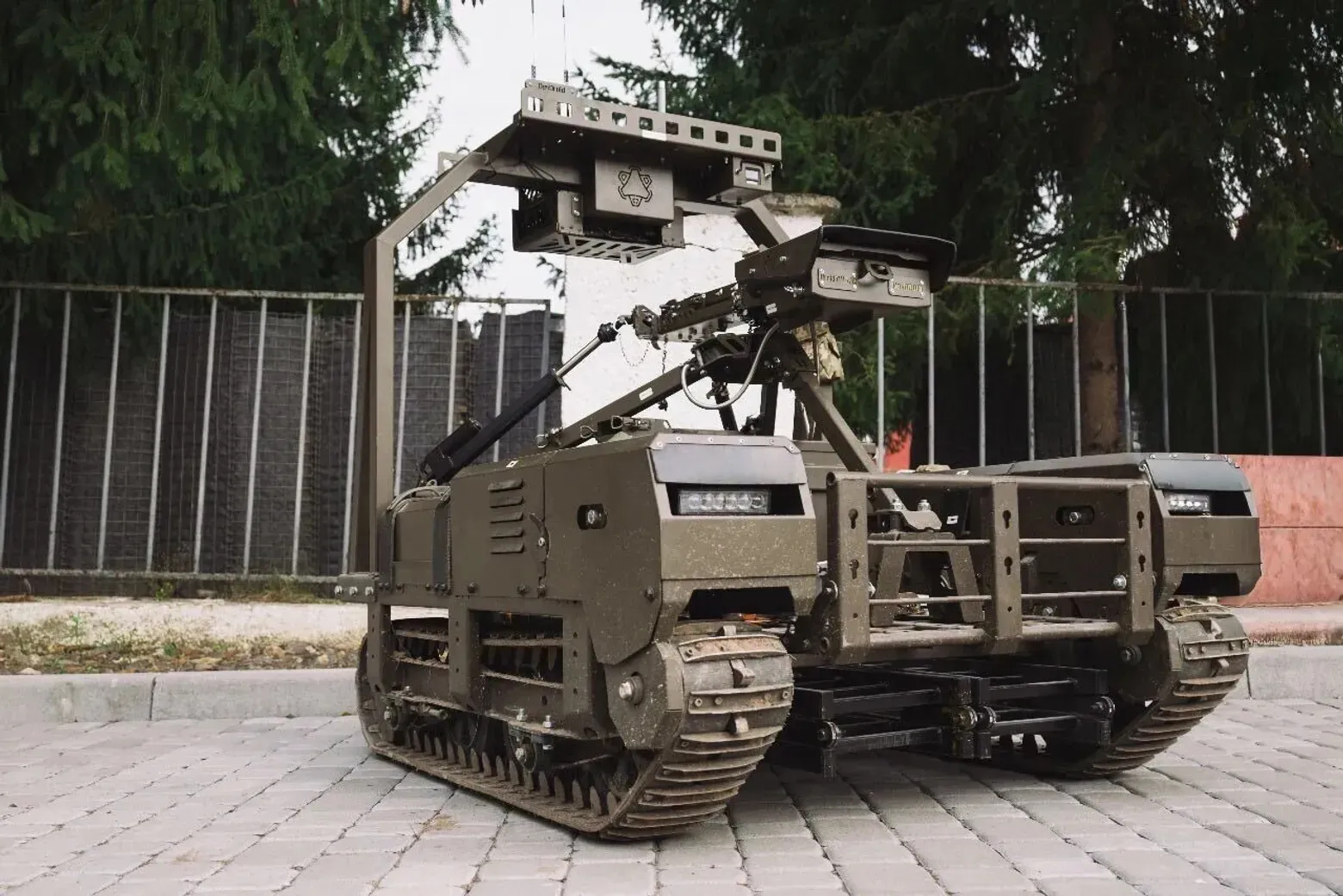
During the night, operators of the 5th Assault Brigade detected in a thermal imager an MT-LB with airborne troops moving directly into the strike zone. What came to meet them was not infantry — a combat platform on a tracked chassis with a large-caliber machine gun.
Two Robots, Two Missions
Video published by the unit on December 10, 2025, captures two separate operations. In the first — a combat platform Droid with a Browning machine gun attacks an MT-LB: armor-piercing rounds pierce the armor, occupants inside are hit. The assault is stopped without infantry entering the gray zone.
In the second operation, a logistics UGV is used not for delivering ammunition, but rather — it delivered explosives directly to an enemy position and detonated them. The same class of vehicle that evacuates the wounded and carries ammunition is transformed into a single-use striking tool.
«My vision of the future battlefield is when instead of APCs, IFVs, tanks conducting assault operations, unmanned systems without crews will be sent to preserve the lives of personnel»
UGV operator of the 5th Assault Brigade, Nakypilo
Pioneer Brigade Since 2023
The 5th Assault — one of the first in the Armed Forces of Ukraine to receive the task of introducing UGVs into service: according to Nakypilo, the brigade was included in the list of pioneer units back in 2023. Since then, operators have worked out tactics from scratch: first sortie in test mode, reconnaissance of the neutral strip once, then — combat rotations. Some vehicles were lost on the first sortie, others have dozens of successful missions each.
The broader context matters. According to Defense Minister Fedorov, only in March 2026 the AFU completed more than 9,000 missions using UGVs — compared to less than 3,000 in November 2025. The Ministry is contracting 25,000 units for the first half of 2026 — twice more than for all of 2025. Declared goal: 100% front-line logistics — by robots.
What This Changes Tactically
A logistics UGV in the role of a kamikaze — not improvisation, but a result of accumulated experience. The vehicle is already in the gray zone, already has a cargo compartment, already is controlled remotely. Adding explosives instead of ammunition — a technically simple step, tactically significant: an enemy position is attacked without risk to the operator and without deploying aviation or FPV drones, which can be shot down by electronic warfare means.
- Droid Combat Platform — Browning machine gun, thermal imager, tracked chassis, repelling night assaults
- Logistics UGV — ammunition delivery, evacuation of the wounded, detonation of enemy positions
- Weak points: Electronic warfare can sever communications, mines and FPV drones destroy platforms, complex terrain limits maneuver
If the AFU achieves the declared figure of 25,000 UGVs and develops tactics for their mass application in assault operations — the question is not whether infantry will remain on the front lines, but rather what exactly role will remain for it when the gray zone becomes a zone of robots.