Poland Deploys SAN on Eastern Border: How It Will Change the Region's Air-Defence Map
Polska Grupa Zbrojeniowa unveiled the mobile short-range air defense system SAN — designed to cover vulnerable zones at low altitudes and, according to plan, expected to become part of border defense by the end of the year. We explain what’s special about it and why it matters for Ukraine.

By Tetiana Suchkova-Ladik
February 20, 2026 · 2 min read
Brief — why read this
The demonstration of SAN at the Military Institute of Armaments in Zelonka is not just promotion for a new system. According to Army Recognition, Poland is preparing a mobile short-range air-defence system intended to fill "gaps" at low altitudes alongside the Patriot and Narew programs. For Ukraine, this is an important signal of strengthened border resilience by its neighbour and of a growing number of solutions that can reduce the risks posed by loitering drones and cruise missiles.
What SAN is and what it does
SAN is a short-range air-defence system aimed at intercepting UAVs, loitering munitions and low-altitude cruise missiles. It is positioned as a component of Poland’s multi-layered air-defence architecture: SAN’s task is to detect and neutralize targets that bypass medium- and long-range air-defence systems or emerge as a local threat to critical infrastructure.
Technical features
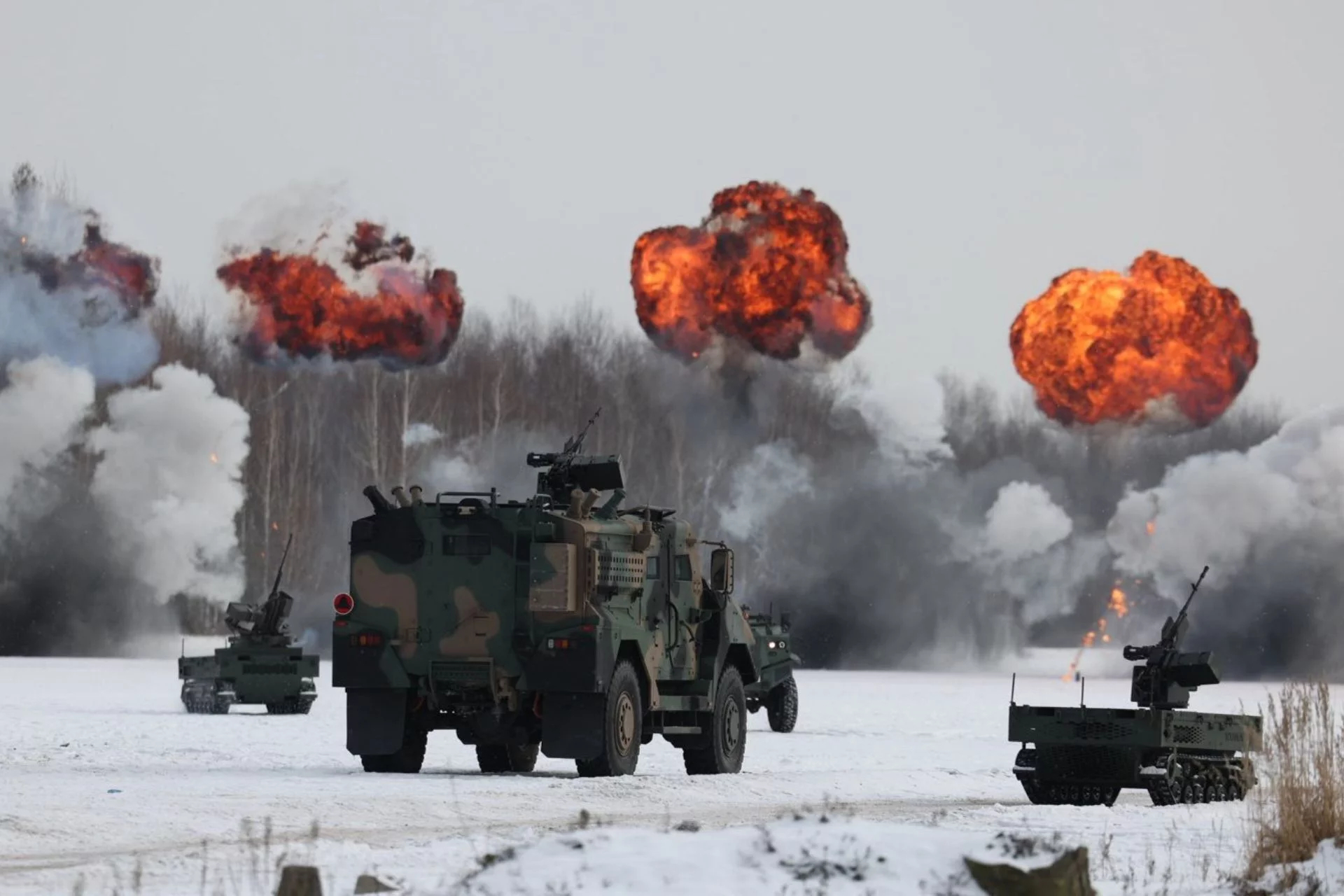
According to the demonstration, the complex is equipped with X-band radars designed to detect low-RCS (radar cross-section) targets. Dedicated tracking radars shorten the "detection-to-engagement" cycle. The fire module includes 35 mm anti-aircraft guns with programmable air-burst ammunition and 70 mm guided rockets for interceptions at several kilometres. All elements are mounted on Jelcz and Legwan wheeled chassis, giving the system high mobility.
"The SAN system is intended to counter modern low-observable threats at low altitudes and will complement Poland’s existing layers of defence"
— Polska Grupa Zbrojeniowa / according to Army Recognition
Where it will be deployed and what it means for the region
Under the plan, SAN elements are to be deployed along Poland’s eastern border by the end of the year — a response to the worsening security situation in the region. Mobility on Jelcz/Legwan chassis allows positions to be changed quickly, and the built-in "friend-or-foe" system reduces the risk of fratricide. For Ukraine the main consequence is an increase in coverage density on the NATO-shared flank and a lower likelihood that a low-altitude threat will penetrate neighbours’ defences and complicate the situation in our theatre of operations.
Analysis: what to expect next
SAN will not replace long- or medium-range systems — this is layered air-defence policy: each level covers its own threats. At the same time, the emergence of mobile, low-cost and rapidly re-deployable short-range air-defence systems increases overall border-defence survivability. Analysts in Europe also note that parallel initiatives to develop inexpensive air-defence solutions strengthen collective ability to respond to asymmetric attacks.
Now the practical questions remain: will the systems be integrated in time with existing fire-control systems, and will there be enough batteries to cover critical areas. Answers to these questions will determine SAN’s real protective effect at the regional level and for Ukraine’s security.



