Poland to produce "Bohdana" for NATO — Ukrainian artillery enters the European market
Polish-Ukrainian joint venture PK MIL SA launches production of the 2S22 "Bohdana" in Poland. It’s about NATO standards, supply chains and the security of the eastern flank — we break down why this matters now.

By Tetiana Suchkova-Ladik
March 6, 2026 · 2 min read
What happened
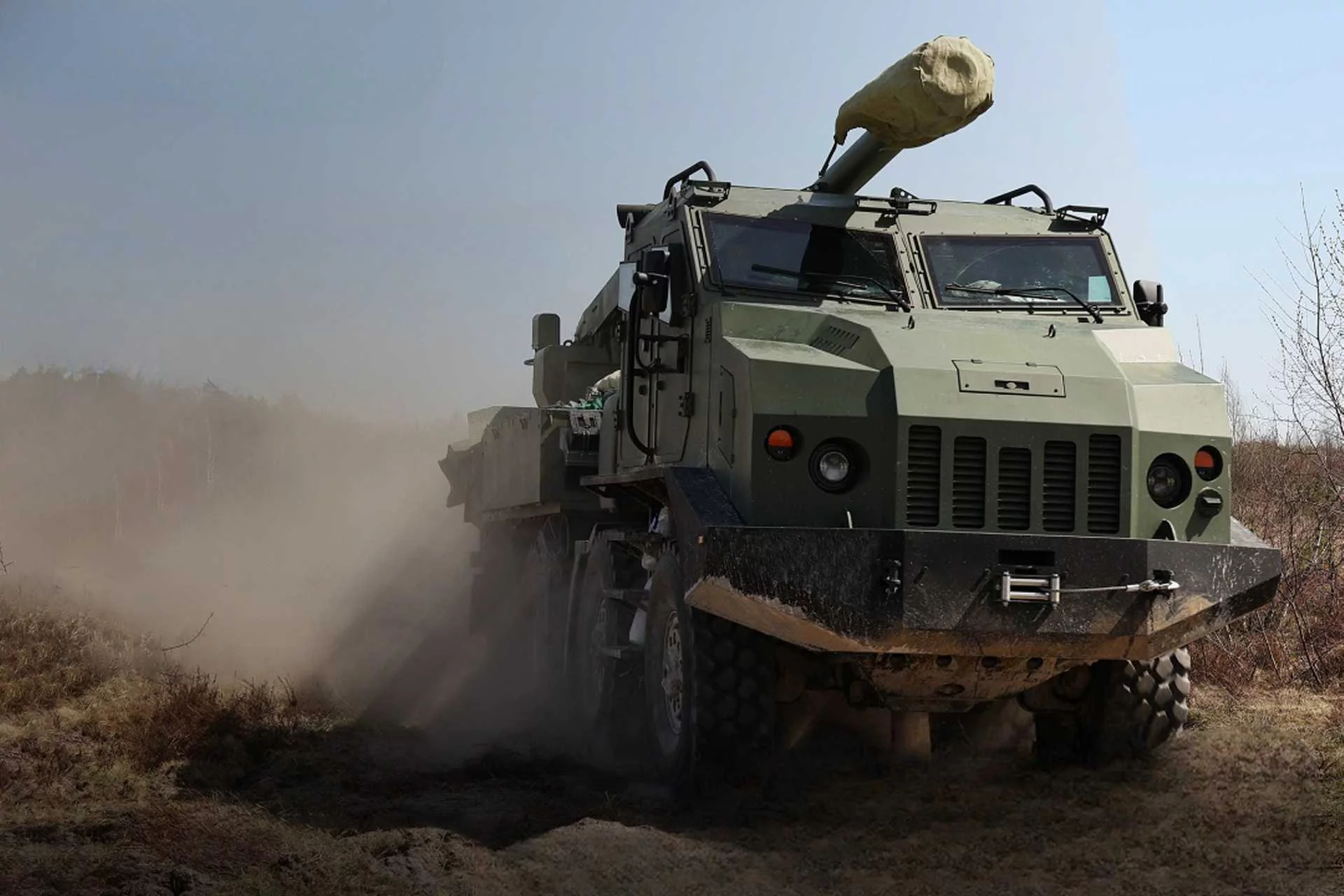
Production of the Ukrainian wheeled self-propelled howitzer 2S22 «Bogdana» of 155 mm caliber will soon begin in Poland. The production will be organized by the Polish‑Ukrainian joint venture PK MIL SA, created by Ponar Wadowice together with the Kramatorsk Heavy Machine Tool Plant. This was reported by Business Insider Poland.
"The enterprise, founded in October 2025, is now completing regulatory and production preparatory procedures before the start of production."
— Business Insider Poland
Why this matters for Ukraine
This step is not just about the number of vehicles. It’s about the integration of Ukrainian technology into European supply chains and confirmation of compatibility with NATO‑standard ammunition. For Ukraine, this means new markets, strengthening of the industrial base, and additional supply guarantees during wartime.
Briefly about the system
2S22 «Bogdana» is a wheeled SPH with a 155 mm L/52 gun: up to 42 km with conventional shells and up to 60 km with rocket‑assisted/extended‑range ammunition. The system was developed from 2016, entered service with the Armed Forces of Ukraine in 2023 and has undergone combat testing. Since the start of serial production up to 2023 and afterwards, more than 600 units have been produced and are already operating at the front.
Geopolitics, economy and defense
Ponar Wadowice holds a 51% controlling stake in the JV and will be responsible for manufacturing key components and system integration. Supplies are planned not only to Ukraine, but also to Poland and other Eastern‑flank NATO countries that are switching to 155 mm. This strengthens the region’s collective defense and creates a mark of confidence in the Ukrainian defense industry.
Implications and risks
Pluses: diversification of production, access to Western markets, acceleration of the transition to NATO standards. Risks: quality control and standardization of production processes in a new environment, logistics of components, regulatory hurdles and dependence on external supply chains. It is important that political statements turn into signed contracts and real exports.
Context: part of a broader picture
The decision in Poland complements other integration steps: in 2025 Ukraine and Germany agreed on the production of 200 «Bogdana» SPHs on Mercedes‑Benz Zetros chassis, and the Polish air defense system SAN complements Patriot and Narew in defending against low‑altitude threats. Together this looks like a systematic effort to standardize and scale Ukrainian developments within NATO.
Conclusion
The launch of «Bogdana» production in Poland is not an emotional story but a practical step in strengthening industrial and combat potential. Now the key question is how quickly and well serial production will be set up and whether the agreements will turn into deliveries and contracts. Are our partners ready to prove their words with actions?



