Powerful and affordable: Xiaomi unveils Desk Charging Station 140W — 8 ports for $42 and what it changes
Money loves silence: an affordable charging station from Xiaomi can reduce the number of power bricks in the home, cut e‑waste, and simplify life for people who work on the go. Sales start January 7 — we break down the technical details and what it means for users.

By Tetiana Suchkova-Ladik
December 31, 2025 · 2 min read
What was announced
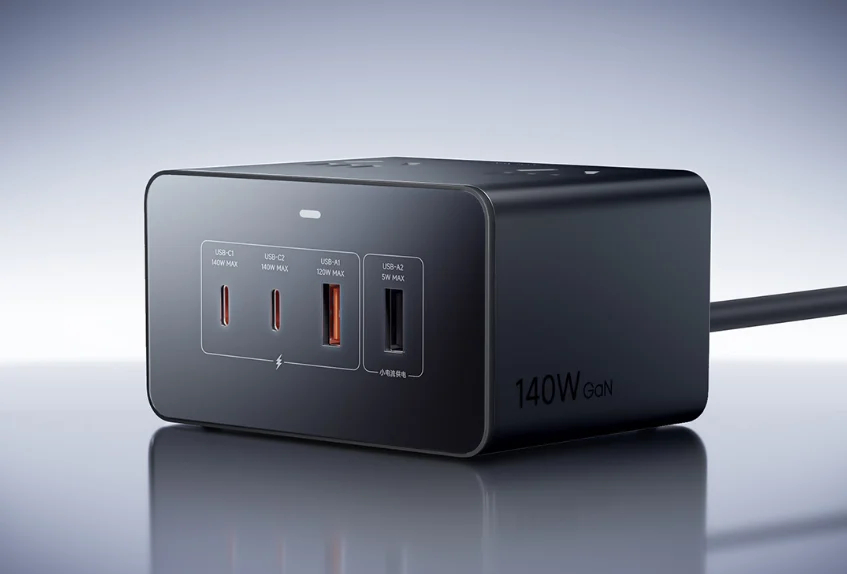
Xiaomi announced the Desk Charging Station 140W — a universal charging station with eight outlets: two USB‑C, two USB‑A and four AC sockets. According to Gizmochina, the USB‑C ports support the PD 3.1 standard, which allows up to 140 W to be delivered to each.
"The station supports fast charging via PD 3.1 through the USB‑C ports, allowing up to 140 W to be delivered to each."
— Gizmochina
Hardware and safety
The device automatically manages power distribution between connected devices using a built‑in chip — this should reduce the risk of power interruptions when multiple devices are connected simultaneously. One of the USB‑A ports operates in low‑current mode — for headphones, fitness bands and smartwatches. Standard protection systems are provided: protection from overheating, short circuits, overload and voltage spikes.
Price and availability
Sales start on January 7. Full price — 299 yuan (≈ $42), for early buyers — 249 yuan (≈ $36). This is clearly aimed at the mass market: for a small amount the user gets an alternative to several separate chargers.
Why it matters
First, concentrating power in a single device saves space and reduces the number of adapters at home — a fact that matters for apartments, remote offices and travel. Second, power balancing allows you to charge a laptop, smartphone and peripherals at the same time without manual switching, which increases convenience for IT professionals, volunteers and mobile teams.
In addition, more affordable and universal solutions help reduce electronic waste — fewer unnecessary power bricks in households. For the Ukrainian market, the key factors will be official import, customs policy and local pricing — these will determine how quickly such a solution becomes widespread here.
Context in Xiaomi's ecosystem
Recent Xiaomi announcements — from the charging station to the Xiaomi Watch 5 with eSIM — demonstrate a strategy of expanding the ecosystem: the company not only releases individual devices but also offers services and accessories that work together. For the consumer this means an easier life; for the market — increased competition in the segment of affordable high‑power solutions.
What to watch for
If you plan to buy: check compatibility with your devices (especially PD profiles), read reviews about real power distribution under load, and follow official suppliers — this affects warranty and service.
Will this model change the charger market in Ukraine? We're inclined to think yes — but only if the device is available locally at a competitive price and accompanied by reliable service. Now it's up to distributors and retailers.