Robot Droid TW-7.62 killed two Russian soldiers at 300 m — what it means for the front
A unit of the 32nd Separate Mechanized Brigade deployed the ground robotic complex Droid TW-7.62 during a combat mission. We explain why this is not an isolated incident and how such systems are changing the balance of forces on the battlefield.

By Tetiana Suchkova-Ladik
February 26, 2026 · 1 min read
What happened
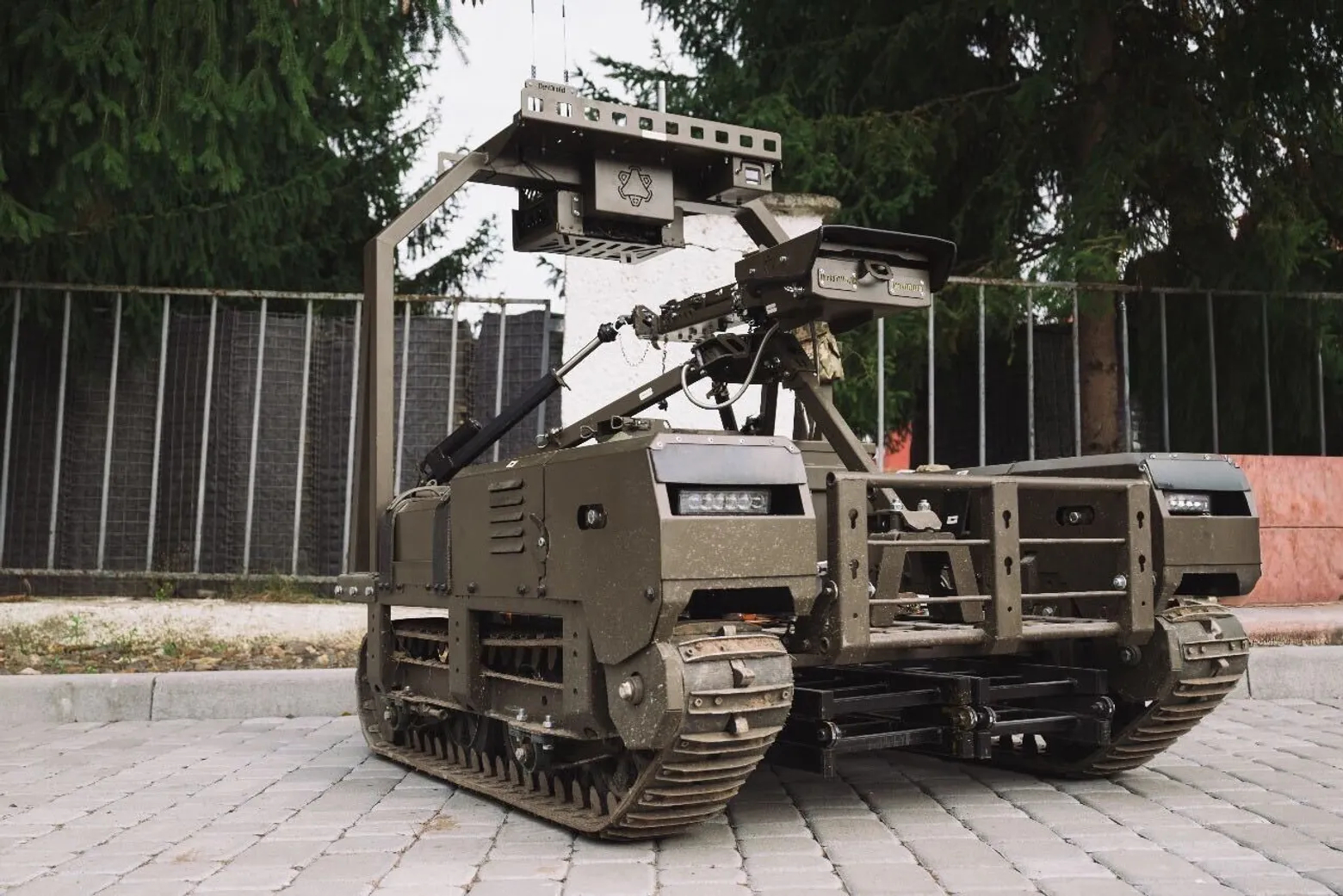
A unit of the 32nd Separate Mechanized Brigade of the Armed Forces of Ukraine used the ground robotic system Droid TW-7.62 during a combat mission. According to DevDroid via LIGA.net, the operator remotely detected an enemy target, fixed it and opened fire — at a distance of about 300 meters two Russian servicemen were killed.
"The operator remotely detected an enemy target, fixed it and opened fire. At a distance of about 300 meters two occupiers were eliminated."
— DevDroid, manufacturer of Droid TW-7.62 (report via LIGA.net)
What this system is and why it matters
The Droid TW-7.62 is a reconnaissance‑strike ground system adapted for the KT-7.62 (PKT) machine gun. The platform is equipped with a ballistic computer and AI detection and target-tracking systems, which increase accuracy and shorten the decision‑making cycle without exposing personnel to direct risk.
Implications for the front
This operation is part of a broader trend: ground robotic systems are becoming an important factor in improving combat effectiveness. They give units additional firepower, reduce risks to personnel, and force the adversary to adapt tactics and logistics. Defense analysts note that the combination of AI and ballistic calculations accelerates the detection–response cycle on the battlefield and changes intelligence priorities.
Context and next steps
Previously, the Droid TW-7.62 recorded the capture of three Russian servicemen and the engagement of armored vehicles, confirming the platform’s practicality in various scenarios. For the effect to be systemic, serial deliveries, integration with tactical networks, and proper technical maintenance are required — in other words, resources and coordination at the brigade level and state support.
Conclusion. The described episode demonstrates that modern war is increasingly defined by technology and systematic effort, not only by isolated heroic acts. The question is how quickly and at what scale such capabilities can be deployed across the front to become a sustained factor of security and advantage.