Samsung Makes Foldable Flagship Its First Entry Point for Google's AI Agent
Galaxy Z Fold 8 and Z Flip 8 are set to debut with Gemini Intelligence before Pixel 10 and Galaxy S26 — but a key feature is still missing from the One UI 9 beta.

By Tetiana Suchkova-Ladik
May 14, 2026 · 3 min read
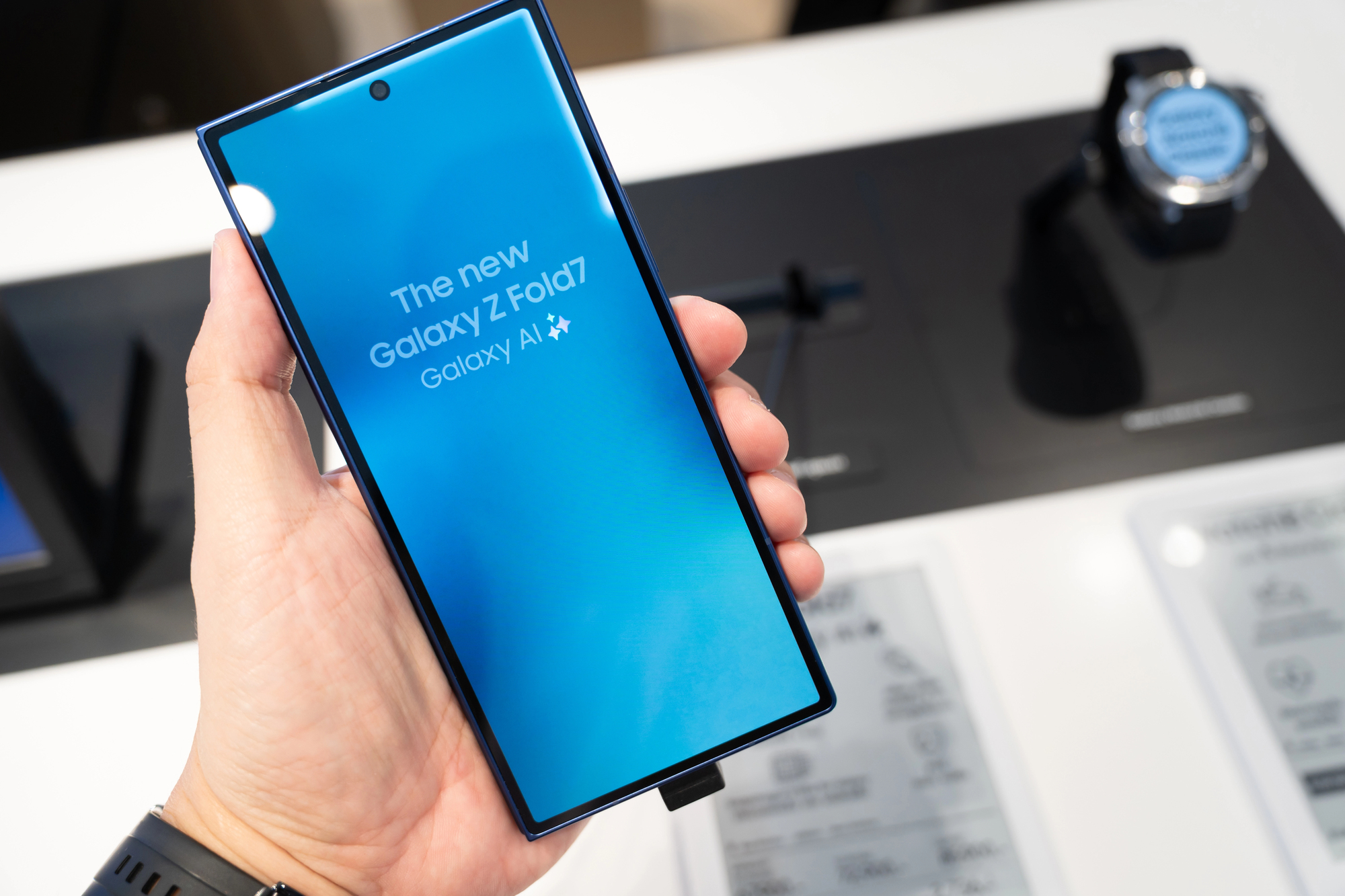
If you believe a message from Korean publication Seoul Economic Daily, Google and Samsung have arranged the sequence as follows: the agentic AI Gemini Intelligence will reach consumers not through Google's flagship or Samsung's mass-market lineup — but through expensive foldable devices, whose audience is already willing to overpay for exclusivity. The Z Fold 8 and Z Flip 8 are expected in July-August, which means the debut will occur just weeks before the Pixel 10 announcement.
What is Gemini Intelligence and how does it differ from a regular assistant
Gemini Intelligence is not just another chatbot in the quick access panel. The system is built on agentic logic: it can execute chains of actions across multiple applications with a single request. For example, find a flight in the browser, transfer data to the calendar, and confirm payment — without manually switching between screens.
As noted by Android Authority, One UI 8.5 on the Galaxy S26 series already knows how to launch individual applications through Gemini, but One UI 9 is supposed to move on to multi-step scenarios within a single request. This is what transforms a smartphone from an assistant into an agent — one that acts, not just responds.
Warning sign: the feature isn't even in the beta version
This is where the first practical nuance appears. According to Android Authority, Gemini Intelligence is still absent from the One UI 9 beta, which Samsung is already rolling out to testers on the Galaxy S26. The company plans to add it only in the stable release — suggesting incomplete optimization before the mass rollout.
«The feature may require additional processing, considering the system-level access that these AI tools require».
Android Authority
System-level access is not just a technical detail. An agent that independently moves between applications sees far more than a voice assistant that responds to individual requests.
Google on privacy: the framework exists, open risks do too
Google published a separate material on Gemini Intelligence security: the assistant launches automation only at explicit user command and has access exclusively to permitted applications. The company positions this as an industry standard for agentic AI on Android.
However, as noted by Progressive Robot, open risks haven't gone anywhere: prompt injection, incorrect context, excessive personalization. The question is not whether a phone can act as an agent — but whether it does so predictably and transparently.
Why Samsung needs this exclusivity
Foldable smartphones are Samsung's most expensive segment, where the company must justify a price above $1,800 every year. Hardware changes between generations become increasingly invisible to the buyer. Software exclusivity at launch — one of the few tools that allows making a new model noticeably different from the previous one right at the presentation.
- Z Fold 8 and Z Flip 8 — the first devices with Gemini Intelligence on board
- Galaxy S26 and Pixel 10 will receive the feature later, according to current forecasts
- One UI 9 is based on Android 17
- Agentic scenarios cover text, search, translation, and cross-application actions
If Samsung launches Gemini Intelligence in the One UI 9 stable release without public documentation on what data the agent sees and how it processes it — will this be enough for an audience already wary of Galaxy AI after last year's controversies surrounding cloud processing terms?