Tuesday, May 26, 2026
Today's Edition

EveryNews

Stories that matter, signal over noise

Technologies

U.S. begins testing LUCAS strike drone — Shahed‑136 analogue

Flights of the LUCAS strike drone, developed for the U.S. Marine Corps as an affordable counterpart to the Iranian Shahed‑136 and designed for mass production, have begun at the Yuma Proving Ground in Arizona.

Oleg Bazylewicz

By Oleg Bazylewicz

December 11, 2025 · 1 min read
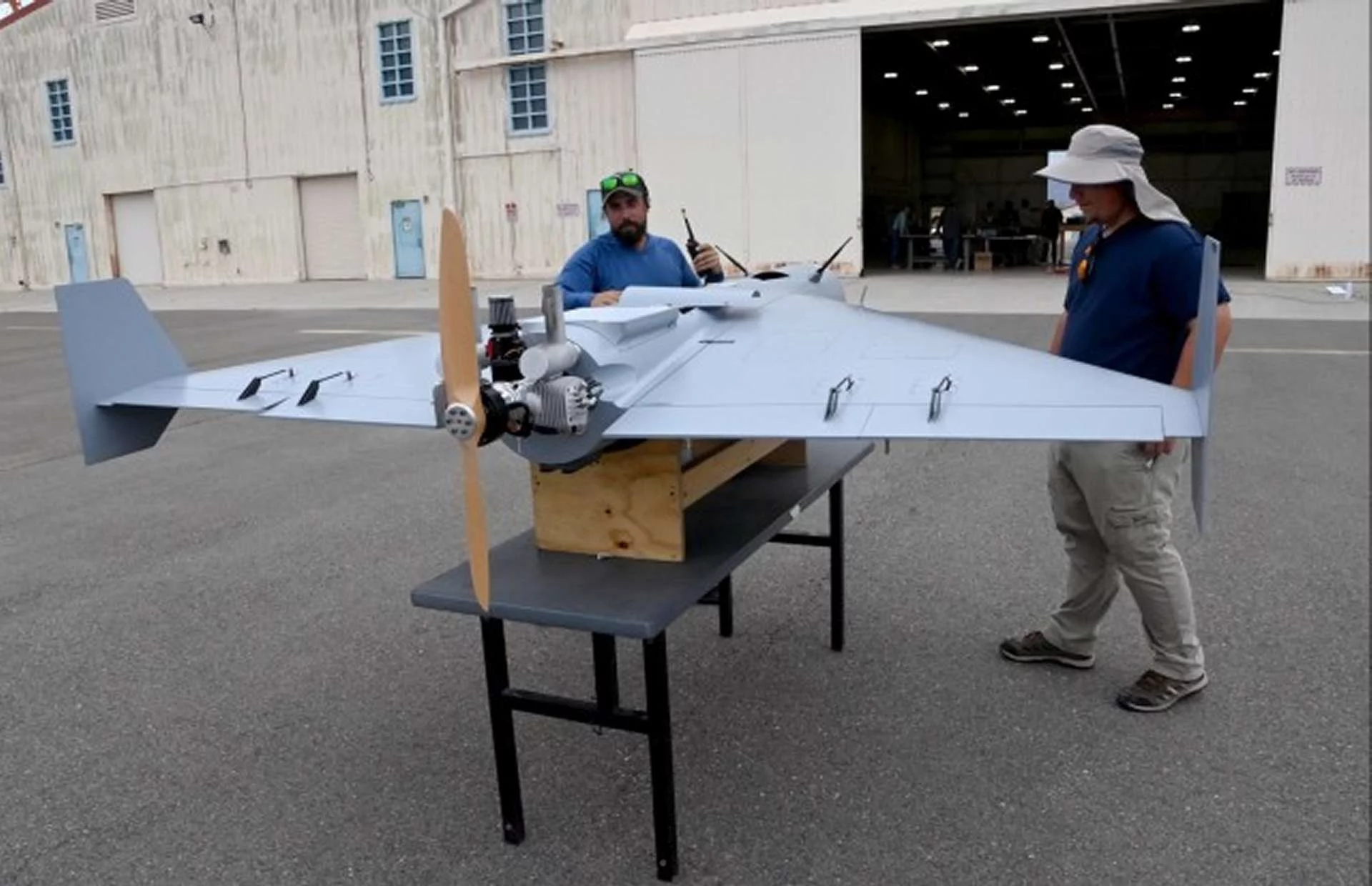
U.S. begins testing LUCAS strike drone — Shahed‑136 analogue

At the Yuma Proving Ground in Arizona, testing has begun of the LUCAS strike drone, developed on contract for the U.S. Marine Corps. The project is designed for serial production and use as a cheaper alternative to the Shahed-136.

Technical characteristics

LUCAS has a delta-shaped wing and a propeller engine and can remain airborne for up to six hours. The platform is designed with a modular payload, allowing equipment to be changed depending on the mission — warheads, reconnaissance sensors, or electronic warfare systems. The drone connects to a network through which the aircraft exchange target data, coordinate joint swarm attacks, and perform communications relay functions.

Advantages and production

The main advantage of LUCAS is its low cost, which allows it to be used instead of more expensive missiles. The system is intended to be launched en masse from trucks to strike air-defense systems, vehicles, and depots. Unlike the Shahed, LUCAS was developed from the outset with scalability in mind so that multiple manufacturers could produce it in large volumes.

Separately from the project mentioned, China recently tested a similar platform with a reported range of about 1,600 km and endurance of up to nine hours; Chinese armed forces have also integrated the DeepSeek artificial intelligence into some types of equipment.


Related

Latest

Business

EU Against Google: Why the Latest Fine Could Change More Than Previous Ones

# European Regulators Target Google Again — This Time Over Digital Markets Act Violations. What's Behind the Accusations and Why It Matters Beyond the Corporation European regulators have renewed their scrutiny of Google, this time focusing on alleged violations of the Digital Markets Act. The charges underscore Brussels' increasingly aggressive stance on big tech monopolies and what officials say are anticompetitive practices. The accusations center on how Google leverages its dominance across multiple digital services — from search to advertising to mobile platforms — to disadvantage competitors. Regulators claim the company is using its market power in ways that stifle innovation and limit consumer choice. The case carries significance far beyond Google itself. It signals how the EU is attempting to enforce its landmark Digital Markets Act, legislation designed to curb the gatekeeping power of tech giants. A potential penalty could set precedent for how other large technology companies face similar scrutiny. For consumers and smaller tech firms, the outcome could reshape the digital landscape by creating more room for competition. For Google, fines and operational restrictions could fundamentally alter its business model in Europe, the world's most stringent regulatory market. The case also reflects a broader geopolitical divide, with the EU pursuing a regulatory approach that contrasts sharply with the lighter-touch oversight favored in the United States.

May 26, 2026