AI That Doesn't Wait for Your Request: Anthropic is Building an Assistant That Reads Your Email, Slack and GitHub — Without Asking Permission
Anthropic is promoting the concept of proactive AI — and is already implementing it in the Orbit tool, which independently collects data from a user's work services. Convenience and data control are entering into open conflict here for the first time.

By Tetiana Suchkova-Ladik
May 14, 2026 · 2 min read
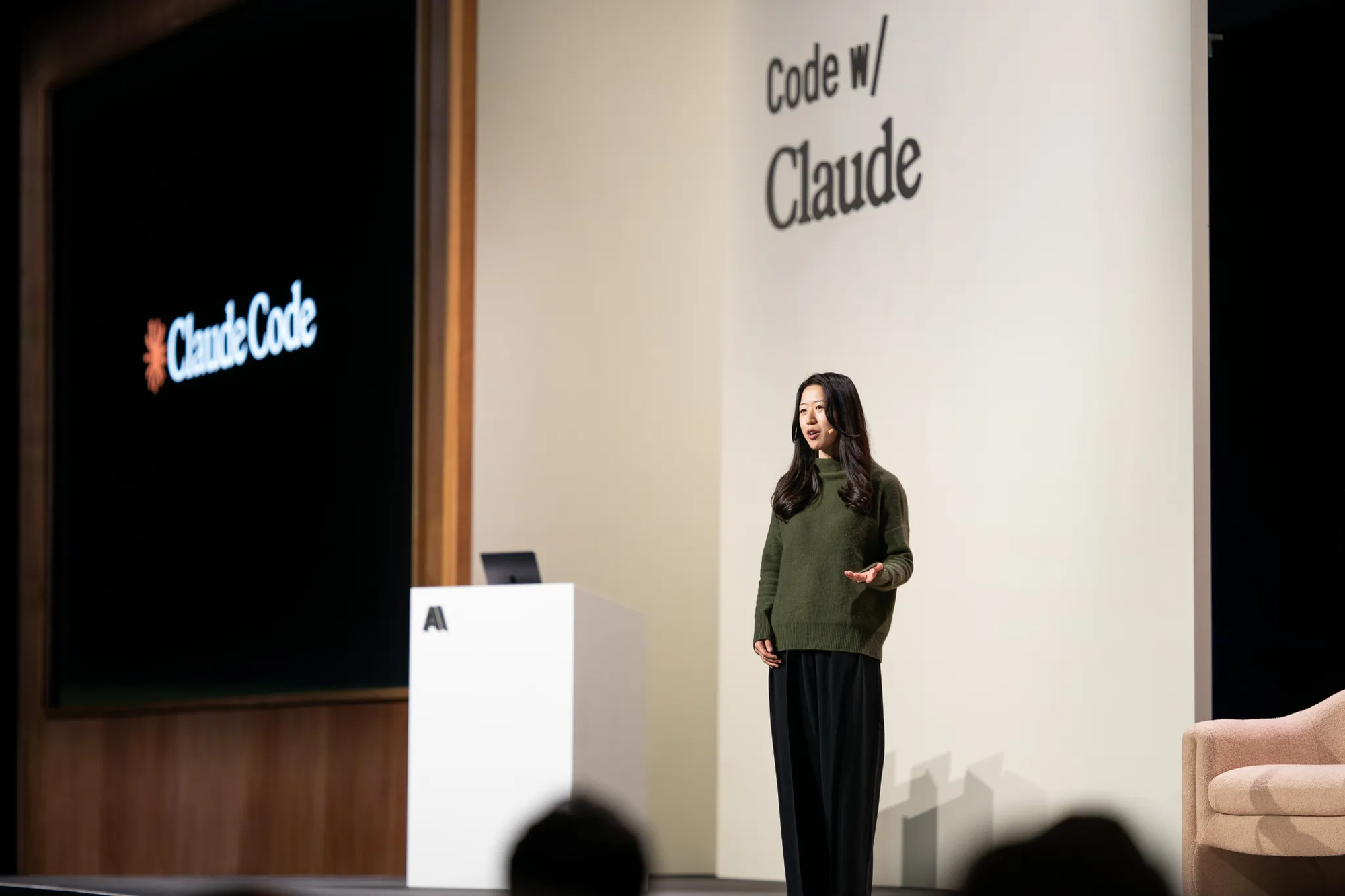
Kat Wu joined Anthropic in August 2024 and became head of product for Claude Code and Cowork. At the second annual Code with Claude conference in San Francisco, she articulated something the industry has long discussed around but rarely stated directly: future versions of Claude will act before the user formulates a request.
«What we're fundamentally designing is to stay on the exponential»
Kat Wu, head of product for Claude Code and Cowork, Anthropic
This is not a metaphor. While Wu spoke about principles, Anthropic engineers were already embedding a concrete product into the application.
Orbit: a proactive assistant that no one officially announced
Even before the conference, researchers found traces of a new feature in the code of Claude's mobile and web app — Orbit. Based on what was discovered, this is a proactive assistant for Claude Cowork: it automatically collects data from Gmail, Slack, GitHub, Google Calendar, Drive, and Figma and generates personalized briefings — without any request from the user. At the time of discovery, Orbit existed only as a toggle switch in the settings panel, which is a typical sign of a feature before release.
Anthropic is not the only company on this path. According to PCWorld, OpenAI launched ChatGPT Pulse in September 2025 — a morning briefing based on previous conversations, Gmail, and Google Calendar. Now Claude and Gemini are following the same track.
Where convenience ends and questions begin
Orbit solves a real problem: most people don't formulate requests because they don't know what exactly to ask, or simply don't have time. An assistant that tracks deadlines in Calendar, changes in GitHub, and emails in Gmail on its own — this is not science fiction, but a described architecture.
But this is precisely where a non-trivial conflict arises. Analysts are already pointing out: a system that reads corporate Slack and GitHub without an explicit request is technically no different from a personnel monitoring tool — if HR or company management gain access to it. As reviewers note, when you transfer context to an external system, you also transfer negotiating positions. Orbit today is your assistant; tomorrow it's a SaaS product that your employer purchased.
- Orbit connects to six platforms simultaneously: Gmail, Slack, GitHub, Calendar, Drive, Figma
- The feature is opt-in — but the mechanism for revoking access is not publicly described
- Anthropic is currently in negotiations over a funding round that could value the company at close to $950 billion
- Among corporate clients, Claude has already surpassed ChatGPT — market share quadrupled since May 2025
Competition is accelerating the pace: the faster OpenAI, Google, and Anthropic roll out proactive features, the less time remains to address privacy issues before release, rather than after.
If Anthropic launches Orbit without transparent policies regarding corporate access to collected data — will this be a choice for convenience, or simply a deferred problem that will be solved after the first scandal?