Smartphone instead of separate device: "Chuyka" is now controlled from a phone and sees FPV from 4 km away
BlueBird Tech has transferred the interface of the "Chuyka" drone detector to a mobile application — one smartphone can now control multiple devices simultaneously. For a fighter on the front line, this means less equipment to carry and more time to react.

By Tetiana Suchkova-Ladik
May 18, 2026 · 2 min read
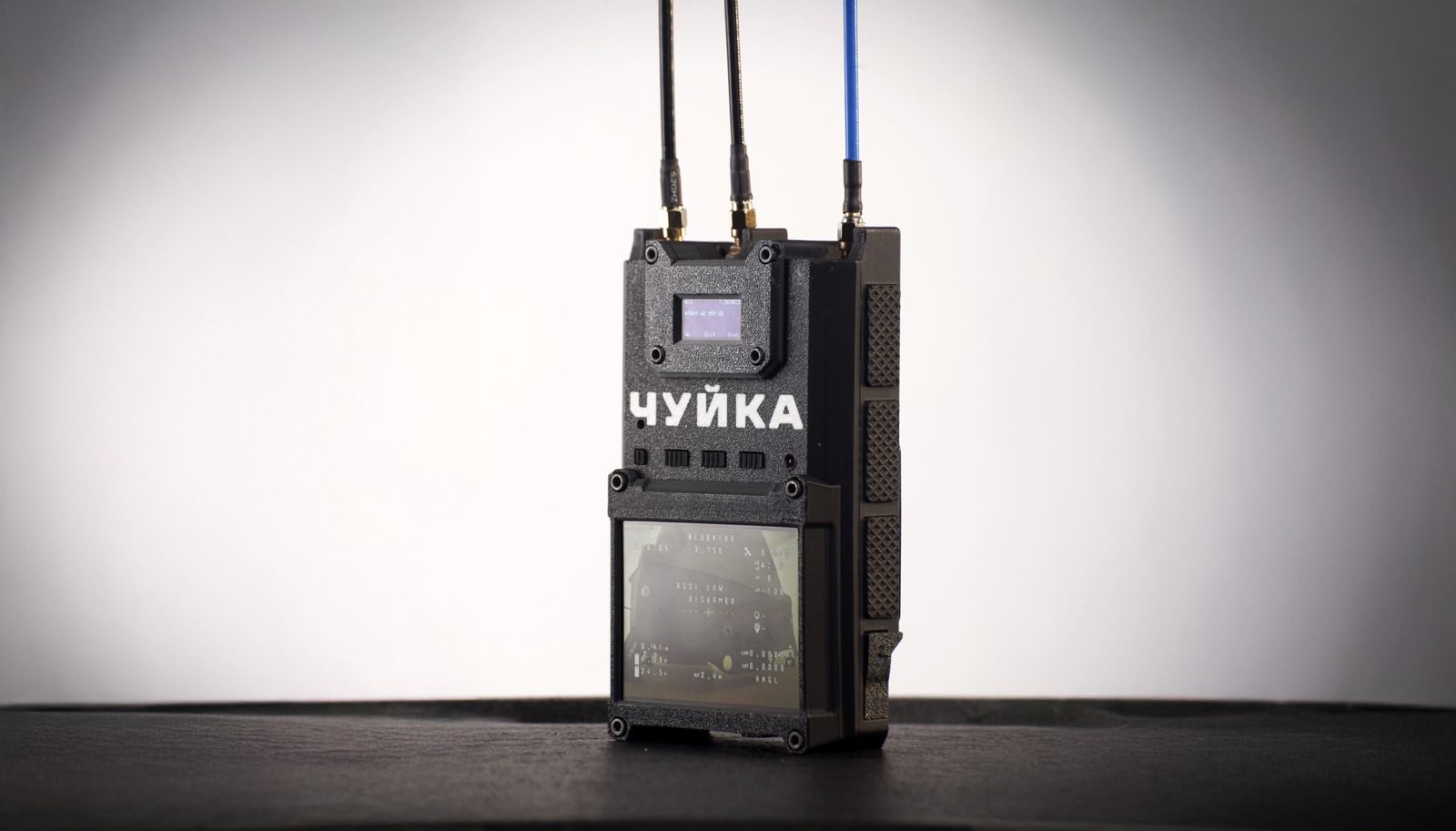
An FPV drone can travel from detection to strike in less than a minute. "Chuyka 3.0" from BlueBird Tech gives fighters an advantage: the device detects an analog video signal from a drone before visual contact — at distances up to 4 km, and the entire scanning cycle of three frequency bands takes 4 to 8 seconds. Now a mobile interface has been added to this.
What the app changes
Before the app appeared, Chuyka was an autonomous device with its own display. The new mobile application allows you to connect multiple detectors to a single smartphone, see their status on the main screen, and manage them centrally. Firmware updates are free through the app.
The practical value lies not in convenience, but in tactics: one fighter or operator can simultaneously control a sector through a network of detectors positioned at different locations, without needing to be physically present at each device. This is the "integrated reconnaissance loop" that the company refers to.
What's under the hood of Chuyka 3.0
- Passive detection of analog FPV signals on frequencies 1.2, 3.3, and 5.8 GHz
- Range — up to 4 km with line of sight
- Weight — 650 g, battery life — up to 6 hours, charging via USB-C
- Audio and visual alerts + display of threat channel and frequency
- NATO coding — the device passed the appropriate certification
Chuyka 3.0 was presented at the Defense Tech Valley 2025 exhibition in Lviv. According to BlueBird Tech representative Andriy Chepak, the device is primarily aimed at infantry — it is designed to warn a fighter about an approaching FPV before the drone enters the field of view.
Chuyka 3.0 is designed to inform and warn an infantryman about the presence and approach of FPV drones to him.
Andriy Chepak, BlueBird Tech representative
Scale and limitations
BlueBird has already scaled Chuyka production 100 times over — this is not a startup prototype. However, there is a fundamental limitation: the detector only detects analog signals. Digital FPV systems — particularly DJI O3 and similar ones — remain outside its detection range. In parallel, the company has developed the "Vishchun-P" retransmitter with a range of up to 25 km, indicating a broader ecosystem of products.
If the adversary accelerates the transition to digital drone control channels — and technically this is a matter of resources, not time — how quickly will BlueBird be able to release a version of Chuyka that detects digital signals without revealing its own position through active radiation?