# US Accelerates GPI: Hypersonic Missile Interceptor Receives $1.3 Billion — But Operational Readiness Delayed Until 2035
The Missile Defense Agency has increased funding for the Glide Phase Interceptor program to over $1.3 billion. The missile is designed to intercept hypersonic targets during the glide phase — but the deployment timeline has been postponed for the second time.

By Tetiana Suchkova-Ladik
April 16, 2026 · 2 min read
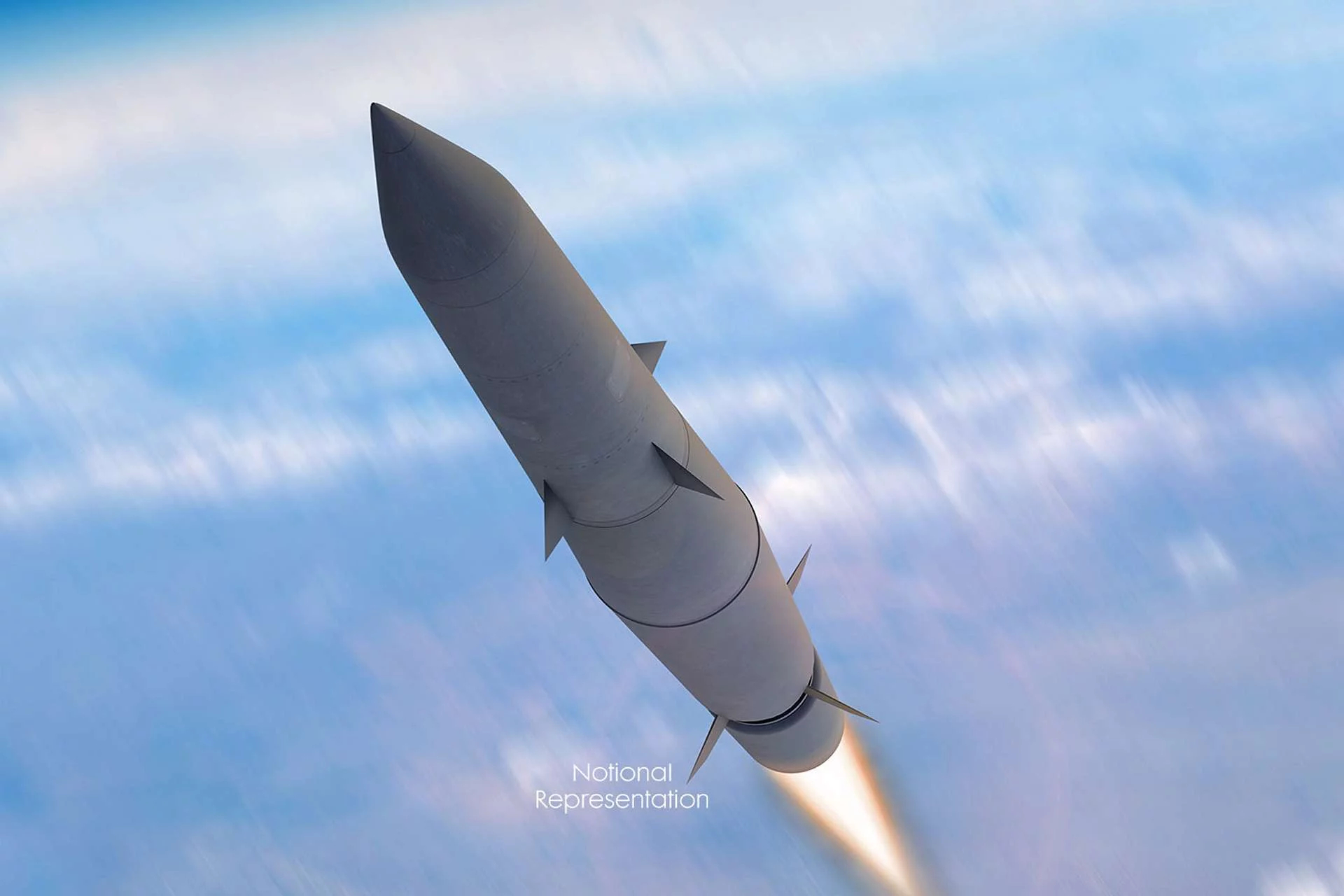
Northrop Grumman has received an additional $475.3 million from the Missile Defense Agency for developing the Glide Phase Interceptor (GPI) hypersonic missile interceptor — bringing total program funding to over $1.3 billion. The company confirmed the contract modification and called it an "acceleration of development."
GPI is an air-to-air missile class weapon that will be launched from vertical Mk 41 launch systems on Aegis-equipped destroyers and from ground-based Aegis Ashore batteries. Its mission is to destroy hypersonic glide vehicles during the glide phase itself: at altitudes and ranges beyond the reach of the current SM-6 missile. The key difference from terminal interception is that the target is still maneuvering in the upper atmosphere, meaning the interceptor has more reaction time than in the final seconds of flight.
Parallel Space Sensors
GPI does not operate in isolation. In parallel, the MDA is developing the HBTSS (Hypersonic and Ballistic Tracking Space Sensor) program — a constellation of low-orbit satellites for early detection and continuous tracking of hypersonic targets. The Presidential Executive Order "Iron Dome for America" of January 27, 2025, directly mandated the Pentagon to accelerate HBTSS deployment as part of a new air defense architecture.
"GPI seamlessly integrates into the Missile Defense Agency's missile defense ecosystem to provide reliable, layered defense."
Northrop Grumman
A Timeline Already Changed Twice
There is an important detail that corporate press releases do not highlight. According to data from the U.S. Congressional Research Service (CRS), published in April 2025:
- The NDAA FY2024 law obligated the MDA to achieve initial operational capability by December 31, 2029, and full capability by 2032.
- Yet the MDA budget documents for FY2025 already moved delivery to FY2035.
- The FY2026 request includes $247 million in mandatory funding — Congress is attempting to maintain the pace through legislative pressure.
In other words, between the legislative mandate and the agency's actual plan — there is a six-year gap. "Acceleration" in the current announcement means not narrowing these dates, but additional resources for testing: extreme temperature simulations, stage separation system validation, and Aegis integration.
Threat Context
The strategic logic of the program is a response to hypersonic arsenals from Russia and China. Russia has deployed the Kinzhal in Ukraine: in May 2023, Patriot shot down at least one such missile over Kyiv. However, analysts note that the Kinzhal is an aeroballistic missile with a relatively predictable trajectory, not a maneuvering hypersonic glide vehicle. The real interception challenge comes from the Zircon and Chinese hypersonic glide warheads — precisely against these that GPI is designed. In September 2025, China tested a hypersonic ICBM with boost-glide technology and a reduced trajectory, shortening the detection window.
Even with improved sensors, as DARPA analysts have noted, the closing speed between the interceptor and target could reach Mach 15 and higher — and no kinetic interceptor has yet been proven to operational reliability in such conditions.
If the MDA revises the delivery date again in the FY2027 budget request — this will signal that technical challenges have outpaced financial momentum, and Congress will have grounds to question the management of the entire program.