US to Remanufacture Brain of AGM-86B: 1982 Missile Will Extend Service Until 2033
The U.S. Air Force is ordering Boeing to refurbish 550 control units for AGM-86B nuclear cruise missiles to maintain their combat readiness until the arrival of their successor, the AGM-181 LRSO.

By Oleg Bazylewicz
April 8, 2026 · 2 min read
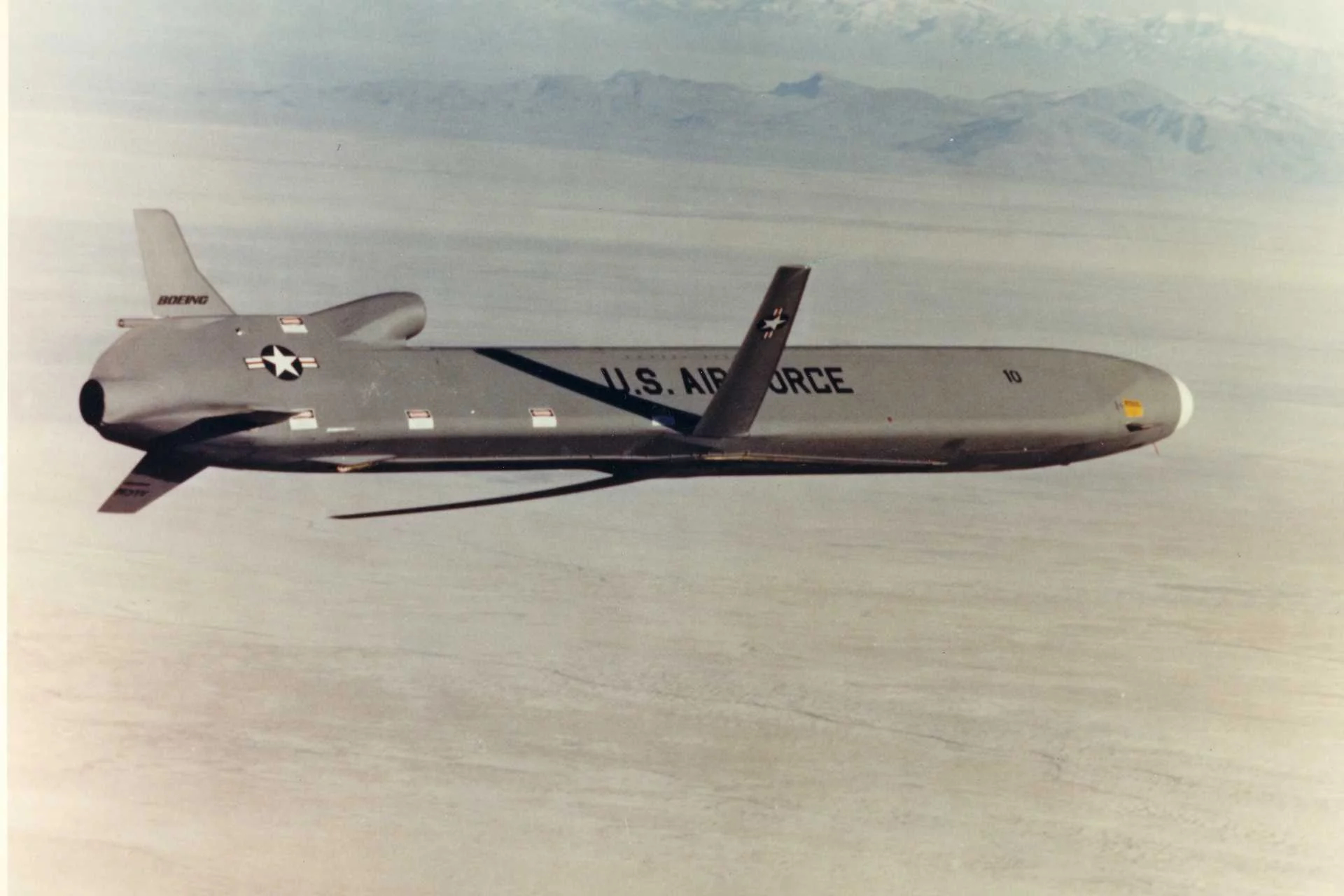
The U.S. Air Force's Nuclear Weapons Center at Tinker Air Force Base on April 6, 2026, announced a contract proposal with Boeing for the remanufacturing of flight control blocks for AGM-86B cruise missiles. The completion deadline is set for July 2033. Details are reported by Defence Blog.
What exactly is being remanufactured and why it matters
The contract involves the restoration of 550 aileron-elevator actuator blocks — a component responsible for controlling the missile's trajectory during flight. Production rate: 94 units per year. Boeing will receive the contract as the sole qualified contractor for this work (sole-source IDIQ) — no alternative manufacturer exists for this component.
The AGM-86B was adopted for service in 1982. It carries a W80 thermonuclear warhead with a yield ranging from 5 to 150 kilotons, is launched from B-52H Stratofortress strategic bombers, and can strike targets at distances up to 2,800 kilometers using the TERCOM terrain-mapping navigation system. Over more than four decades of service, the missile has undergone several modernization programs, but its fundamental design has remained unchanged.
"The program is designed to ensure the stability of nuclear deterrence during the transition period to new systems"
Air Force Nuclear Weapons Center, April 2026
Bridge to AGM-181 LRSO
Extending the AGM-86B's service life until 2033 is a direct response to delays in the successor program. AGM-181 LRSO (Long Range Standoff), being developed by Raytheon, was originally expected to achieve initial operational capability around 2030. Current plans call for a production decision in 2027 and IOC approximately in 2030. The AGM-181 will be integrated with both the B-52 and the new B-21 Raider bomber; its key advantage is the ability to penetrate modern integrated air defense systems (IADS) from significant distances.
Thus, the Boeing contract is not routine maintenance but insurance against a gap between two generations of nuclear weapons. Should LRSO be delayed beyond 2030, the remanufactured AGM-86B blocks will formally ensure the continuity of this triad component until 2033.
Context: its place in the nuclear triad
The AGM-86B is the air-based component of America's nuclear triad. Unlike ICBMs (land-based component) and submarine-launched ballistic missiles, air-launched cruise missiles provide flexibility: the carrier can be launched into the air as a signal without firing the missile. American strategists view this capability as a deterrence tool in escalation scenarios.
- Platform: B-52H Stratofortress (up to 20 missiles per aircraft)
- Warhead: W80, 5–150 kt
- Range: up to 2,800 km
- Navigation: TERCOM (terrain mapping)
- In service since: 1982
If AGM-181 LRSO achieves IOC as planned in the 2030s, Boeing's program will serve as a planned buffer. However, if LRSO schedules slip again — as has happened with numerous American defense programs — the contract extending to 2033 will become not insurance but the sole means of keeping this triad element combat-ready.



