Handstand Is Not a Trick: Atlas Already Being Put on Hyundai's Assembly Line
Boston Dynamics showcased new Atlas gymnastics not for the sake of viral video — but to prove the robot is ready for factory deployment. All 2026 shipments are already sold out.

By Tetiana Suchkova-Ladik
May 6, 2026 · 2 min read
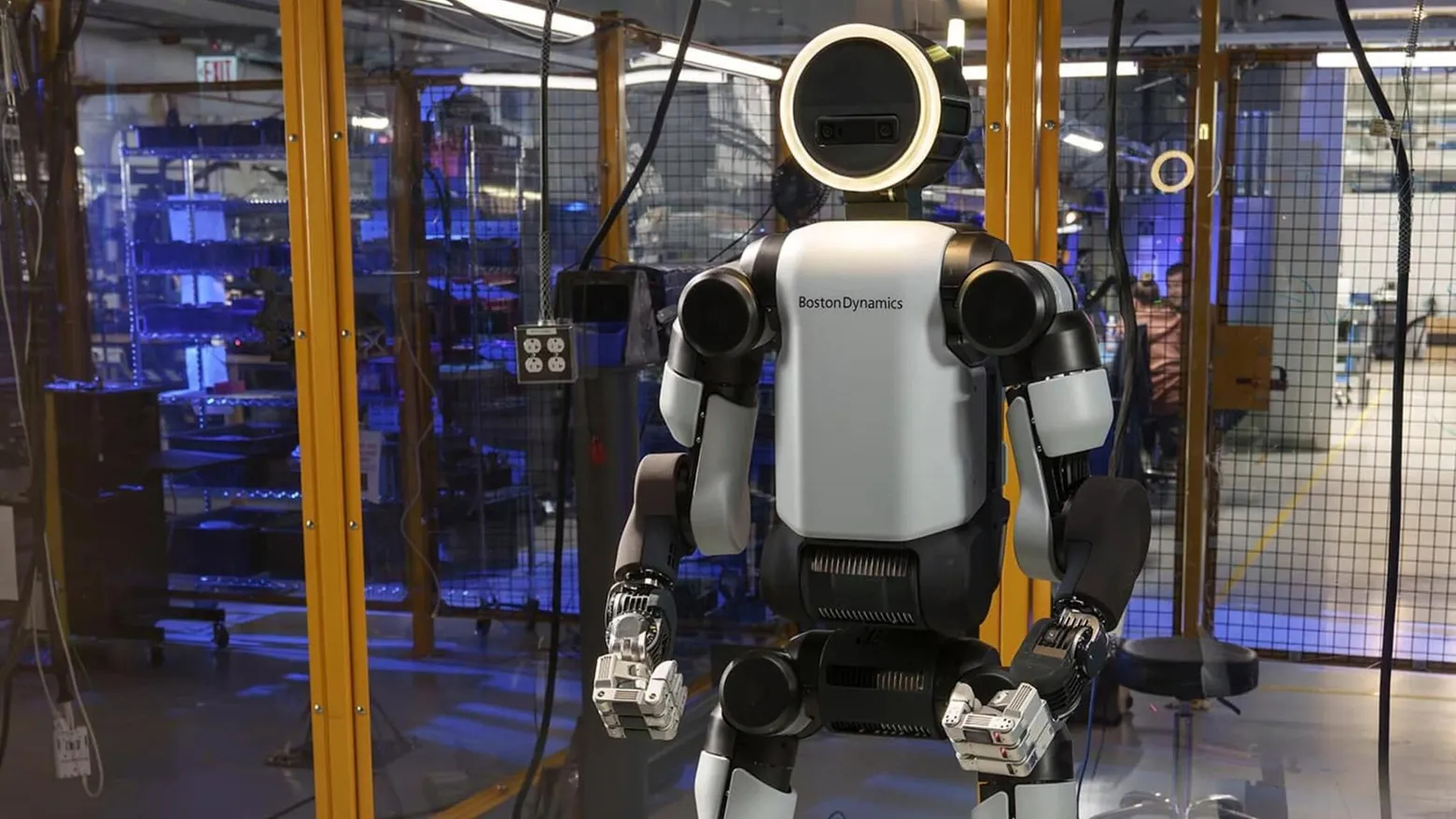
A new Boston Dynamics video shows the humanoid robot Atlas performing a handstand and holding an L-sit position, appearing as a demonstration of capabilities. But behind this video stands a specific industrial argument: the ability to balance on a small surface area is needed in factories — to lift heavy parts and work where standard equipment cannot reach.
From backflips to the factory floor
Previous generations of Atlas impressed with parkour and backflips. The current version — electric, completely redesigned — is no longer a prototype for exhibitions. In January 2026, at CES, Boston Dynamics announced: production has begun, all deliveries for 2026 are fully contracted. Among the first customers are Hyundai and Google DeepMind.
The gymnastics video is a demonstration that learning through simulation (sim-to-real transfer) actually works on a physical robot. Atlas practices movements in a virtual environment, then reproduces them in the real world without additional adjustments.
What Hyundai specifically plans
Hyundai Motor Group — majority shareholder of Boston Dynamics after acquiring the company in 2021 — is preparing to deploy tens of thousands of robots at its own facilities. According to CNBC, Atlas will appear at the American Metaplant facility in Georgia no earlier than 2028 — initially for sorting parts. By 2030, a transition to component assembly is expected.
«Balancing commercial goals and robotics research can be tricky, but with Atlas we're making it work.»
— Boston Dynamics
In parallel, the company announced the construction of a new robot manufacturing facility — with capacity of up to 30,000 units per year. Hyundai's total investment in the United States — $26 billion.
What the video doesn't show
- Atlas has not yet been shown in a real industrial environment — only in controlled laboratory conditions.
- The cost of one robot and contract terms are not disclosed.
- Training for industrial tasks is conducted through AI models in partnership with Nvidia and Google — but none of the partners have confirmed specific timelines for system readiness.
Atlas can lift up to 50 kg, has tactile sensors in its hands, and operates at temperatures from −20°C to +40°C. Technically — impressive. But the key question is not about gymnastics: if by 2028 Hyundai does not introduce Atlas into a real assembly line process with measurable productivity indicators, will the scenario of previous "revolutions" in humanoid robotics repeat itself, where there was always a five-year gap between video and serial use?