Tuesday, May 26, 2026
Today's Edition

EveryNews

Stories that matter, signal over noise

Technologies

Ukrainian ground robot destroys Russian MT-LB in combat

Soldiers of the 5th Separate Assault Brigade used the Droid TW 12.7 system against a crewed Russian MT-LB. Manufacturer DevDroid says this is the first documented case of an armored vehicle being struck by a ground robot; video has been released and the platform’s technical specifications have been provided.

Oleg Bazylewicz

By Oleg Bazylewicz

December 10, 2025 · 1 min read
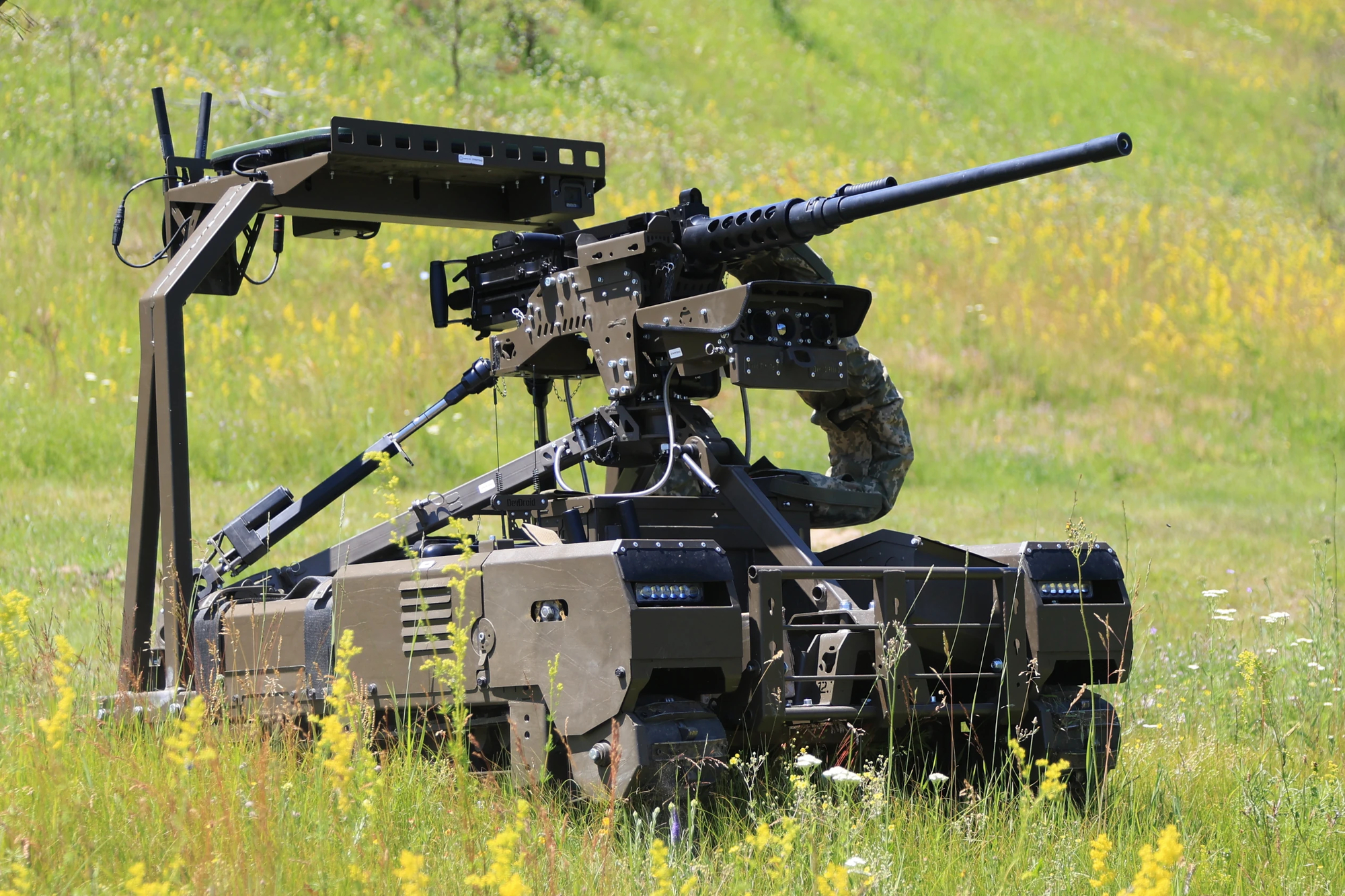
Ukrainian ground robot destroys Russian MT-LB in combat

Servicemembers of the 5th Separate Assault Brigade used the robotic system Droid TW 12.7 to strike a Russian MT-LB together with its crew. Manufacturer DevDroid said this is the first documented case of a ground robot destroying armored equipment during actual combat.

Sequence of the strike on the vehicle

The company published a video on its own channel showing the platform opening fire on the armored vehicle; the machine continued to move for some time afterward.

Technical specifications of the platform

The platform has an operational range of up to 25 km and can reach speeds of about 7 km/h. Communications are provided via Starlink, LTE and mesh networks, and the maximum engagement range is approximately one kilometer. A remotely operated turret is fitted with a 12.7 mm M2 Browning machine gun, intended for effective engagement of light armored vehicles — BMPs, BTRs and armored cars.

Previous instances of use

Earlier reports said a similar platform evacuated a severely wounded soldier under fire from about 20 meters from enemy positions. In addition, an electric bicycle dropped from a drone helped extract a National Guard fighter from an encirclement.


Related

Latest

Business

EU Against Google: Why the Latest Fine Could Change More Than Previous Ones

# European Regulators Target Google Again — This Time Over Digital Markets Act Violations. What's Behind the Accusations and Why It Matters Beyond the Corporation European regulators have renewed their scrutiny of Google, this time focusing on alleged violations of the Digital Markets Act. The charges underscore Brussels' increasingly aggressive stance on big tech monopolies and what officials say are anticompetitive practices. The accusations center on how Google leverages its dominance across multiple digital services — from search to advertising to mobile platforms — to disadvantage competitors. Regulators claim the company is using its market power in ways that stifle innovation and limit consumer choice. The case carries significance far beyond Google itself. It signals how the EU is attempting to enforce its landmark Digital Markets Act, legislation designed to curb the gatekeeping power of tech giants. A potential penalty could set precedent for how other large technology companies face similar scrutiny. For consumers and smaller tech firms, the outcome could reshape the digital landscape by creating more room for competition. For Google, fines and operational restrictions could fundamentally alter its business model in Europe, the world's most stringent regulatory market. The case also reflects a broader geopolitical divide, with the EU pursuing a regulatory approach that contrasts sharply with the lighter-touch oversight favored in the United States.

May 26, 2026