Unwave unveils mobile electronic warfare system 'Choven-2': roof-mounted unit to jam enemy drones
An unobtrusive box-shaped module on a car roof that operates both on the move and when stationary — how it is changing city defense and front-line logistics.

By Tetiana Suchkova-Ladik
January 21, 2026 · 2 min read
Briefly — why this is needed
Unwave has announced the mobile electronic warfare complex "Choven‑2" in a roof‑box form factor that can be mounted on any car with roof rails without modifying the vehicle body or interior. The main idea — to provide fast, discreet and scalable countermeasures against enemy UAVs both on the move and from stationary positions.
What's inside: technical details
The system has 14 jamming modules of 50 W each and covers frequencies from 320 to 5255 MHz with vertical and horizontal polarization. Each module is equipped with its own DC‑DC converter — this ensures stable operation even at low battery charge and during prolonged use.
"Choven was created on the basis of the 'Shatro' system but adapted to the roof‑box form factor. Its design protects all elements, preserves the vehicle's civilian appearance and can be mounted quickly. All key components are manufactured and tested by the Unwave team in Ukraine."
— Unwave, press service
Integration with detection and tactical effect
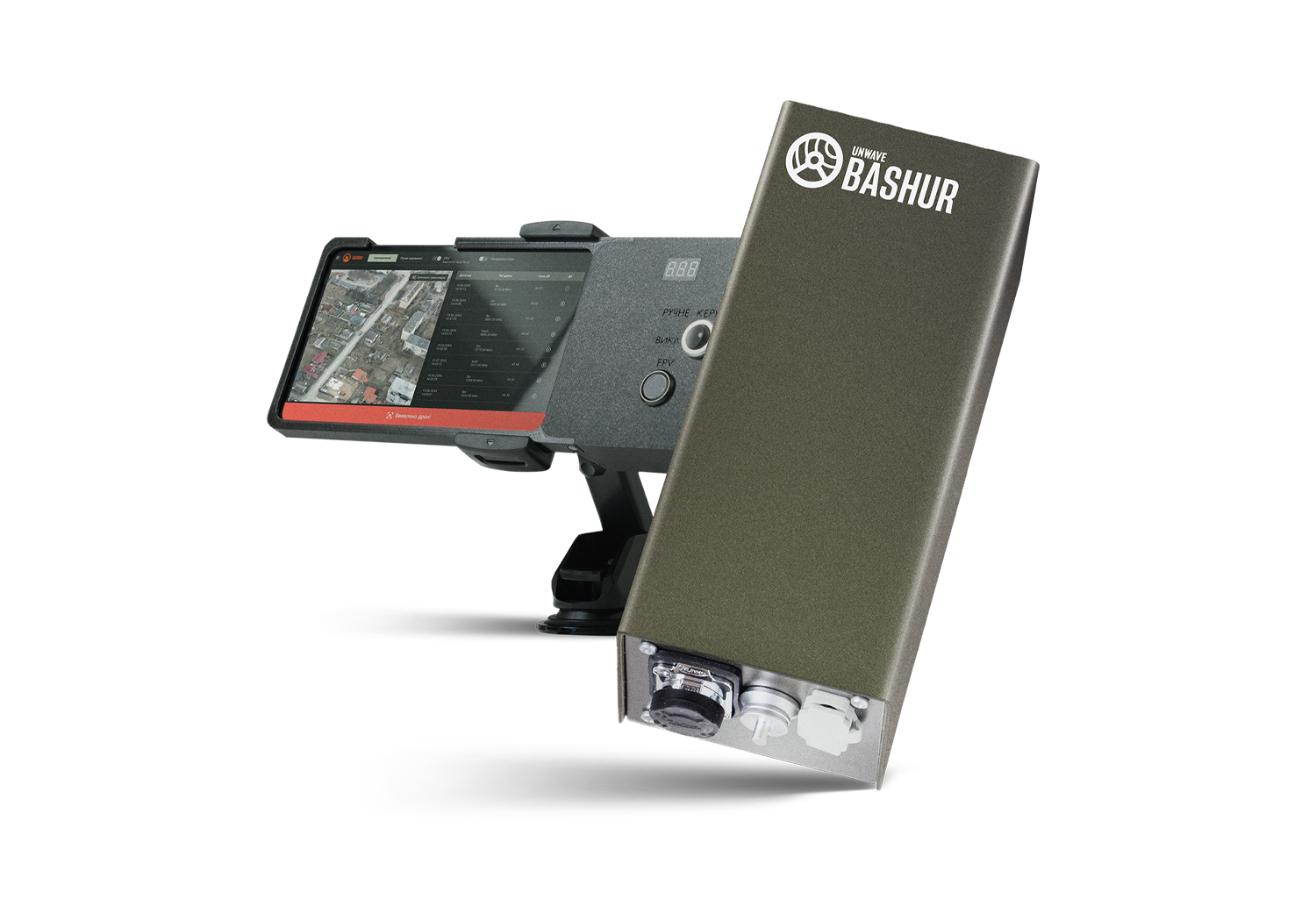
The complex can operate autonomously or in tandem with Unwave's "Bashur" drone‑detection system: "Bashur" detects a threat, sends a signal to "Choven" to activate jamming, notifies the operator and forwards intercepted video. This combination provides a "detected — neutralized — recorded" chain, which is important for rapid responses in areas of civilian infrastructure and frontline units.
What this means in practice
First, mobility and a civilian appearance reduce deployment time and the risk of direct detection. Second, coverage of a wide frequency spectrum makes "Choven‑2" effective against different types of piloted (manned) and autonomous systems that use GSM, Wi‑Fi, GPS and control/telemetry bands.
Risks and implementation issues
Despite the advantages, this is not a universal solution. There are coordination questions for using such complexes in populated areas due to potential interference with civilian communication networks, as well as legal and procedural aspects of deployment on critical infrastructure. Defense‑sector analysts note: for the technology to work in the country's interest, standards of use, integration with command structures and testing in real conditions are needed.
Conclusion
"Choven‑2" is an example of the rapid adaptation of the Ukrainian industry to the needs of war: mobile, locally produced and integrated into a detection system. It is not a panacea, but another link in the line of defense against UAVs. The next steps are mass testing, a regulatory framework for use and coordination with telecom operators and military command.