Japan tests autonomous drones with Hivemind AI — what it means for Ukraine
Mitsubishi Heavy Industries and Shield AI integrated Hivemind into the lightweight ARMD drone within eight weeks and demonstrated autonomous coordination and target pursuit — a technology that is already beginning to shape unmanned operations tactics and has direct relevance to Ukraine's defense needs.

By Tetiana Suchkova-Ladik
March 19, 2026 · 2 min read
Briefly: what happened
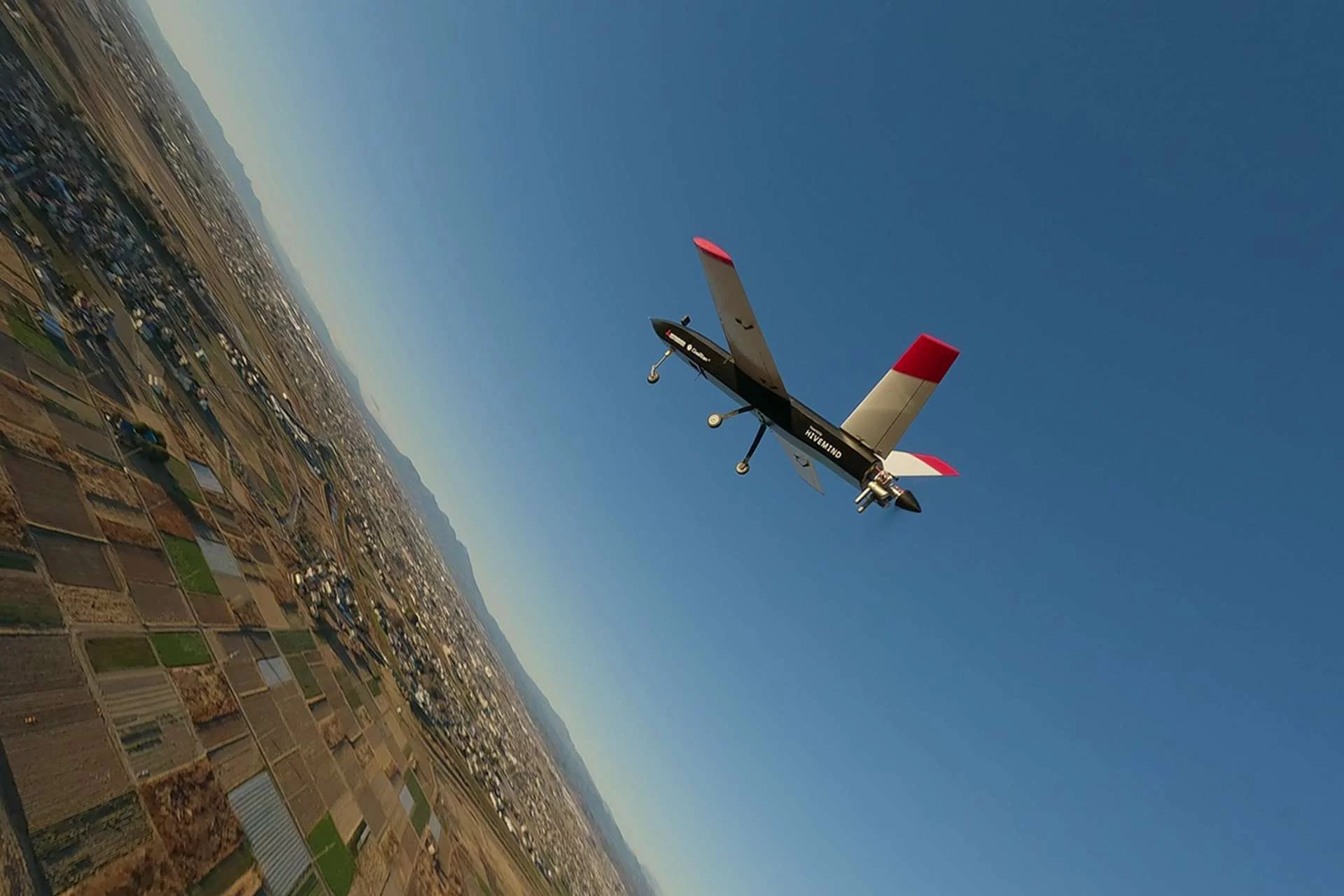
Japanese Mitsubishi Heavy Industries, together with American Shield AI, tested the ARMD unmanned aircraft with an AI-based autonomous control system. The tests took place in November–December 2025 in Ibaraki and Gunma, and the results have been released now. Integration of the Hivemind Enterprise software from development to flights took about 8 weeks, which in itself is a notable example of rapid field-integration of modern systems.
"During the tests we confirmed the system's key capabilities: autonomous behavior based on reinforcement learning, coordination of a group of drones, and dynamic target pursuit without constant operator intervention."
— Mitsubishi Heavy Industries, press release
What the flights showed
A small fixed-wing drone weighing about 20 kg was used as the platform, effectively serving as a testbed for the algorithms. In demonstrations two vehicles autonomously coordinated their movements and pursued targets; in the second flight the system manifested as more complex and more "aggressive" in behavior. This means the reinforcement learning algorithms not only follow pre-scripted scenarios, but also adapt to changing conditions in real time.
Technical dimension and logistics
The speed of integration (8 weeks from development to flights) is important not so much as a record as it is evidence that modern software platforms can be rapidly adapted to different hardware solutions. For teams upgrading their UAV fleets, this means shorter testing cycles and faster deployment of new capabilities into the field.
Why this matters for Ukraine
Shield AI is already working on integrating Hivemind into Ukrainian unmanned systems, and the company has presented other solutions (for example, the autonomous X-BAT without the requirement for GPS or a runway). For Ukraine, such technologies have several practical implications:
- Tactical flexibility: autonomous groups of drones can perform reconnaissance, escort, or target pursuit with less operator workload.
- Resilience in GPS‑denied environments: autonomy-focused architectures better withstand electronic jamming and interference.
- Speed of adaptation: short integration cycles allow updates to be deployed faster and lessons from combat to be incorporated more quickly.
Risks and limitations
Autonomy increases effectiveness, but it also raises questions of control and rules of use: how to ensure compliance with ethical and legal standards, who will make the final decision to engage a target, and what safety guarantees exist in case of unforeseen algorithm behavior. The fact that the demonstration showed more "aggressive" behavior underscores the need for clear "human-on-the-loop" or "human-in-the-loop" procedures.
Conclusion
The Mitsubishi and Shield AI tests are not just a technical demonstration. They signal that autonomous systems are becoming rapidly integrated components of modern weaponry. For Ukraine, the key question now is how quickly and safely to adapt these solutions to national needs while ensuring proper oversight and compatibility with existing systems. As the technology evolves, geopolitics and logistics will determine how much these capabilities translate into practical battlefield advantage.