In Two Weeks From Sketch to Detonation: US Army Tests BRAKER Bunker-Destroying Drone
A warhead for single-use strike drones, developed from scratch in 14 days using 3D printing technology, destroyed a makeshift bunker at a test range in Alabama. The speed of development is no less significant news than the weapon itself.

By Tetiana Suchkova-Ladik
April 23, 2026 · 2 min read
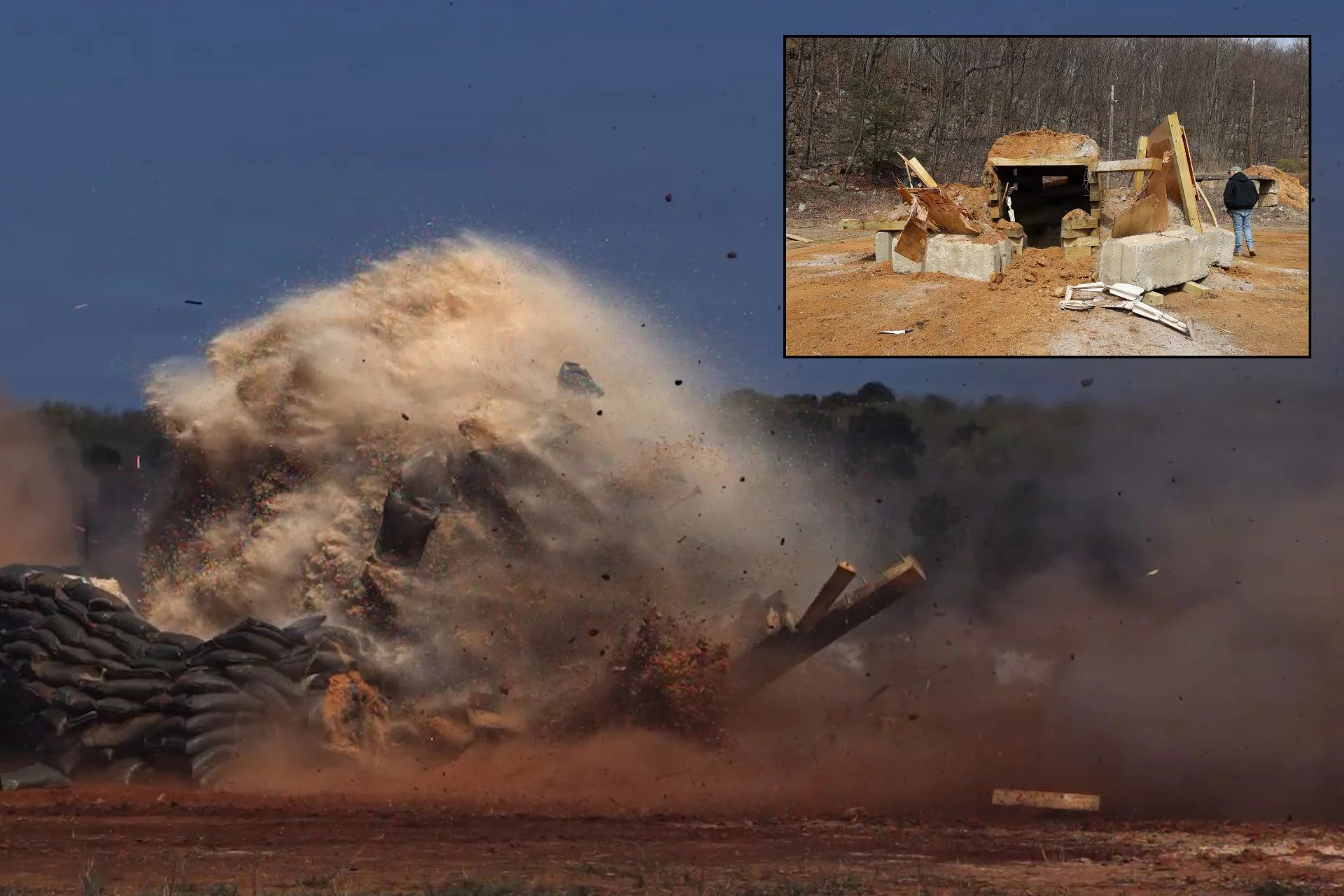
On March 26, 2026, at the Redstone Arsenal range in Alabama, an unmanned drone dropped a warhead onto an improvised bunker and detonated it from the inside. From first sketch to detonation, approximately two weeks elapsed. The development was named BRAKER — Bunker Rupture and Kinetic Explosive Round.
What it is and how it works
BRAKER is a lightweight warhead for single-use loitering munitions. The principle of operation: penetration through a protective layer — soil or reinforced structure — followed by detonation inside the target. This algorithm is what distinguishes it from conventional fragmentation-blast munitions, which detonate on the surface.
The development was led by engineers from the DEVCOM Armaments Center (Picatinny Arsenal, New Jersey). They used additive manufacturing — 3D printing — for designing, manufacturing the casing, and integrating the warhead onto a low-cost single-use loitering drone. About a dozen warheads were assembled; one was initially tested on a temporary bunker at the local Picatinny firing range, and the prototypes were then transported to Redstone Arsenal for a demonstration to army leadership.
For standardized integration of warheads with various drones, developers created a unified interface — Picatinny Common Lethality Integration Kit (CLIK) and a small universal payload interface (sUPI). According to Colonel Vincent Morris, the project lead, the CLIK/sUPI architecture will allow industry to scale this advantage.
«BRAKER demonstrates our ability to rapidly develop and safely deliver lethal effects from small unmanned aircraft systems».
Colonel Vincent Morris, program lead
Why development speed is separate news
According to Stars and Stripes, the BRAKER program reflects a priority of the U.S. Army — to replicate capabilities that have proven effective in Ukrainian forces' struggle against Russia. Army Secretary Dan Driscoll, whom President Trump dubbed the «drone guy», told lawmakers that the service is using lessons from the Russian-Ukrainian war: Ukrainian military forces have «fundamentally changed the approach to conducting combat operations».
The context is direct: as one American analyst noted, the innovation cycle on the Ukrainian front occurs within hours — trigger mechanisms for drone warheads are 3D-printed at night for tomorrow's targets. This same cycle in the U.S. traditionally took years due to procurement procedures and approvals.
Tactical context
The problem of fortified positions — trenches with coverings, concrete command posts, underground bunkers — remains one of the key issues in positional warfare. Drone warheads like BRAKER give infantry units the ability to strike protected targets without air support and without expending expensive large munitions.
- Mass and carrier: lightweight warhead on a single-use loitering drone — without special aircraft carriers
- Production: casing is 3D-printed; cycle from concept to prototype — weeks
- Scaling: unified CLIK interface allows integration of the warhead on various platforms without modification
- Adoption timeline: the U.S. Army has not yet announced
BRAKER has not yet been adopted: the army has not announced when exactly the system can reach units. A demonstration to leadership is a step before a decision on serial production, but not the decision itself.
If the U.S. Army does scale BRAKER through the CLIK interface and transfers the technology to allies — the question remains open: will units currently facing multi-layered Russian fortifications receive this tool before the front line becomes mobile again?



