Zeus for $50,000: American Rocket With No Combat Experience Goes to Ukrainian Quadcopters
The Aeon startup has announced a partnership with a Ukrainian drone manufacturer to integrate the Zeus missile onto quadcopter platforms. The system has not yet undergone combat testing — and this is precisely what determines the real value of the announcement.

By Tetiana Suchkova-Ladik
April 10, 2026 · 2 min read
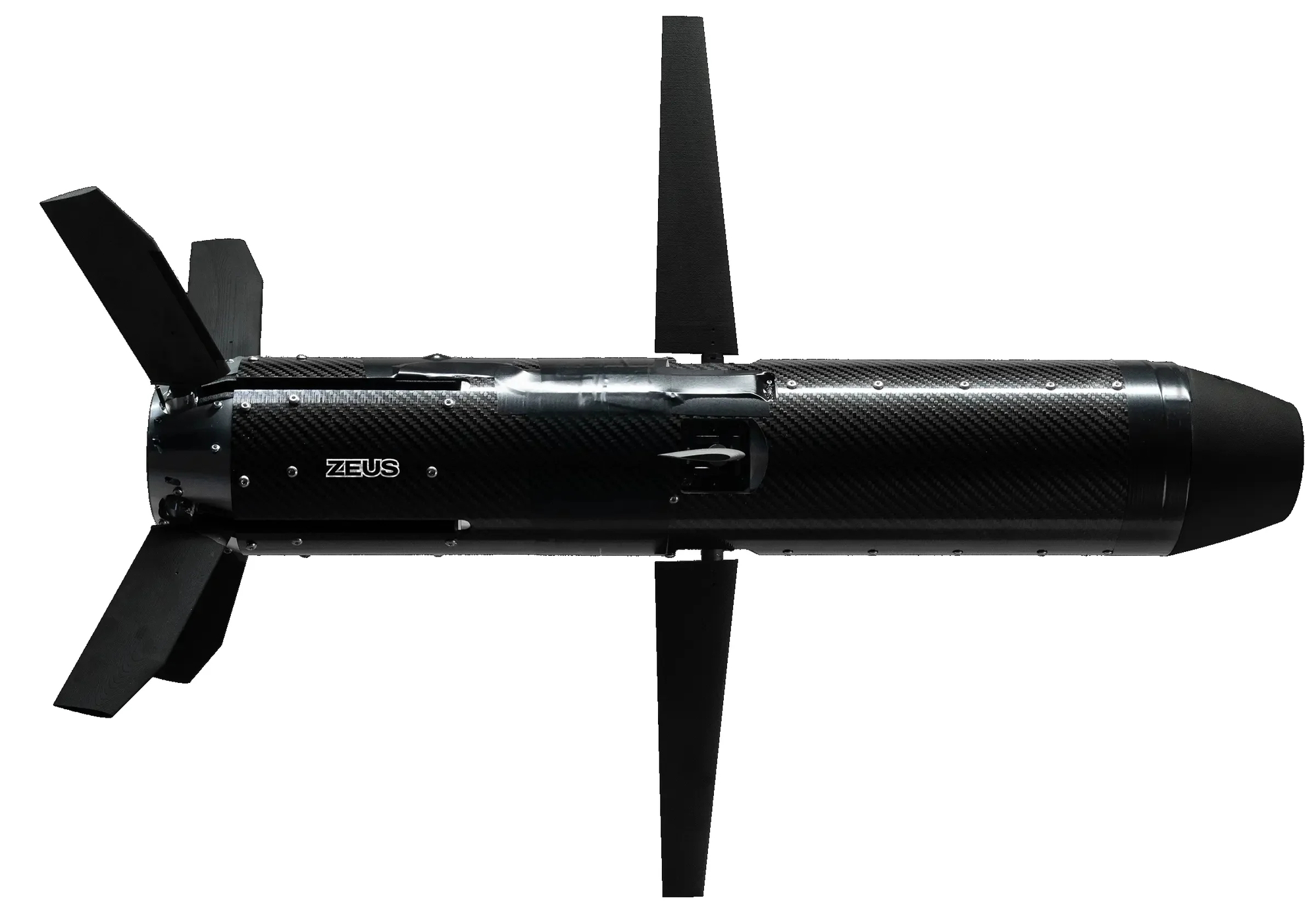
On April 9, 2026, Austin-based startup Aeon officially presented the guided tactical rocket system Zeus and simultaneously confirmed a partnership with a Ukrainian drone manufacturer. The goal is to adapt the missile for launch from small quadcopter platforms. The company did not disclose the name of the Ukrainian partner.
What is Zeus and how it differs from Javelin
In terms of dimensions, Zeus is close to the disposable AT4 grenade launcher: 9 kg, 76 cm in length. The price of one missile is around $50,000, which is more than twice cheaper than the Javelin FGM-148, the average procurement cost of which, according to CSIS, is $107,500. Aeon claims savings of over 90%.
The system is software-defined: guidance is implemented through its own ODIN platform with automatic target recognition. Warheads and sensors are changed without tools — directly in the field. The missile is compatible with ATAK (Android Tactical Assault Kit), which allows remote target designation and integration into networked combat management systems.
The company webAI concluded an agreement with Aeon for an additional level of artificial intelligence: target recognition models are transferred to the missiles before the mission and updated afterward — through a secure mesh network between units.
"Zeus is the first serious progress in tactical weapons systems in a decade. It is built from the ground up for precision, adaptability, and advantage"
Navid Tahmas, CEO of Aeon
Manufacturing model and financing
Aeon uses a vertically integrated model: solid fuel, igniters, safety devices, control systems — in-house production. Structurally, carbon tubes and additive manufacturing are widely used, which allows attracting civilian suppliers instead of specialized defense factories. The target volume is over 10,000 missiles per year. The company has raised $18.6 million in venture capital from Quiet Capital, Silent Ventures, and 1789 Capital, and also cooperates with the U.S. Army Applications Laboratory on a modular warhead and electronic safety device.
Integration with Ukrainian drones: what is known for certain
The partnership was confirmed personally by CEO Tahmas. The task is to enable Zeus launch from quadcopter platforms, which increases the strike range relative to a foot soldier. The specific range, type of seeker, and armor penetration characteristics in Aeon's public materials have not been disclosed. Army Recognition notes: Zeus should not be described as a direct replacement for Javelin until this data is verified.
- A test launch took place on March 21, 2026 at a ranch in East Texas
- Shoulder-fired launch confirmed; integration with a quadcopter is in the adaptation stage
- The system has not yet seen combat application
- The Ukrainian partner has not been named publicly
The logic of the partnership is clear: Ukrainian operators already use quadcopters on a large scale for dropping ammunition, but precise guidance remains limited. A guided missile on a drone theoretically closes this gap — if it meets the weight and ballistic requirements of the specific platform.
If Aeon discloses verified data on range and armor penetration by the end of 2026, the partnership with the Ukrainian manufacturer could move from announcement to actual contract — and then the comparison with Javelin would become substantive rather than marketing.