"Left in 2015, returned in 2016, died in Kharkiv region in 2026: Bucha says goodbye to Oleksandr Novitskyi"
Oleksandr Novytskyi defended Ukraine in the ATO zone in Luhansk region long before Bucha became a symbol. Nine years after returning from the front, he died during evacuation to a hospital.
By Oleg Bazylewicz
April 8, 2026 · 2 min read
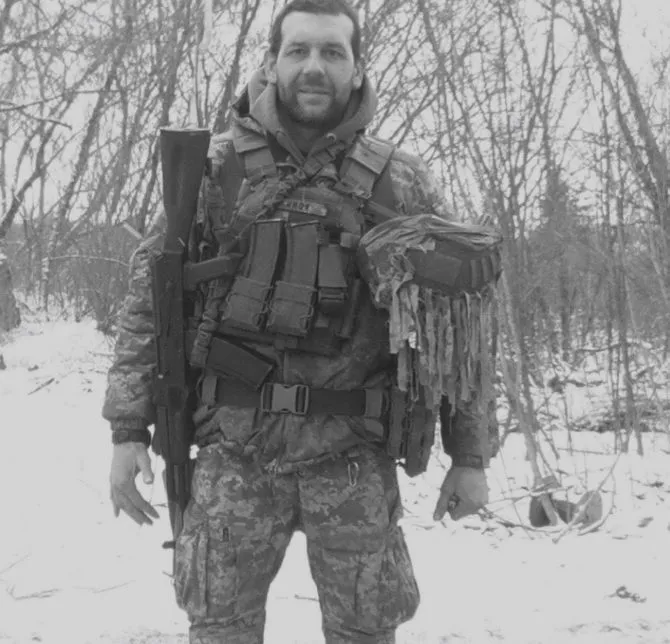
On March 31, 2026, Oleksandr Novitskyi died during evacuation to a hospital in Kharkiv region. He was 49 years old. Today, the Bucha community is saying farewell to a man who stood up to defend Ukraine at a time when most people were not even speaking the word "front."
2015. Luhansk region. ATO
Oleksandr went to war in 2015 — during the first, most difficult rotation cycle in the east, when volunteers and conscripts were thrown in to plug holes in Luhansk region. By the end of 2016, he returned home to Bucha and returned to ordinary life: work at a factory, family.
The fact that he managed to return at all is already a statistical rarity for those who fought in the ATO zone in 2015–2016 on the Luhansk direction.
Bucha after Bucha
The city where he lived and worked became known to the entire world a few years after his demobilization for the worst of reasons. Oleksandr Novitskyi is one of those Buchans whose defensive contribution preceded the occupation but remained overshadowed by more prominent events.
Oleksandr is remembered as a kind and sincere person. He worked at a factory in Bucha. The defender is survived by his wife Svitlana, his father, and his brother, who is now also defending Ukraine.
Bucha City Council
Death during evacuation
The circumstances of his death — a sharp deterioration in health while in Kharkiv region and death during evacuation to a hospital — point to a situation faced by dozens of veterans: health undermined on the front manifests itself years later, often without timely medical care nearby.
His brother is now on the front. His wife Svitlana and father lost two sons at the same time — one was buried, the other is fighting.
Number by number
- 2015 — the year he went to the front
- 2016 — return to Bucha
- 49 years — his age at the time of death
- 9 years — between demobilization and death
If Oleksandr's health deteriorated as a result of service in the ATO zone — and this is a typical picture for veterans of that generation — then his death raises a specific question: are ATO veterans who formally "returned alive" in 2015–2016 receiving systematic medical support today, or does the state consider its task completed at the moment of demobilization?