"600 drones and 90 missiles in one night: Kyiv counts 91 casualties from the largest attack of the invasion"
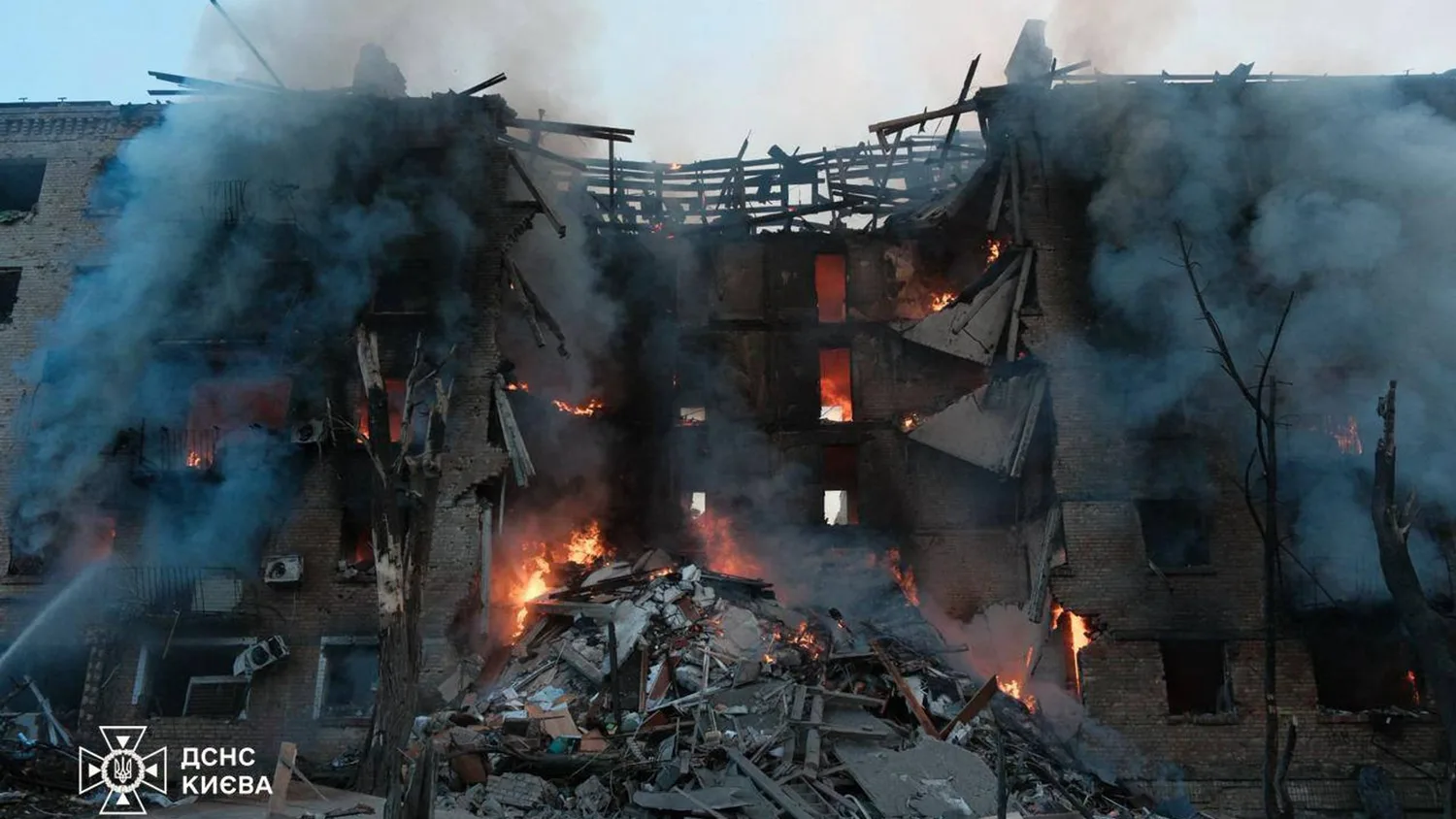
A strike on the night of May 24 damaged over 300 facilities in the capital — a record in terms of destruction scale since the start of the full-scale invasion. Two people killed, 91 injured, with the most severe situation in the Darnytskyi district, where debris is still being cleared.

By Tetiana Suchkova-Ladik
May 25, 2026 · 2 min read
On the night of May 24, Russia launched a combined attack on Kyiv and Ukraine: 600 drones of various types and 90 missiles from air, sea, and ground-based systems, according to the Ukrainian Air Force. The capital was the main target.
Scale: Larger Than Ever
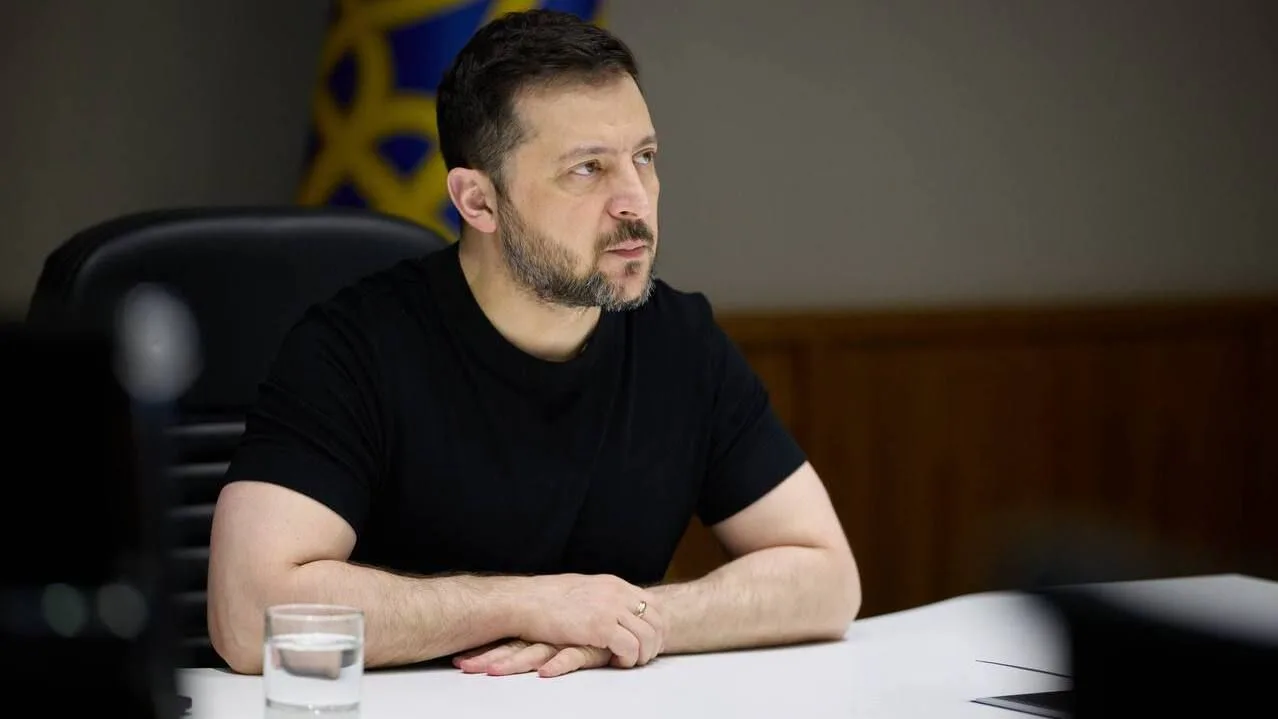
According to Kyiv City Military Administration head Timur Tkachenko, the attack became the largest in terms of damaged locations since the beginning of the full-scale invasion. Zelenskyy clarified that approximately 300 objects were affected. Among them were the government building, the Ministry of Foreign Affairs, the "Chornobyl" museum, and the National Art Museum. Residential buildings suffered the most damage.
"This is the first time the Russian army has resorted to systematic strikes on historical architecture and memorial sites. Podil suffered the most damage in years of war."
— Timur Tkachenko, head of KMVA
Casualties and Rescue Operations
The number of injured rose to 91 people by Monday as people continued seeking medical assistance. Two Kyiv residents were killed. Among the hospitalized are children, with three adults in critical condition.
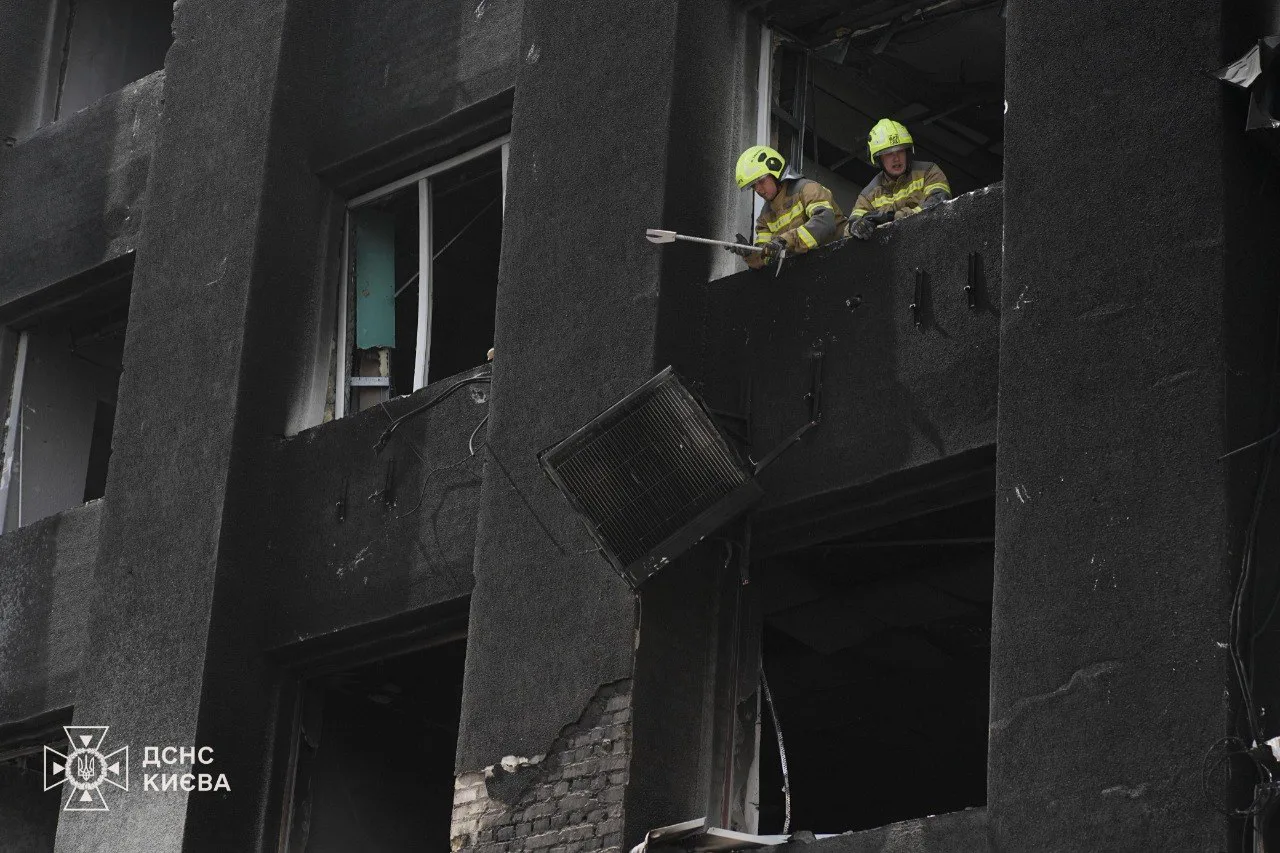
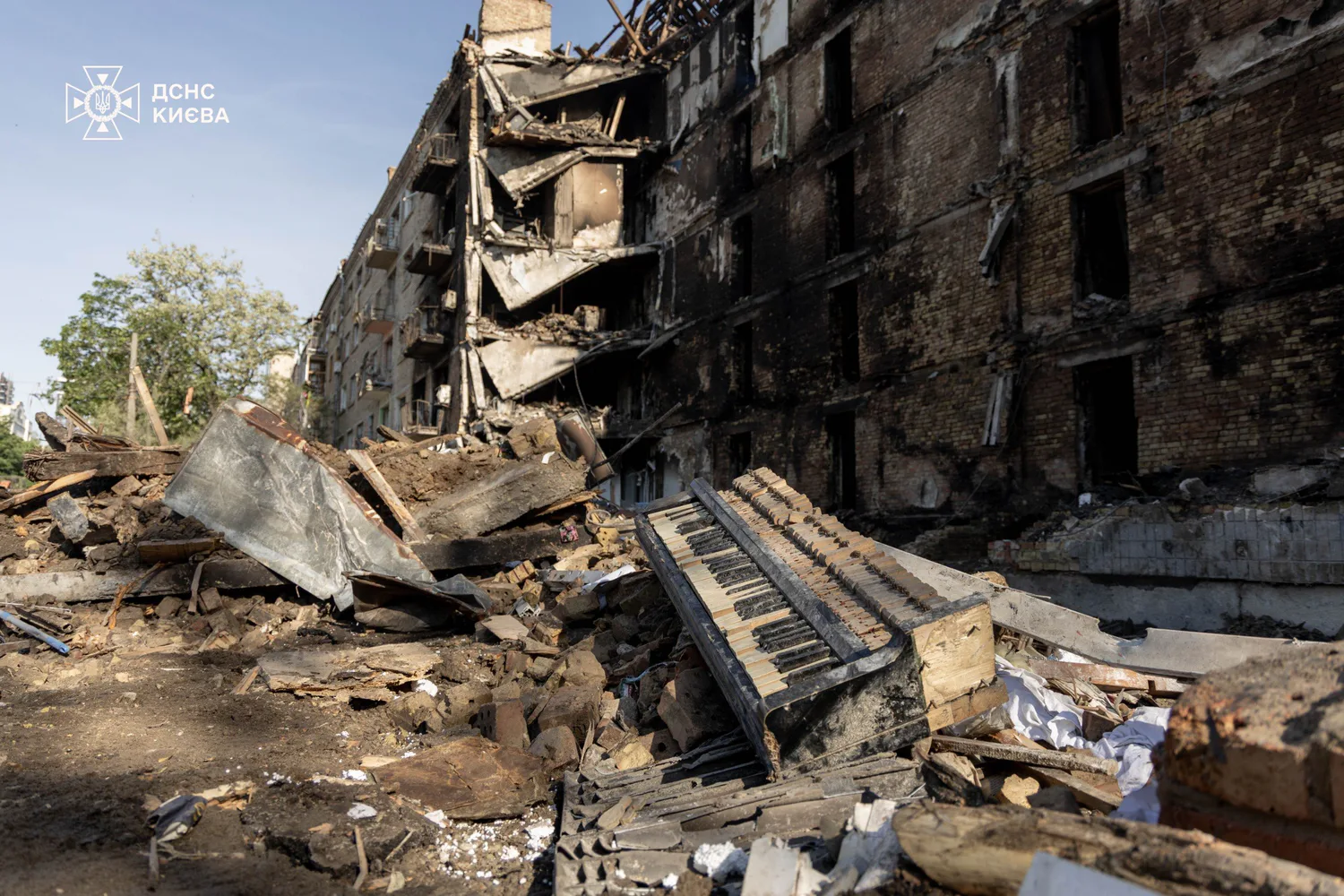
The situation is most critical in the Darnytskyi district, where missile and drone shrapnel hit a multi-story residential building, causing structural collapse. Emergency services rescued at least 10 people from the rubble, with search and rescue operations continuing Monday. Eighteen apartments were destroyed, and the left bank experienced water supply disruptions.
- Shevchenkivskyi and Podilskyi districts — emergency response involving nearly 100 emergency services personnel
- Holosiivskyi district — fire at Shevchenko National University dormitory due to gas pipe depressurization and partial structural damage
- Obolonsky, Solomyansky, Svyatoshinsky, Desnyansky — damage to residential and non-residential buildings, fires, damaged vehicles
Separately, a ballistic Oreshnik missile struck Bila Tserkva in Kyiv region. Kyiv Regional Military Administration head Mykola Kalashnik called this strike one of the most intense combined attacks on the region in recent times.
Context: Third Night in a Row
The May 24 attack was not isolated. On May 23, Russia struck the capital in the morning (no casualties), and again on the night of May 25: damage was recorded in Holosiivskyi, Dniprovskyi, and Shevchenkivskyi districts. Three attacks in three days — a density not seen before.
Tkachenko noted that the city will seek additional resources to aid victims. Among them is a family that left Donbas in 2014 and relocated to Kyiv region. Now they are homeless for the second time.
If this pace of attacks continues through the end of May, the question is no longer how many missiles air defense destroys — but whether Kyiv has the resources to recover between strikes.