Entrance Collapse: Floors One Through Five - Shevchenko District Completes Debris Removal After Kyiv's Largest Strike in a Year
Emergency rescuers unblocked the bodies of two deceased women and dismantled 165 square meters of reinforced concrete. The total toll from the attack on the capital stands at 92 wounded, with damage recorded at 49 locations.

By Tetiana Suchkova-Ladik
May 25, 2026 · 2 min read
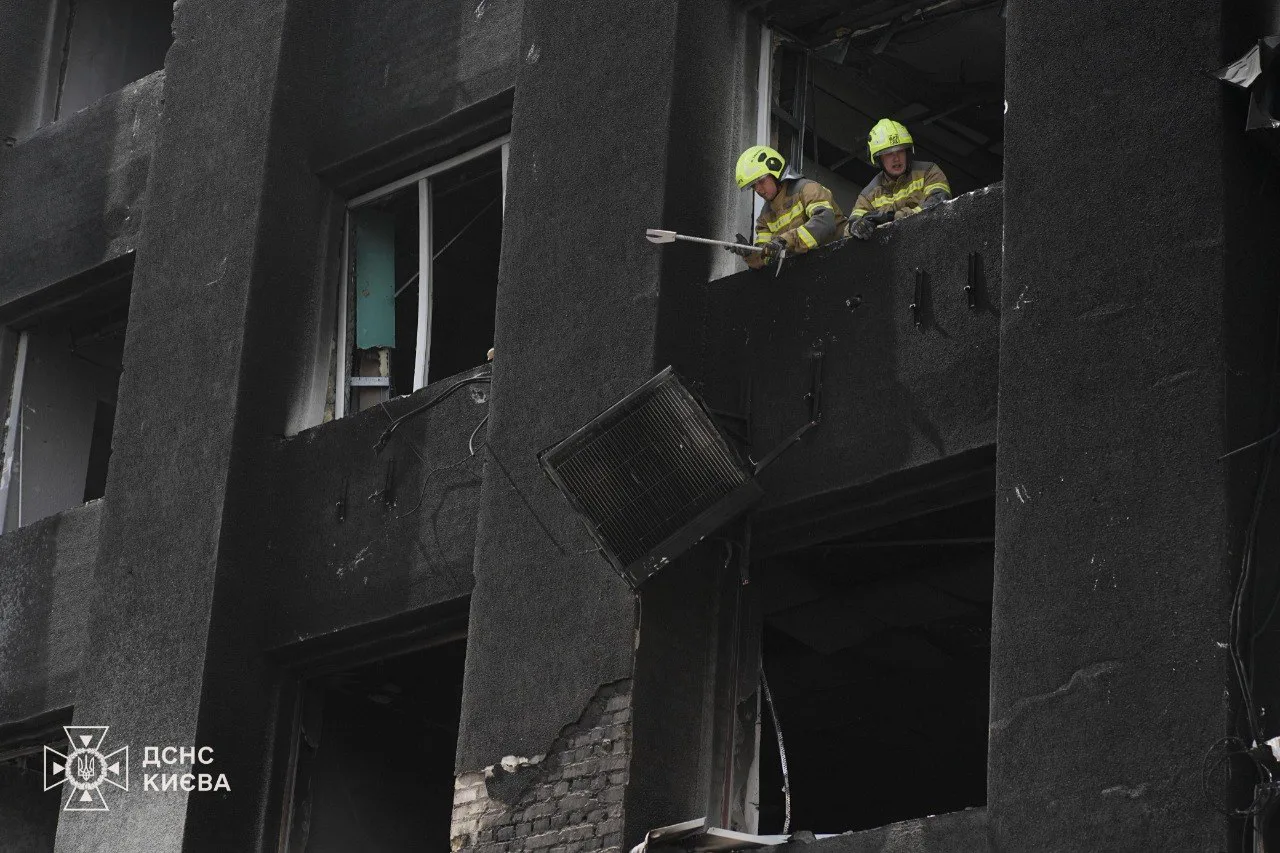
On the night of May 24, Russia delivered one of the largest strikes on Kyiv since the full-scale war began — according to the Air Force, approximately 700 air targets were used: over 50 missiles and up to 600 strike drones of the Shahed type and their modifications. Damage was recorded in all districts of the city at 49 separate locations.
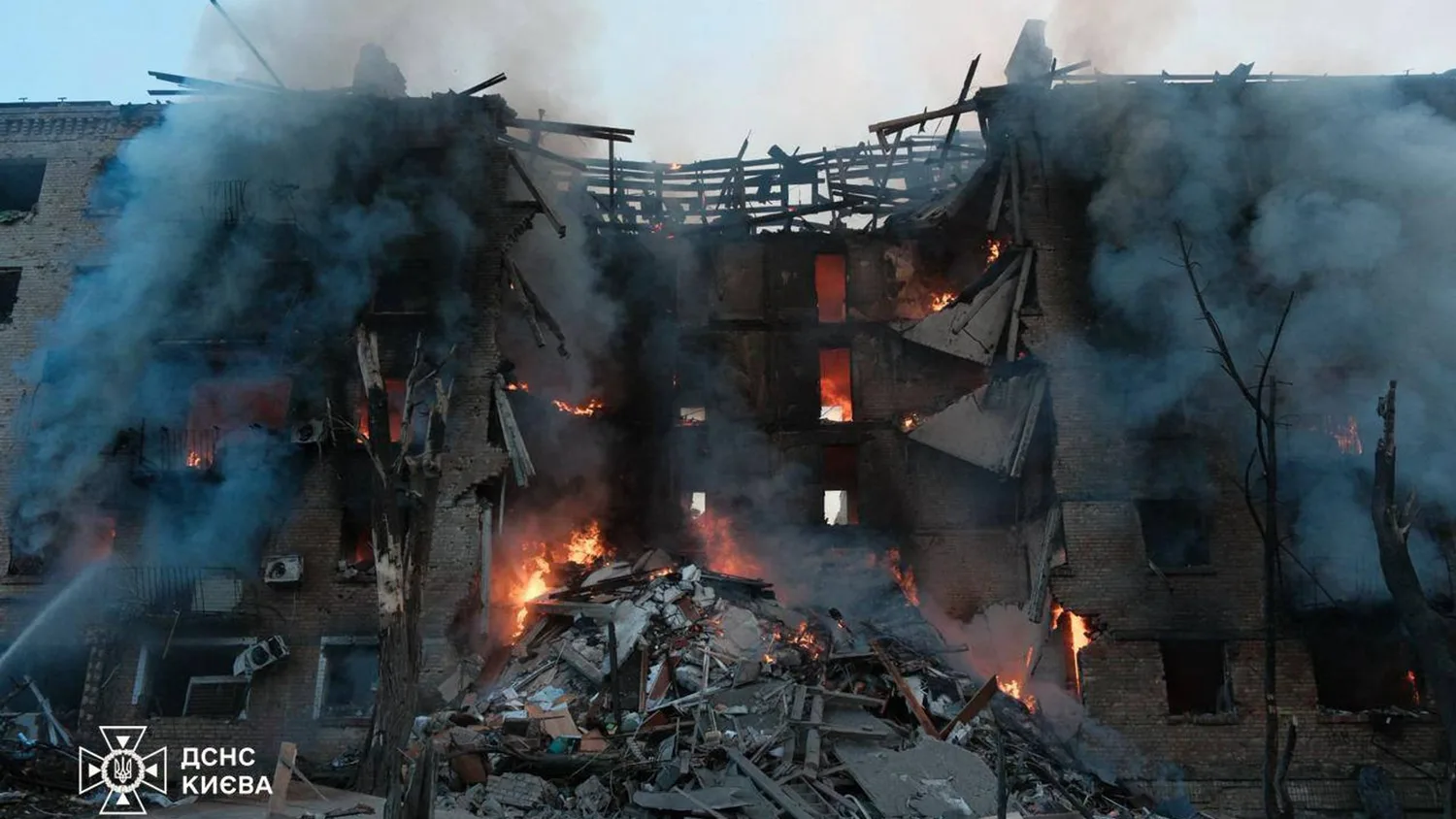
Five-story building in Lukyanivka: what happened
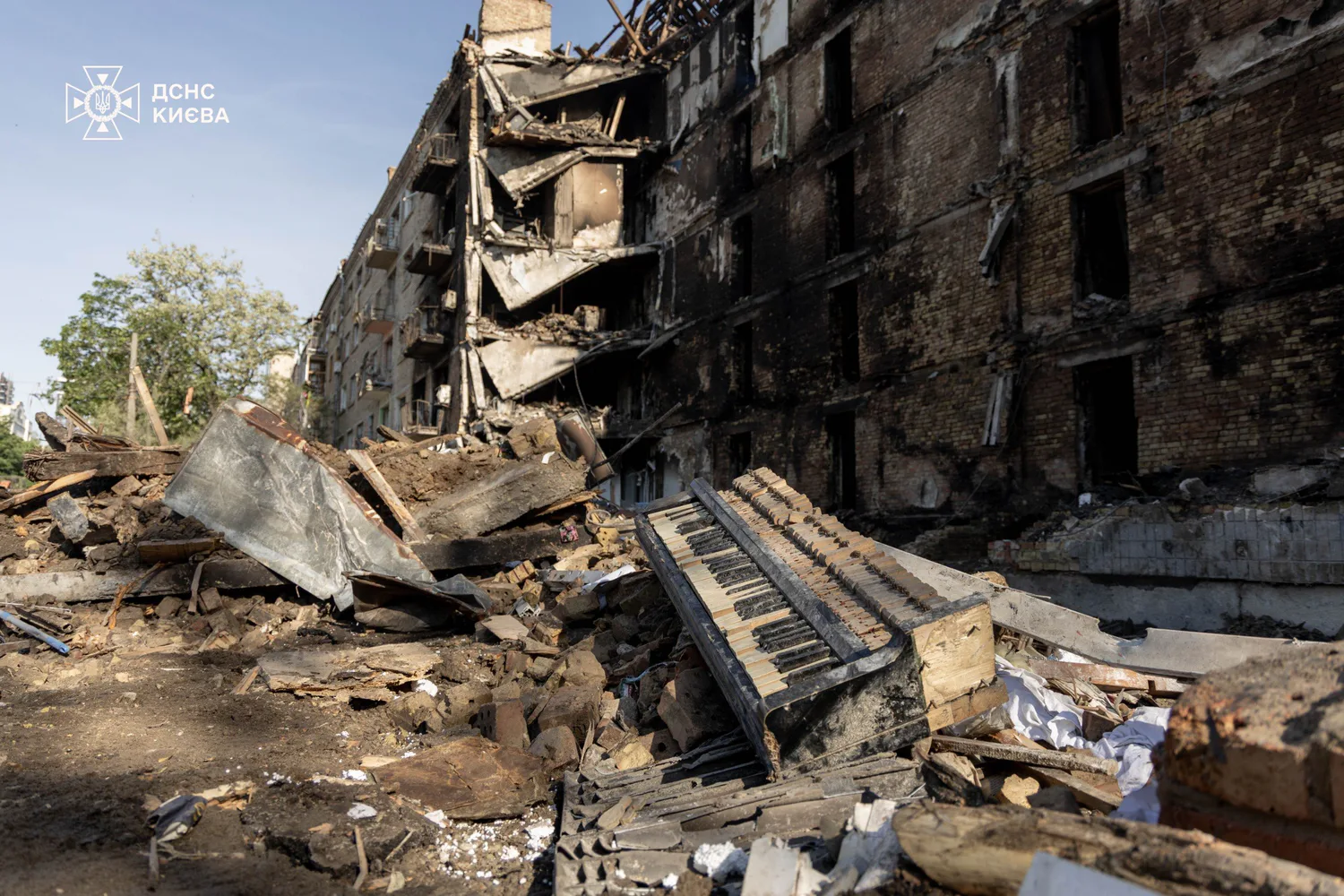
The Shevchenkivsky district sustained the heaviest blow. A missile hit a residential five-story building and completely destroyed the entrance from the first to the fifth floor. According to the State Emergency Service (DSES), rescue workers retrieved the bodies of two deceased women from under the rubble, utilizing canine units and specialized equipment.
Over 165 square meters of damaged reinforced concrete structures were dismantled. Canine teams inspected over 100 square meters of territory.
State Emergency Service of Ukraine
Nearby, according to rescue workers, a direct missile hit destroyed one of the DSES units of Kyiv region — part of the personnel continued to coordinate operations and receive calls after the strike.
Scale in numbers
- 92 injured in Kyiv, including children
- 2 killed — both women found under the rubble of the five-story building
- ~300 objects damaged throughout the city, of which approximately 150 are residential buildings
- 100 DSES rescuers engaged only in Shevchenkivsky and Podil districts
- 112 people received psychological assistance from DSES psychologists
Head of the Kyiv City Military Administration Timur Tkachenko called the attack record-breaking in the number of affected locations throughout the full-scale war. Mayor Vitaliy Klitschko confirmed that 30 injured were hospitalized, with medical institutions in the capital operating normally.
Broader context of the strike
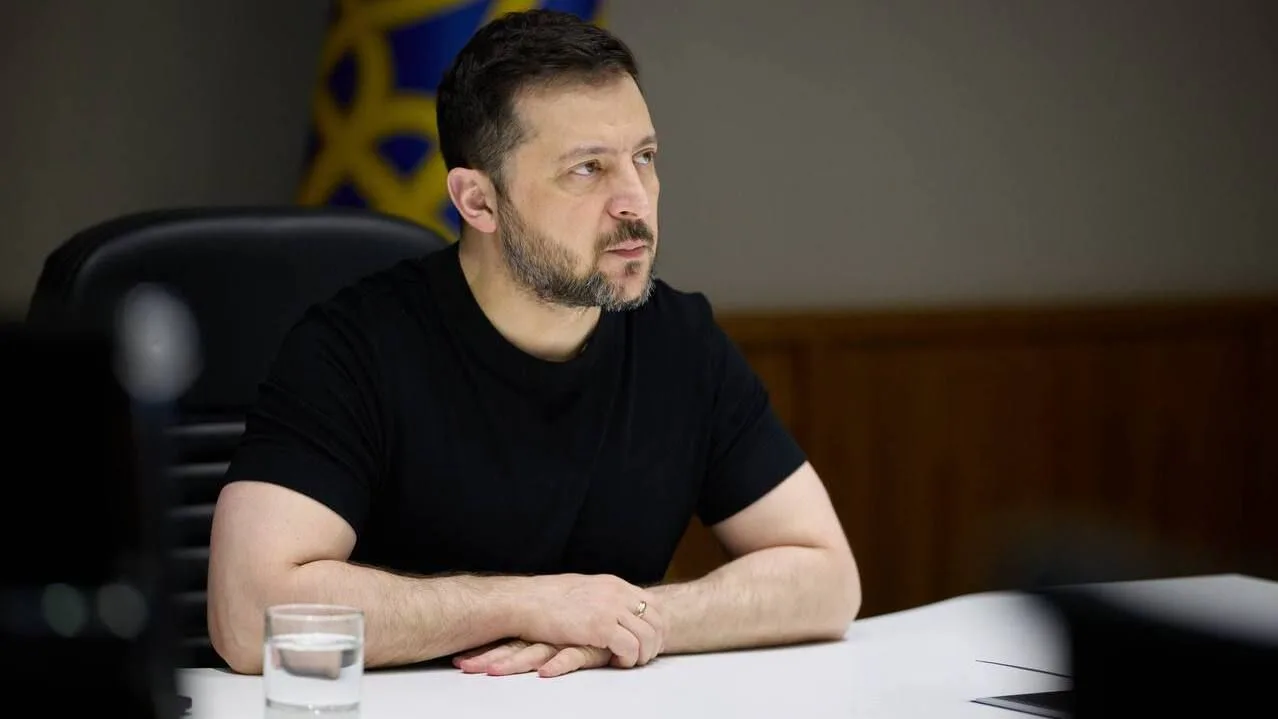
In addition to Kyiv, Russia used the Oreshnik ballistic missile on Bila Tserkva — confirmed by President Zelensky, this is the third recorded case of use of this weapon throughout the war. In Shevchenkivsky district, a school was also affected (fire covering 300 sq. m), a business center, a market, and a building of the museum of the Main DSES Directorate.
The overall toll for Kyiv region — two more killed and nine wounded outside the capital. Air defense intercepted 604 targets out of nearly 700 launched: 55 missiles and 549 drones, but even this proved insufficient to prevent destruction in every district of the city simultaneously.
Emergency work in Shevchenkivsky district has been completed. If Russia once again uses a combined strike of such density — over 600 targets simultaneously — the question is no longer whether air defense can withstand it, but how many interceptors will remain for the next wave.