72% without queue: how Ukrposhta competes with Nova Poshta's 30,000 parcel lockers from within its own branches
Ukrposhta is expanding its network of self-service lockers to 600 units after a pilot program at 121 Kyiv branches demonstrated that seven out of ten customers collected parcels without operator assistance. However, the key question remains whether this is sufficient to compete with street-based parcel lockers.

By Tetiana Suchkova-Ladik
June 10, 2026 · 2 min read
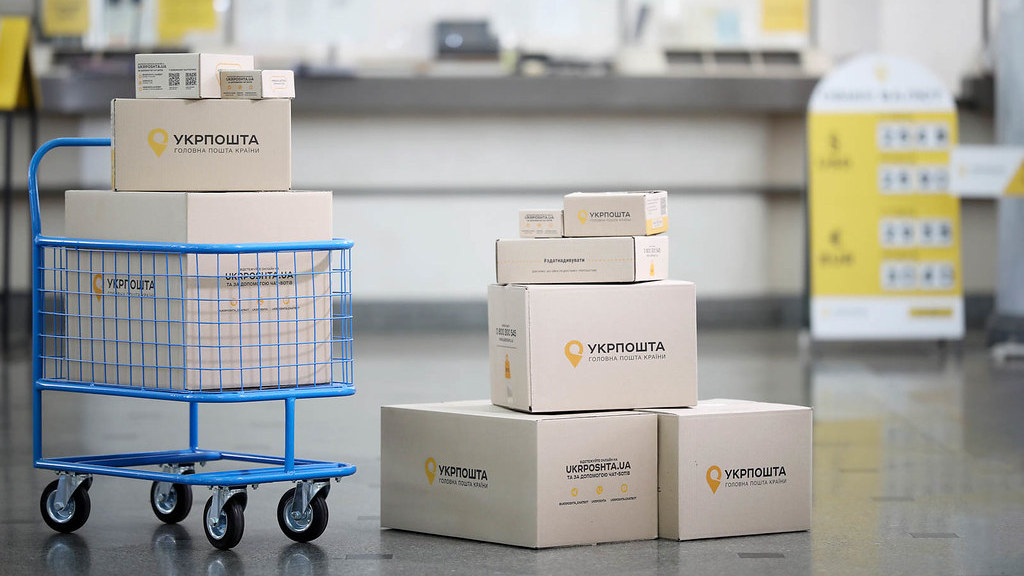
In May, Ukrposhta launched a pilot program in 121 branches in Kyiv and the Kyiv region: quick-delivery lockers appeared inside where packages could be picked up using an SMS code without waiting in line for an operator. Nearly 72% of packages in these branches were collected by customers this way. Based on this, the company increased its plan from 400 to 600 lockers and announced expansion to million-person cities and regional centers.
How it works
Ukrposhta automatically directs some shipments to the quick-delivery format. When a package arrives at a branch, the customer receives an SMS with a unique code, comes in, and opens their section independently — no operator needed. The main stated goal is to separate flows: currently, queues at branches form because people paying utilities and sending mail stand next to those simply picking up a package.
«Unlike classic parcel lockers, these compartments operate directly in branches and are available during their working hours»
Ukrposhta press service
Branches vs. street: the difference in approaches
This format is not the same as a parcel locker. And this is where the non-trivial point lies. Novaya Pochta had over 30,600 parcel lockers as of mid-October 2025 throughout the country, operating around the clock and independently of branch schedules. According to the company, the number of shipments through parcel lockers increased from 9.5 million to 46 million over three years.
Ukrposhta chose a different path: instead of building a parallel street network, it made self-service part of existing branches. This is cheaper to deploy and doesn't require separate logistics, but ties the customer to postal operating hours — and to actually going there.
What stands behind the 72% figure
The figure looks convincing, but has context. The pilot launched in Kyiv and suburbs — the most mobile and technologically ready audience. How customers in regional centers with different demographics and smaller flows will behave is a separate question that only scaling will answer. Additionally, the company automatically directs part of packages to the locker format — meaning the percentage is partly determined not by customer choice, but by Ukrposhta's algorithm.
- 600 lockers — new plan instead of the initial 400
- Priority — cities with the largest customer flow
- Lockers operate only during branch working hours
- Customers don't always choose this format themselves — the system directs automatically
In parallel, Ukrposhta is also developing street parcel lockers: according to data, the company planned to install 100 such points by the end of 2025 — compared to 30,600 at Novaya Pochta.
If 72% self-service is maintained after expanding beyond Kyiv, the model will justify itself as a way to relieve operators. If not, it will turn out that the capital pilot measured not customer behavior, but sample quality.