25 Years of Waiting: How Milan Transformed from Europe's Outsider into a Leader Through Banks and Chips
While the rest of Europe's major stock exchanges had been updating records years earlier, the FTSE MIB remained stuck in the shadow of the dot-com boom. On May 25, 2026, it finally broke free — not thanks to tourism or fashion, but due to banking consolidation and global enthusiasm surrounding artificial intelligence.

By Tetiana Suchkova-Ladik
May 25, 2026 · 2 min read
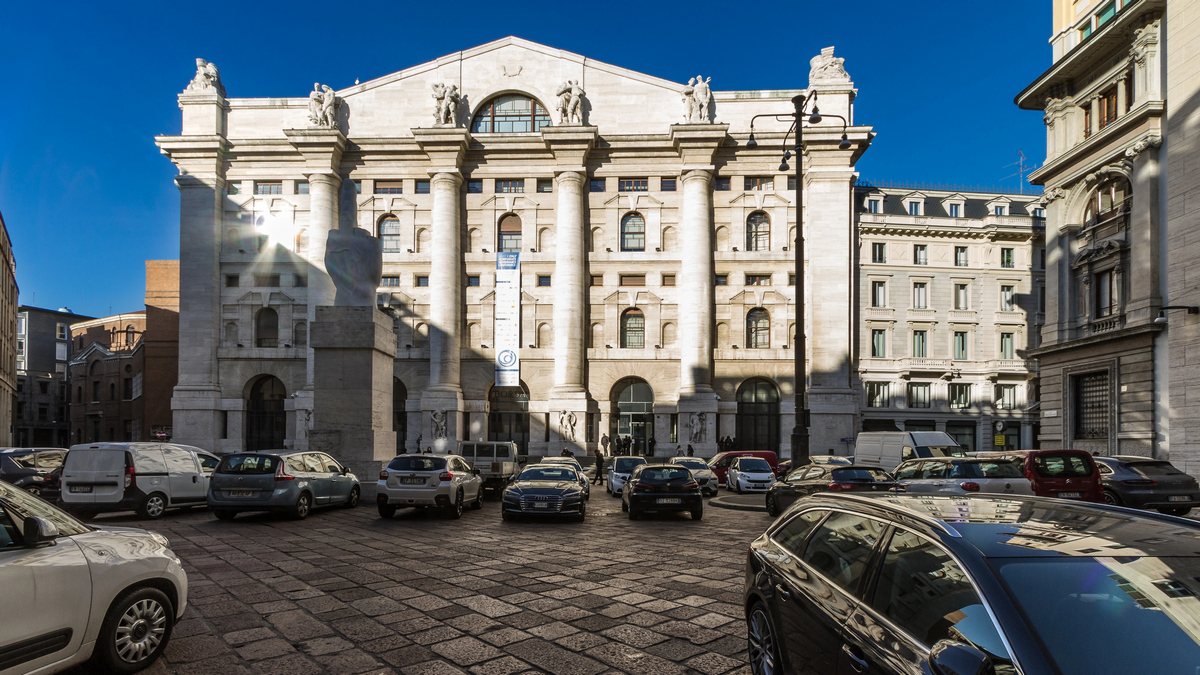
If you're looking for a symbol of how slowly Italy recovered after the financial crises of the 2000s and 2010s, here it is: while DAX and Euro Stoxx 50 were rewriting records, FTSE MIB stood below the dot-com boom levels for years. On May 25, 2026, the index reached 50,121 points — and a twenty-five-year "debt" was finally settled.
Why Now, Not a Year Ago
Banks are the first reason. In 2026, the financial sector became the main driver of FTSE MIB: UniCredit, Intesa Sanpaolo, Banca Monte dei Paschi di Siena, Mediobanca, Banco BPM and BPER Banca — the heaviest components of the index — it was precisely their quotations that dragged it from 45,100 at the beginning of the year to a record. The narrowing of the spread between Italian BTPs and German Bunds — a classic risk barometer for Rome — directly supported financial stocks, whose value is closely linked to government bond dynamics through significant sovereign debt portfolios on banks' balance sheets.
The second reason is chips and photonics. While last year banks were the main drivers of outperformance, this year a global wave of demand for photonics and semiconductors joined the record surge. STMicroelectronics — a Franco-Italian chipmaker with dual listings in Paris and Milan — soared more than 5% following a wave of positive signals from American tech giants about demand for AI semiconductors.
"The market entered 2026 with a combination of political stability in Italy, soft monetary policy from the ECB, and strong profits from the financial sector"
BBN Times
Context: Italy Was the Last
European markets were rewriting records one by one in the post-pandemic era. Euro Stoxx 50 and DAX did so this year, Spain's Ibex 35 back in October 2025. Italy remained the only major European market that had not yet returned to its record. For four consecutive years of growth, stocks rose by only 11% from the beginning of 2026 — and now the burden of being "the class's worst student" has officially been lifted.
What the Numbers Tell Us
- STMicroelectronics and Prysmian — the brightest representatives of the AI theme in the index
- Leonardo — a defense concern that soared at the beginning of the year amid European rearmament
- MPS and Mediobanca — banks that not long ago were associated with crisis, now growth leaders
- BTP–Bund spread is narrowing — this reduces the "fear premium" and cheapens capital for the entire economy
A record is not just a psychological mark. Over the last 12 months, FTSE MIB showed approximately 14.65% profitability, and over the year — more than 28%, becoming one of Europe's best-performing major indices. This is no longer a rebound, but a structural revaluation.
The question is whether this structure will hold if the ECB stops its easing cycle earlier than expected: that's when it will become clear whether the rally in banks is fundamental — or just another reflection of cheap money.