Russian man who hid in France using forged documents of Ukrainian refugee faces trial for theft of half a billion euros
Former owner of Lithuania's Snoras bank Vladimir Antonov spent 14 years on the run — through London, Moscow and Brittany. On May 22, he ended up in a Vilnius prison with a sentence in absentia of 10.5 years.

By Tetiana Suchkova-Ladik
May 26, 2026 · 3 min read
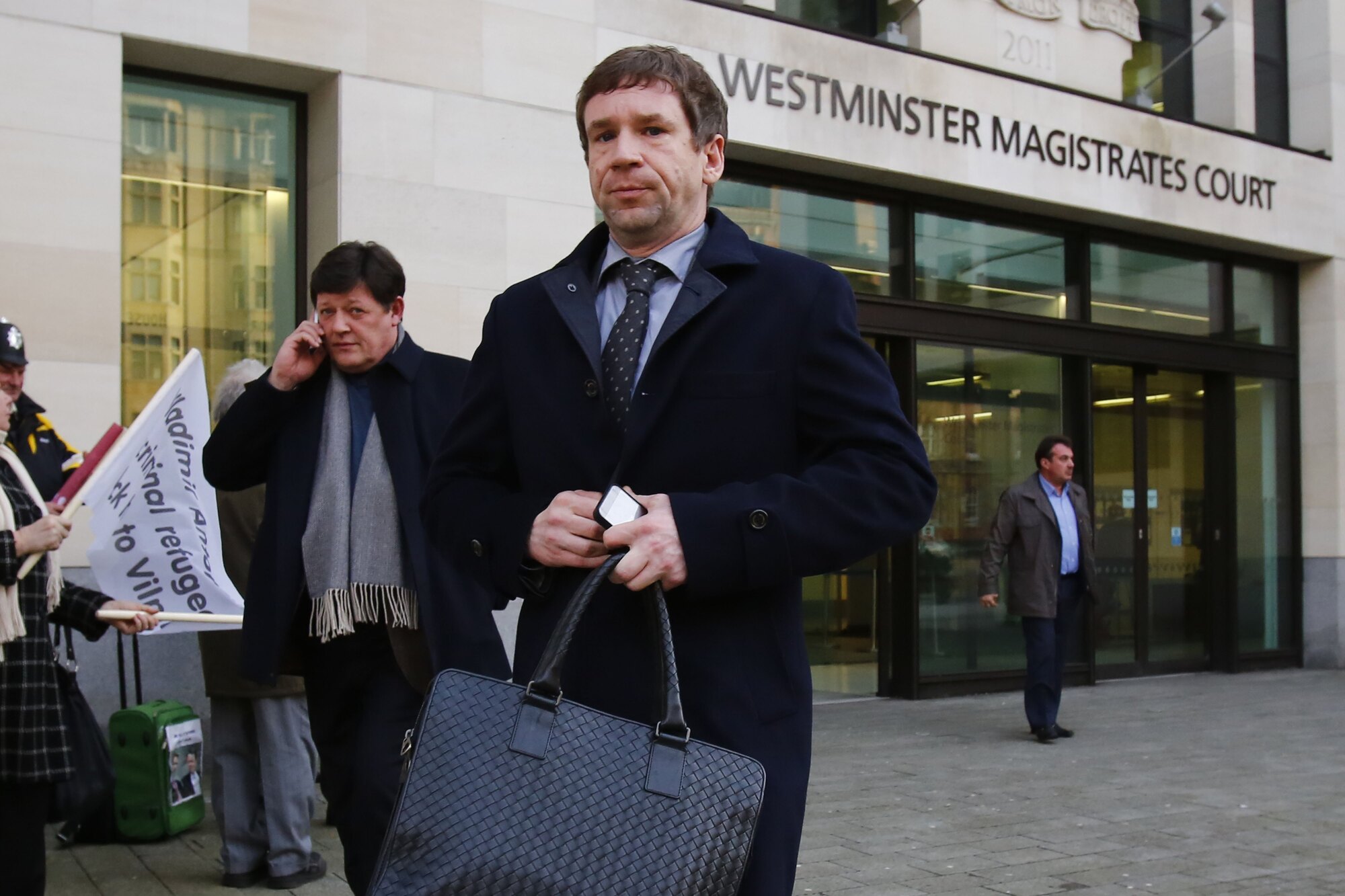
On Friday evening, May 22, a plane landed in Vilnius with a passenger who had been wanted by several countries for over a decade. Vladimir Antonov — former owner of Snoras bank and co-owner of the Latvian Latvijas Krājbanka — exited the aircraft in handcuffs and headed to a detention facility. French law enforcement transferred him to Lithuania after France's Court of Cassation rejected the defense's final appeal on May 13.
The Scheme: 35 Transfers, Offshore Companies and Shell Entities
Lithuanian prosecutors established that between autumn 2008 and summer 2011, 35 large transfers — each ranging from 5 to 74 million euros — were made from Snoras accounts to personal accounts in Swiss banks. A network of offshore structures served as the tool for asset withdrawal, including the company Melfa Group Limited based in Belize with an account at Vienna's Meinl Bank.
According to OCCRP's investigation, in September 2011 — ten weeks before the collapse — Snoras opened a correspondent account at Meinl Bank in Vienna. By September 29, 11 million euros arrived as collateral for a loan of the same amount issued by Meinl to one of Antonov's structures. The transfer was personally initiated by bank co-owner Raimondas Baranauskas and was not reported to the Lithuanian regulator, investigators noted.
In total, according to the verdict of Vilnius District Court, Antonov and Baranauskas embezzled assets worth 509.18 million euros, caused direct damage to the bank and creditors of 466.67 million euros, and misappropriated an additional 14.5 million euros. The court ordered both to compensate 375.18 million euros and confiscate property worth 105 million euros.
Timeline of Flight: London → Moscow → Brittany
When Lithuanian authorities shut down Snoras in November 2011, Antonov and Baranauskas were already in the United Kingdom. At that time, Antonov had just fulfilled a long-held dream — purchasing Portsmouth Football Club.
In London, both were detained under European arrest warrants and released on bail. In 2015, a British court confirmed the possibility of extradition, but both managed to escape to Russia. According to prosecutors, Baranauskas remains there — likely having obtained political asylum.
In 2023, Antonov staged his own disappearance near Moscow and then surfaced in France under the name "Vladimir Ivanov". According to Radio Free Europe/Radio Liberty, he rented a house with an 18-meter swimming pool and a view of the Morbihan Gulf in Brittany and filed an application for refugee status with the French OFPRA office — as a Ukrainian citizen fleeing the war. In his application, "Ivanov" cited hypertension, a destroyed house in Yalta, and fears of mobilization.
"On December 9, he was detained in France, and extradition procedures have now begun under a European arrest warrant,"
Nida Grinskiene, Prosecutor General of Lithuania
The defense attempted to halt the extradition, citing "political persecution" and dangers in Lithuanian prisons. The court in Rennes ruled for transfer on April 3; Antonov appealed the decision — and on May 13, France's Court of Cassation dismissed his appeal.
Parallel Conviction in Latvia
In addition to the Lithuanian proceedings, in 2021 a Latvian court sentenced Antonov in absentia to 6 years in prison and property confiscation — for crimes related to Latvijas Krājbanka, a subsidiary of Snoras. The Latvian prosecutor's office is monitoring the case and will decide how to proceed after the Lithuanian sentence is served.
Who Remains Out of Reach
The verdict against Antonov was issued in absentia — in November 2024, Vilnius District Court sentenced both bank owners to 10.5 years imprisonment on eight counts, including embezzlement, money laundering, fraudulent bankruptcy, and document forgery. Antonov is now in custody. Baranauskas is not: according to Lithuanian prosecutors, he continues to hide in Russia, which refuses legal assistance in this case.
If Russia does not extradite Baranauskas and compensation remains only on paper, the Snoras case will become a precedent not of justice, but of half-justice — and a question of whether one apprehended defendant is enough for 466 million euros to be returned to depositors.