Bucha for €250 and 50 Years Ahead: How Ukraine is Building Memorial Tourism Without a Strategy
# Foreigners Already Visiting Tank Graveyards in Kyiv Region While State Still Formulating Approaches. Key Question — Who and How Will Determine the Line Between Memory and Spectacle.

By Tetiana Suchkova-Ladik
May 25, 2026 · 3 min read
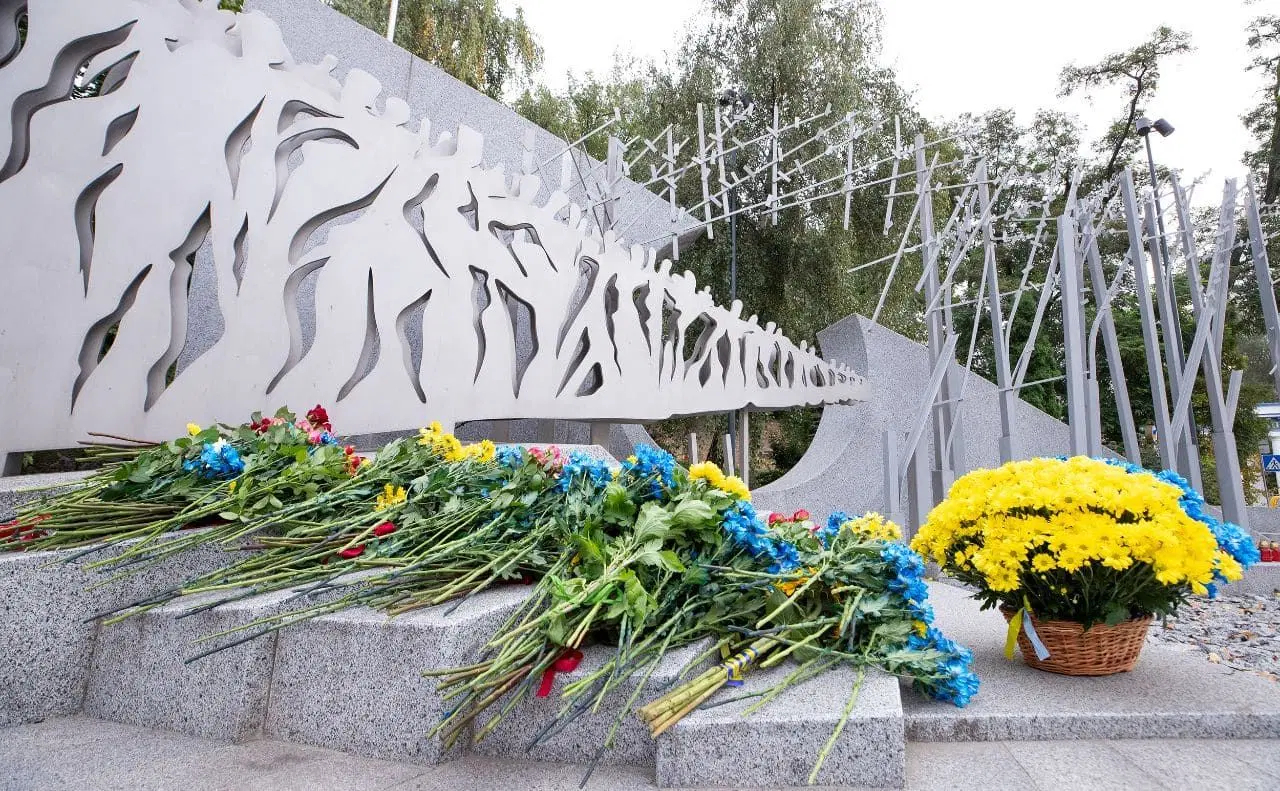
In Bucha, the memorial tablets listing victims of Russian occupation contain over five hundred names. Andrii Halavin, the rector of St. Andrew's Church, does not work with any tourist companies, but has no intention of turning people away: "If a person spends money and time to come to Ukraine, they are looking for answers". This is roughly how memorial tourism is developing in Ukraine so far — spontaneously and without coordination.
What exists now: routes without a map
The State Agency for Tourism Development (DART) confirmed to LIGA.net: memorial routes are being implemented primarily at the local level — by communities, museums, volunteers, and guides. There is no centralized strategy. The agency emphasizes that de-occupied and war-affected territories should not be viewed as "ordinary tourist destinations" — this is about memorialization, honoring the fallen, and documenting aggression, not entertainment.
Demand, however, already exists. Foreign companies organize trips to Bucha and Irpin — a one-day tour of Kyiv costs around 150 euros, a route to the Kyiv region visiting de-occupied cities costs 250 euros. Groups are small, and information about trips is not publicly advertised. According to organizers, most tourists come not for thrills, but to see the real situation and support the economy.
Infrastructure gap
Irpin and Bucha are being rebuilt, but memorial infrastructure remains in its infancy. Anna Kutsenko, director of the State Enterprise "Ukraine Tourism," speaks of the need for basic things: convenient access roads, parking lots, sanitary facilities, navigation.
"We expect the number of visitors to grow, so we are talking about responsible, civilized tourism. That is why we see the need for a quality architectural competition and the creation of a memorial space designed for the long term — for 50-100 years".
Anna Kutsenko, director of the State Enterprise "Ukraine Tourism"
Alongside infrastructure, the question of safety is also open: parts of de-occupied territories remain dangerous due to mine threats, damaged infrastructure, and risks of renewed attacks.
Why this is not just tourism
Memorial tourism as an industry has proven global models. DART provides examples:
- Auschwitz-Birkenau (Poland) — over 1.7 million visitors annually, integrated into the education system of dozens of countries;
- 9/11 Memorial (New York) — has become one of the most visited museums in the USA;
- Tunnel of Hope in Sarajevo — a monument to the 1990s siege, which became a key point of Bosnian identity;
- Yad Vashem (Jerusalem) — a global center for documenting and educating about the Holocaust.
A common feature of all these places: they were formed years after the tragedy, had a clear concept and state or institutional support. Ukraine is beginning this path still during the active phase of war — without precedent in modern history.
The central ethical dilemma is where the boundary lies between memory and spectacle. Irpin and Bucha are attempting to answer a complex question: how to preserve memory of trauma without turning the city into a museum of pain. This is why the question of architectural and conceptual competitions is not aesthetic, but political.
If memorial space in the Kyiv region is formed before the war fully ends, Ukraine will gain a tool for international dialogue about Russian crimes that no diplomatic statement can provide. If not — this narrative will be formed without it: through volunteer routes, spontaneous Instagram photos, and foreign interpretations.



