"Dynasty" Under Arrest: How Funds from "Energoatom" Were Turned Into Cottages in Kozyn
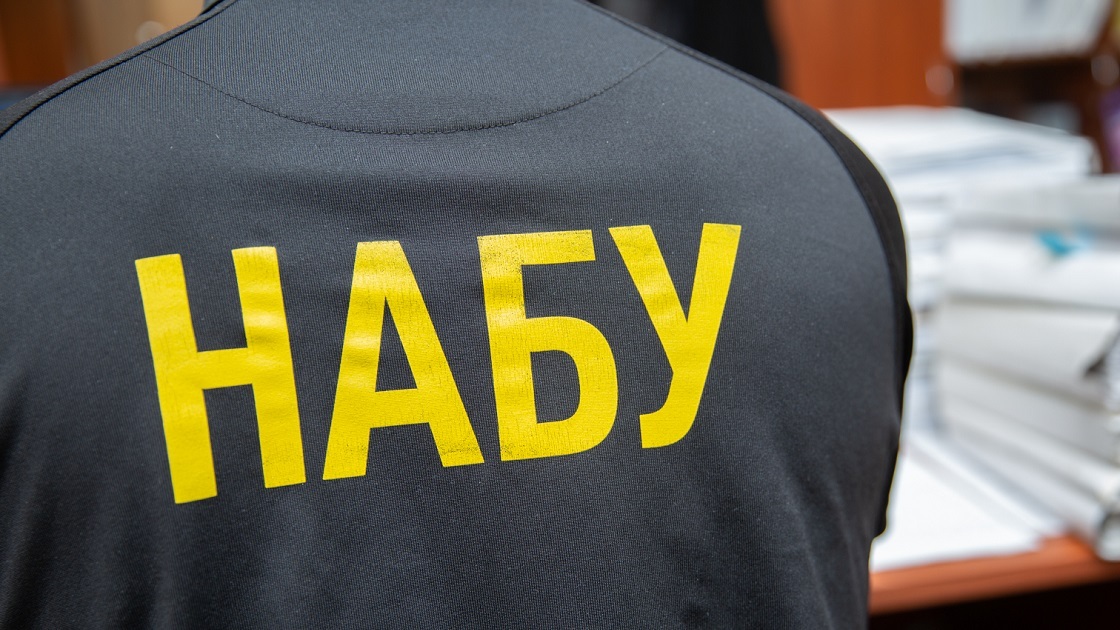
The National Bureau of Investigation (NABU) and the Specialized Anti-Corruption Prosecutor's Office (SAP) announced suspicions against six participants in the "Midas: Dynasty" scheme, including former Vice Prime Minister Chernysho and businessman Mindych. According to the investigation, 460 million hryvnias that were laundered were supposed to materialize as five private residences near Kyiv for the highest-ranking state officials.

By Tetiana Suchkova-Ladik
May 12, 2026 · 3 min read
From "Energoatom" to a Cottage in Kozina: How the Scheme Worked
The National Anti-Corruption Bureau (NABU) and the Specialized Anti-Corruption Prosecutor's Office (SAPO) announced suspicions against six members of an organized group involved in money laundering on a particularly large scale. Among them are former Vice Prime Minister Oleksiy Chernyshov (coded as "Che Guevara" in case materials) and businessman Timur Mindich (codename "Carlson"). The suspicion is under Part 3 of Article 209 of the Criminal Code of Ukraine: laundering of proceeds of crime.
This is already the third stage of announcing suspicions in the case within a single day. The day before, a similar suspicion was brought against former head of the Presidential Office Andriy Yermak — in NABU recordings, he appears as R2. In total, the project has four coded owners of residences: R1, R2, R3, and R4, plus a shared facility R0 with a spa, swimming pool, and gym.
"Andrey has the facades, Chernyshov has everything, between you and Vova there's a fence"
— Timur Mindich, NABU audio recording about the distribution of residences in Kozina
The investigation claims that the funding was based on "black" cash from corruption schemes at state-owned "Energoatom" — kickbacks of 10–15% from company contracts. The money was transferred through Chernyshov's personal assistant and people from Mindich's circle. According to NABU, the total amount of money laundering exceeded 460 million hryvnia (~9 million dollars).
Timeline: From Land Plot to "Laundromat"
- 2018 — Chernyshov became a founder of LLC Bloom Development.
- Summer 2019 — Bloom Development purchased over 4 hectares of land from Kozina village council.
- November 2019 — Chernyshov was appointed head of Kyiv Regional State Administration; he transferred his share to his wife.
- May 2020 — Chernyshov became head of the Ministry of Development of Communities. That same month, the concept of "Dynasty" was born; Mindich joined the project a month later.
- February 2022 — after the start of the full-scale invasion, construction did not stop: Chernyshov demanded round-the-clock work.
- 2024 — participants began seeking ways to legalize funds through the purchase of fake documents; the service fee was 15.5–16.5%.
- July 2025 — after the first suspicions, construction was decided to be suspended.
- November 2025 — NABU launched Operation "Midas" and conducted searches.
- May 2026 — suspicions announced against Yermak and six other scheme participants.
What Has Been Seized and What Is Being Overlooked
The High Anti-Corruption Court (VAAS), at the request of NABU and SAPO, seized land plots and five incomplete construction objects in Kozina. After the case became public, the suspects attempted to move assets out of reach of possible seizure — but the court blocked them. The investigation also documented an attempt to pressure one of NABU's experts: a separate criminal proceeding was opened on this fact.
Chernyshov has already received a second suspicion from NABU: in June 2025, he was accused of receiving unlawful benefits (Part 4 of Article 368 of the Criminal Code of Ukraine) — this is a separate episode. Yermak responded to the accusations by stating that he has "only one car and one apartment." Presidential adviser Dmytro Lytvyn stated that "this context has existed for a long time" and he is "not surprised."
A suspicion is not a verdict. All suspects are presumed innocent until a court decision. However, the structure of the case already raises a specific question: if VAAS confirms that kickbacks from "Energoatom" financed cottages for people in the immediate circle of the president — will a mere criminal trial be enough for society, or will there be a demand for a systemic audit of state company contracts from 2019–2024?



