"Who Loudly Supports Ukraine But Quietly Blocks Financing: The Paradox of Five NATO Allies"
Britain, France, Spain, Italy, and Canada have blocked Rutte's plan to oblige Alliance members to allocate 0.25% of GDP to aid Kyiv. The seven countries that already meet this requirement voted in favor.

By Oleg Bazylewicz
May 25, 2026 · 2 min read
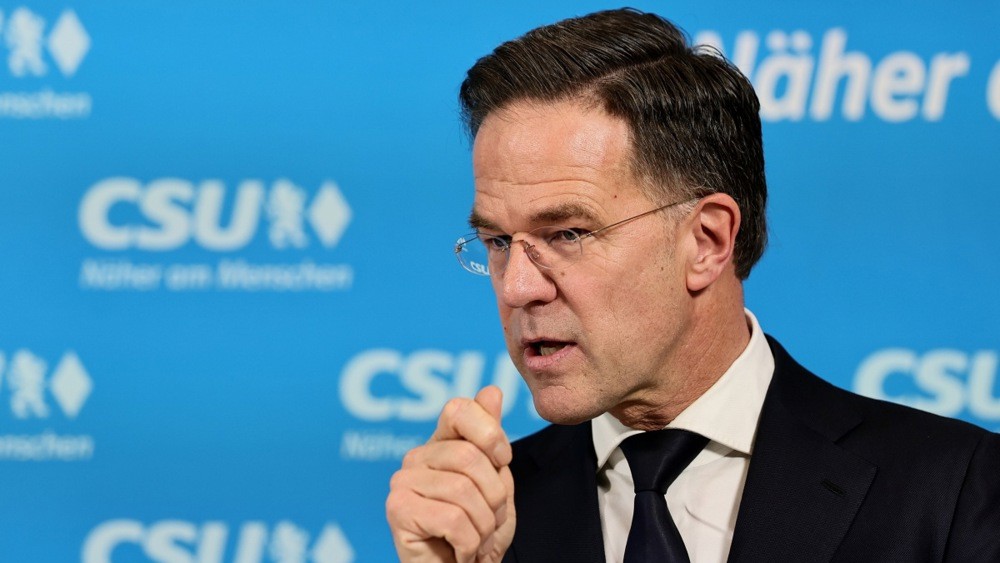
The logic is simple: if you're already spending the required amount, voting to enshrine it costs nothing. If you block it — that means you're not spending and don't plan to. It was precisely this distinction that made NATO Secretary General Mark Rutte's initiative such a telling failure.
What Rutte proposed and what happened
In May 2025, Rutte put forward an idea: each NATO country should allocate at least 0.25% of GDP annually to military aid for Ukraine. According to Politico's calculations, this would triple the combined support flow to $143 billion per year. The Secretary General expected to enshrine the proposal at the July summit in Ankara.
Last week, he admitted defeat.
«I don't think this idea will be put forward»
Mark Rutte, NATO Secretary General — to journalists, without specifying opponents' names
Who supported, who blocked
According to The Telegraph, citing an Alliance source, against were the United Kingdom, France, Spain, Italy, and Canada. The source described their position briefly: «not very enthusiastic about this idea».
In favor — at least seven countries that have already reached or exceeded the 0.25% GDP threshold: the Netherlands, Poland, the Baltic states, and Scandinavian countries. According to the Kiel Institute, these states consistently lead in supporting Kyiv.
NATO decisions are made by consensus — meaning one «no» is enough to kill any initiative. Five was more than enough.
The British paradox
London's position looks most acute. The Telegraph, which revealed this information, directly calls it a double blow to Britain's reputation as «one of Ukraine's most reliable allies». A British Foreign Office spokesman responded in the spirit of diplomatic neutrality: the country «continues to engage with allies on all proposals». France, Spain, Italy, and Canada did not respond to the publication's inquiries.
Context: why this matters now
After the Trump administration began cutting direct military aid to Ukraine, the burden shifted to European NATO members. Rutte has long insisted: Europe must take more responsibility rather than rely on Washington.
- In December 2024, then-Ukraine's Defense Minister Denys Shmyhal called on partners at the «Ramstein» meeting to allocate 0.25% of GDP to Kyiv's defense needs.
- In summer 2025, NATO launched the PURL program — a mechanism for NATO allies to purchase American weapons for Ukraine at their expense.
- At a December meeting of foreign ministers in Brussels, the Alliance confirmed a course toward 5% of GDP for defense by 2035, counting support for Ukraine in this standard.
Swedish Prime Minister Ulf Kristersson openly formulated the contradiction: «I would really like countries that speak so well about Ukraine to also invest money there».
If at the 2026 Ankara summit the Alliance does not propose an alternative mechanism with clear commitments, rhetoric about «unwavering support» risks completely diverging from what the Kiel Institute's statistics show.



