First Deputy Mayor of Svitlovods'k Shot at Colleagues — and Claims He Was Targeted for Assassination
Sergiy Savych opened fire in the executive committee building, where employees and visitors were present. Two people were wounded, police are conducting an arrest — but Savych's public account of events differs sharply from the official version.

By Tetiana Suchkova-Ladik
May 12, 2026 · 2 min read
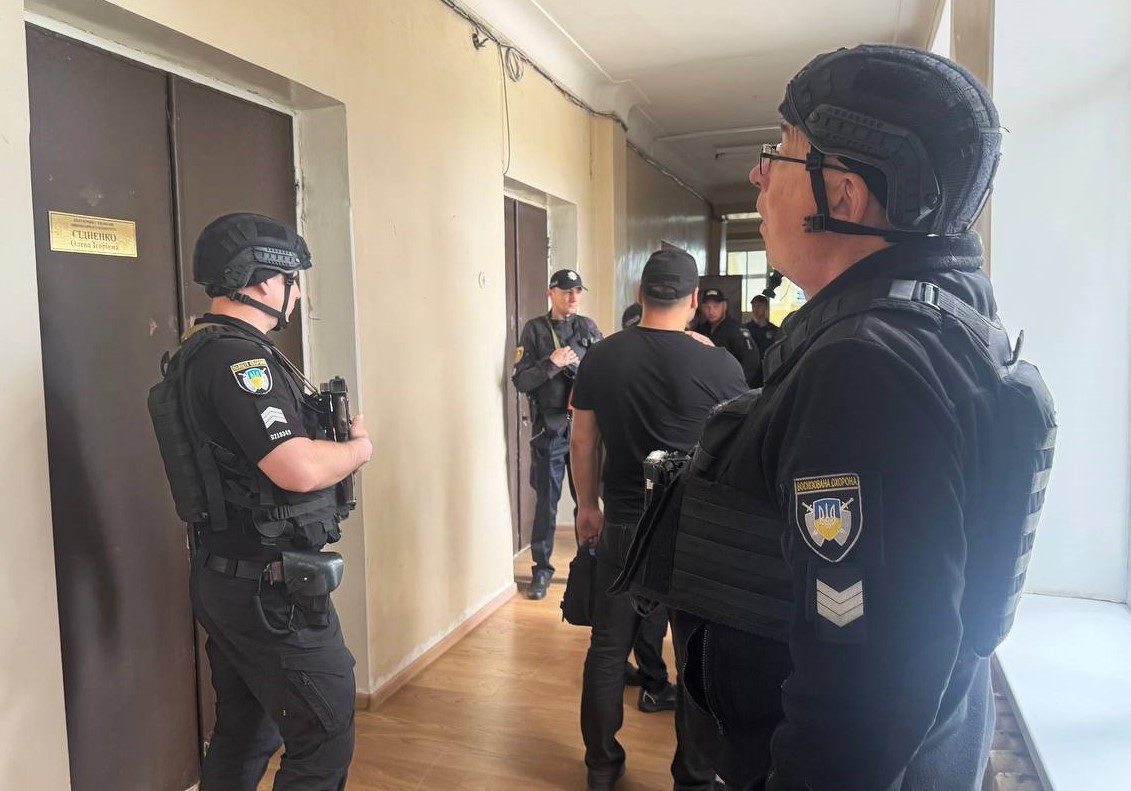
On May 12, shots rang out in the building of the Svitlovodsk City Council in Kirovohrad region. According to the city council's press service, gunfire from a non-lethal weapon was opened by First Deputy City Mayor Sergiy Savych — at a moment when employees and regular visitors were present in the executive committee premises.
Two people were wounded and hospitalized. Police began detention and investigative actions by the end of the day.
A day of escalation — before the shots
The incident did not occur suddenly. According to the official statement from the city council, Savych behaved aggressively in the morning: making threats and using profane language toward City Council Secretary Maksym Bakumenko. The official himself broadcast part of the conflict in live streams on social media — and these very recordings became the main evidence in the first hours after the incident.
«First Deputy City Mayor Sergiy Savych committed actions involving the use of weapons, opening fire in the executive committee building, where employees and citizens were present at that moment.»
— official statement of Svitlovodsk City Council
Savych's version: self-defense
Meanwhile, Savych himself posted his own video of the conflict online and claimed that someone was trying to kill him. According to him, he first fired a warning shot to «scare» the men, and then opened fire in their direction — because, he claims, his life was threatened by several people.
Thus, from the beginning, there are two incompatible versions in the case: the city council qualifies Savych's actions as aggression by an official in a public place; Savych himself — as forced self-defense. Which of them will be confirmed will be determined by the investigation, not by Facebook streams.
Why this is more than just a local scandal
Svitlovodsk is not the first and hardly the last case when service weapons or permitted non-lethal pistols end up at the center of a conflict between local officials. The legal regime of martial law has expanded access to weapons for certain categories of persons, and the question of controlling its possession in civilian institutions remains open.
After evacuating city council employees, police and emergency services were called to the building. A spokeswoman for the National Police of Kirovohrad region confirmed: «there was a conflict between employees, during which one of them fired several shots» — without clarifying the motives.
If the investigation establishes that Savych acted outside the bounds of self-defense, he could face charges under the article on hooliganism involving the use of weapons or intentional infliction of bodily harm — even though the shots were fired from a non-lethal pistol.



