Stubb Ready to Be Europe's Voice in Negotiations — But Russia Must First Agree to Ceasefire
Finnish President Alexander Stubb has publicly confirmed his readiness to represent Europe in peace negotiations on Ukraine. The problem is that no mechanism for his delegation exists — and Moscow has already proposed its own candidate.
By Oleg Bazylewicz
May 25, 2026 · 2 min read
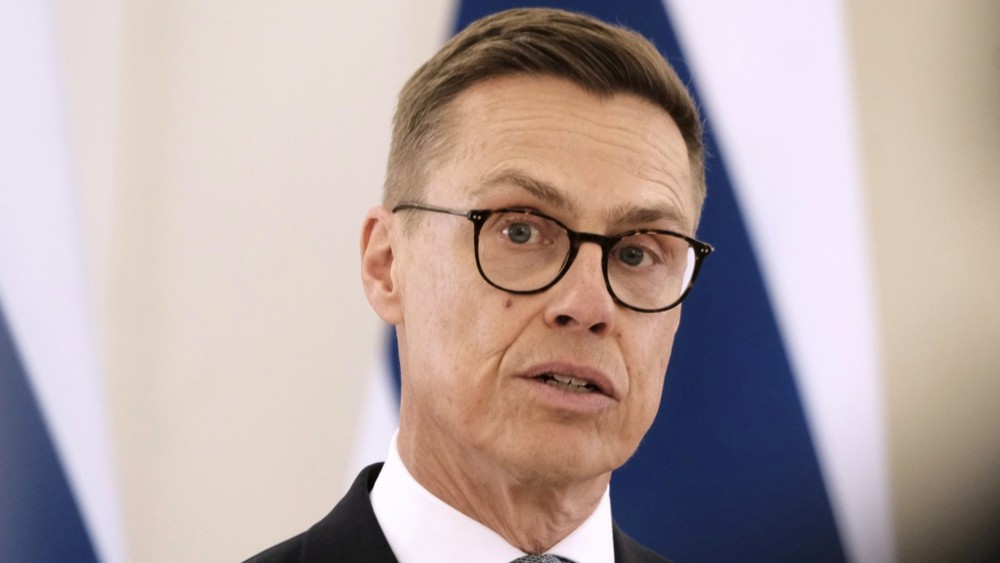
On May 24, during a live broadcast on Finnish broadcaster Yle, Finnish President Alexander Stubb answered the question of whether he was ready to become Europe's representative in peace negotiations on Ukraine. The answer was unambiguous.
"If they ask me, then it's probably the kind of question you can't answer negatively to."
Alexander Stubb, President of Finland, Yle, May 24, 2025
At the same time, he clarified a condition: peace negotiations are only possible when Russia commits to a ceasefire. Without this step, any representation remains a declaration without substance.
Where the request for a "voice of Europe" came from
The request took shape at the end of May against the backdrop of two parallel processes. The American mediation initiative hit a dead end: according to Reuters, negotiations involving the United States have effectively stalled. Direct talks between Ukraine and Russia in Istanbul lasted less than two hours and produced no breakthrough — the parties only agreed to exchange memoranda and continue dialogue.
In this context, Ukraine's Foreign Minister Andriy Sybiga, in a conversation with Politico published on May 11, stated: "We probably need a new role for Europe in our peace efforts." According to him, Kyiv has already asked the European Union to help organize an airport ceasefire.
Zelensky articulated the same idea earlier: Europe should have its own representative in negotiations with Moscow. Stubb is the first European leader to respond to this publicly and affirmatively.
A competitor from Berlin — and old reputation
In parallel, on May 9, Putin put forward his own candidate: former German Chancellor Gerhard Schröder as a "European mediator." Schröder is a longtime personal friend of Putin's, and has been condemned in Germany since 2022 for refusing to break ties with the Kremlin. His candidacy is unacceptable to most EU states, but the fact that Moscow named him first demonstrates that Russia also wants to influence who sits at the table.
Stubb, on the other hand, has a different reputational foundation:
- President of a NATO member country that borders Russia and joined the Alliance precisely because of the full-scale invasion;
- Has repeatedly stated that support for Ukraine is a matter of Finland's own security;
- In December 2025, called the moment "critical" and saw the greatest chance for settlement in nearly four years of war.
What exists and what doesn't
Stubb's willingness is a personal position, not a mandate. Neither the EU, nor the Council of Europe, nor a coalition of allies has made a decision about a single representative. There is neither a delegation procedure nor a defined format in which such a representative would operate. According to Liga.net, citing diplomatic sources, European leaders have still not determined who and when will initiate direct contact with Russia.
Stubb himself acknowledged this in his conversation with Yle: "We discussed with European leaders who will initiate contact, but we still don't know."
In other words, between willingness and authority lies a gap of procedural decisions that have not yet been made.
If Russia does not agree to a ceasefire as a precondition for negotiations in the coming weeks, the question of Stubb's candidacy will remain academic — because without a table, it doesn't matter who sits at it.



