Stubb as Europe's Negotiator: Sybiga Says "Yes," But Format Still Unclear
Ukraine's Foreign Minister has called Finland's president an authoritative diplomat capable of conducting negotiations with Russia. However, neither the mandate nor the conditions for Europe's participation in the peace process have been determined so far.

By Tetiana Suchkova-Ladik
May 25, 2026 · 2 min read
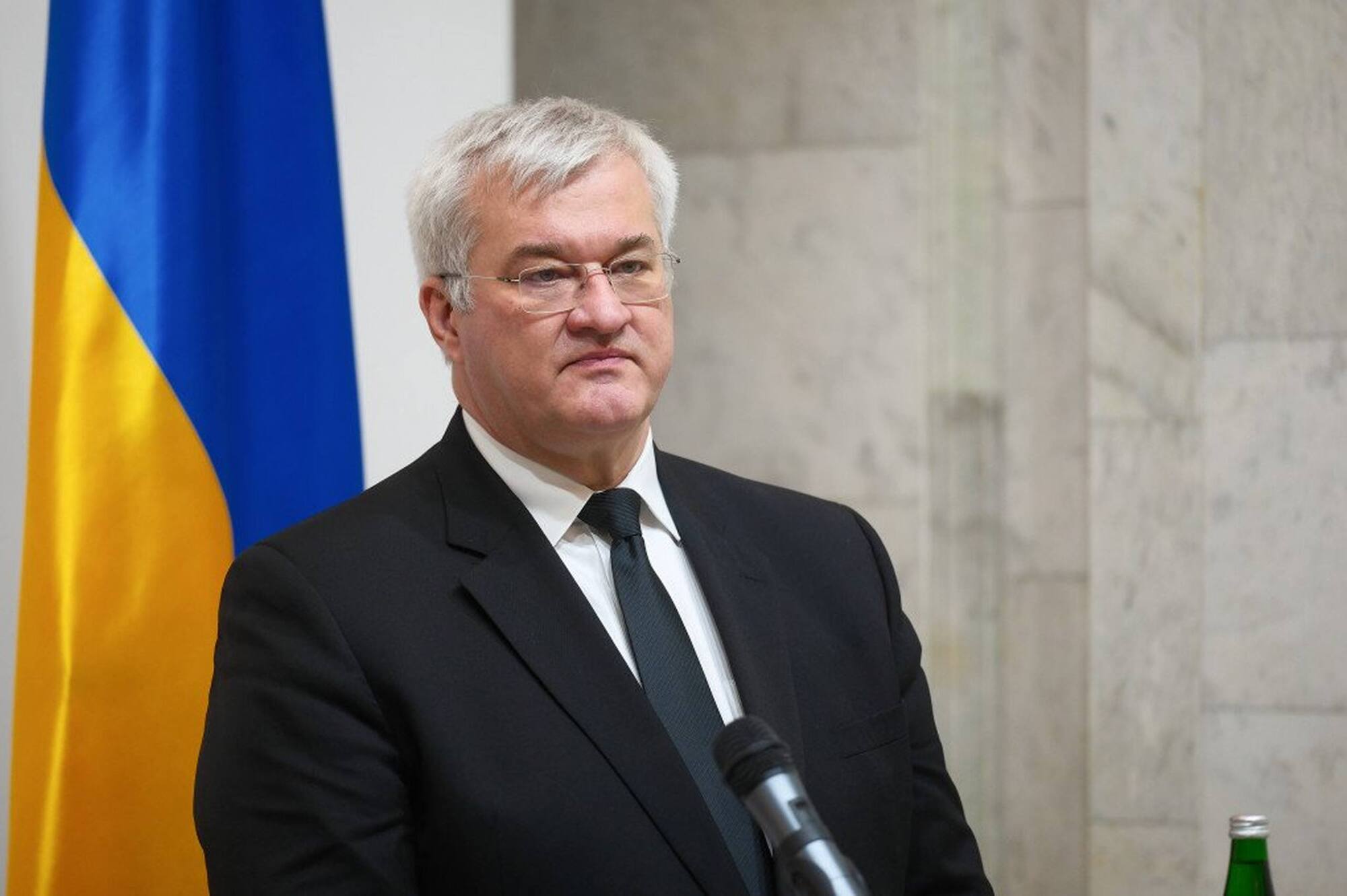
Ukraine's Foreign Minister Andriy Sybiha supported the candidacy of Finnish President Alexander Stubb as a possible European representative in peace negotiations with Russia. But behind the support lies no specific mechanism.
What Sybiha said
At a briefing following a meeting with Belarusian opposition leader Sviatlana Tsikhanouskaya, the Foreign Minister assessed the Finnish president without diplomatic caveats.
«He is a strong politician, a strong diplomat. Authoritative, who has the abilities to be a negotiator of such scale».
Andriy Sybiha, Minister of Foreign Affairs of Ukraine
At the same time, Sybiha clarified that the question of Europe's participation in the negotiation process — the format, timeframe, focus of efforts — remains at the discussion stage. Approval of a candidate and possession of a mandate are different things.
Why Stubb ended up at the center of the conversation
On May 24, Stubb gave an interview to Finnish broadcaster Yle in which he essentially did not reject the role of European negotiator. «If asked — this is probably something one cannot answer negatively to», he said. According to Kyiv Independent, behind this statement lies a broader discussion: American-mediated negotiations are stalling, and Kyiv is seeking a new role for Europe.
As early as May 11, Sybiha told Politico that Ukraine is asking Europe to join the ceasefire process at airfields. «We probably need a new role for Europe in our peace efforts», the publication quotes the Foreign Minister. Stubb is a former Prime Minister and Foreign Minister of Finland, meaning he is a person with real diplomatic credentials, not a symbolic figure.
By comparison, Putin proposed his own version of a «European mediator» on May 9 — Gerhard Schröder. The proposal speaks volumes about whom Moscow would like to see at the table.
Context of negotiations: three rounds without breakthrough
At the time of the briefing, Ukraine and Russia had already held several rounds of direct negotiations in Istanbul — for the first time since 2022. According to the British parliamentary research center, the first round lasted less than two hours and produced no breakthrough: Putin sent a low-level delegation instead of appearing personally as Zelenskyy had promised. The second round on June 2 ended with an exchange of memoranda — the content has not been officially disclosed by either side.
Stubb, despite his willingness to participate, set a clear condition: peace negotiations are possible only after Russia commits to ceasing fire. Russia continues large-scale missile and drone strikes on Ukrainian cities — which in itself is a response to this condition.
- Stubb publicly did not rule out the negotiator role — May 24, Yle
- Sybiha called him «authoritative» and capable — without specifying a mandate
- Format of Europe's participation: not determined
- Stubb's condition: ceasefire by Russia as a prerequisite
- Moscow's position: Schröder instead of Stubb
If Kyiv truly wants a new role for Europe in negotiations — the next step is not verbal support for a candidate, but an agreed mandate from the EU. It does not exist yet. The question is whether it will emerge before the Istanbul format reaches a complete impasse.



