Tusk complained that Poland wasn't in the room — the next day London signed a security agreement with Warsaw
# The E3 Format Left Poland and Italy Outside the Door of London Ukraine Peace Talks. Tusk's Reaction Revealed a Deeper Conflict: Who Has the Right to Shape Europe's Position in Negotiations with Moscow?

By Tetiana Suchkova-Ladik
June 10, 2026 · 2 min read
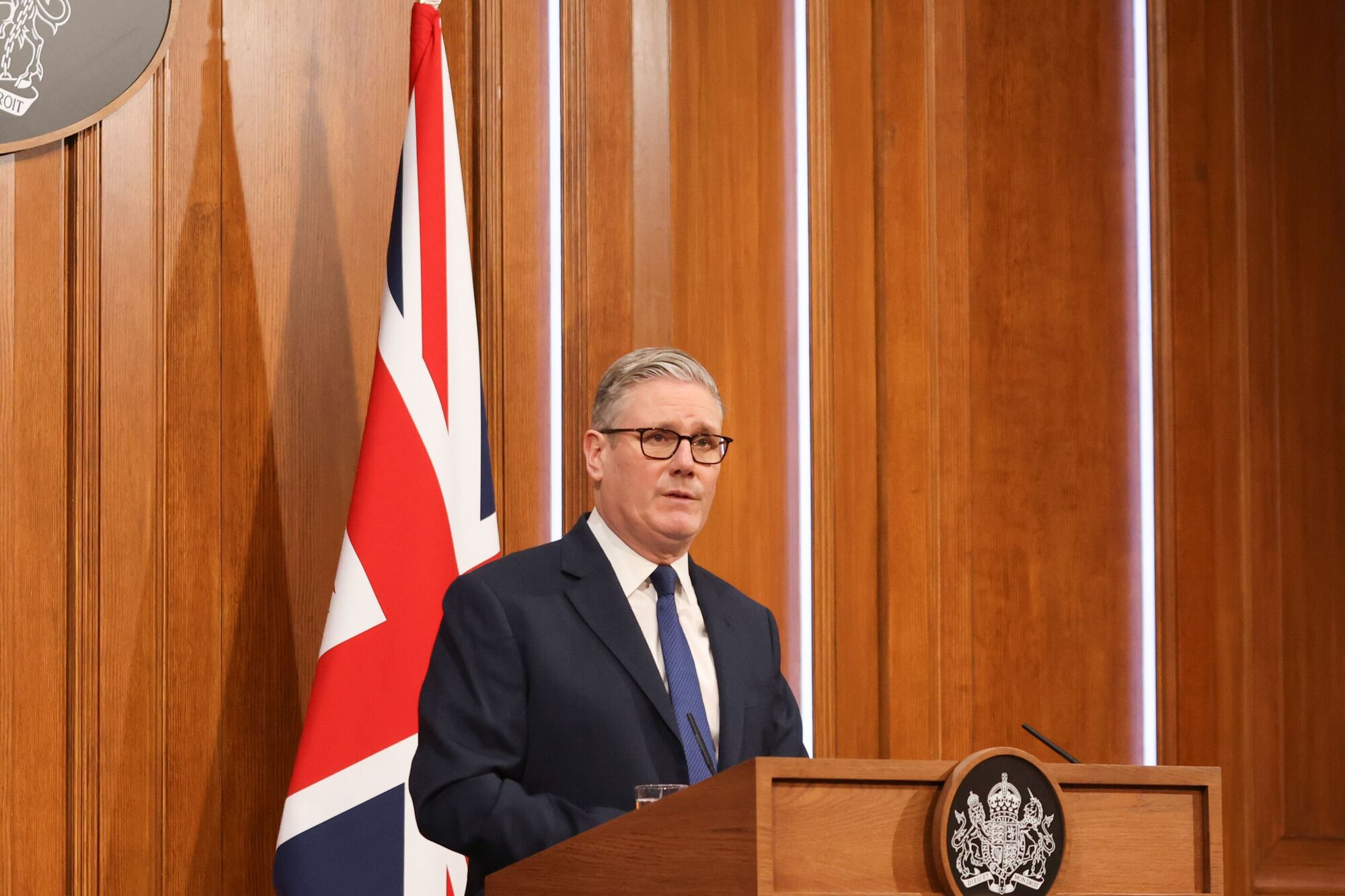
On June 7 in London, Zelenskyy and the leaders of Great Britain, France and Germany — Starmer, Macron and Merz — signed a joint statement with five conditions for "just and lasting peace." Among them: immediate full ceasefire on Putin's initiative, negotiations from the current line of contact, legally binding security guarantees for Ukraine. Poland was not in the room.
"We're not there — so we won't be heard"
On Tuesday, June 9, Polish Prime Minister Donald Tusk openly criticized the E3 format. According to Reuters, he stated that Poland's role in supporting Ukraine and its position on NATO's eastern flank make it impossible to justify any negotiating structure that leaves Warsaw out of the room. Italy took a similar position — Rome was also not invited.
"Poland should participate in negotiations on Ukraine's future"
Donald Tusk, Prime Minister of Poland, Reuters, June 9
Tusk's argument goes beyond protocol. Poland is NATO's largest defense spender relative to GDP: in 2025 it is approximately 4.3% of GDP. Since 2022, it has served as a military-logistics and humanitarian hub for supporting Ukraine and has accepted millions of Ukrainian refugees. According to EUToday, the dispute over the format is essentially a competition over who will shape the pan-European position before direct contact with Moscow or Washington.
Response: partnership yes, seat at the table — not promised
Starmer's press office responded restrainedly: London is prepared to cooperate with all European partners, including Poland, to achieve peace in Ukraine. Expanding the E3 format to E5 — at the demand of Warsaw and Rome — was not directly promised.
Instead, the very next day, June 11, Starmer and Tusk signed a bilateral security treaty in London. According to the British government, the agreement provides for joint production of a new generation air defense missile system of medium range, expanded use of unmanned systems on NATO's eastern flank and large-scale joint exercises. Starmer called this a "generational leap" in relations between the two countries. The treaty follows similar agreements by London with Paris and Berlin.
Parallel track diplomacy
The logic of the British position is clear: E3 is an operational format for quick decisions with the closest allies, bilateral treaties are a mechanism for a wider circle of partners. The problem is that it is in the E3 format that peace conditions are formulated, not in bilateral agreements. Poland, which borders the theater of military operations more than any other EU country, receives a treaty on missiles, but not a seat at the table where principles of settlement are determined.
According to EUToday's analysis, Poland's absence from key negotiating forums — from the Berlin meeting in October 2024 to the London one in June 2025 — is becoming a systemic trend, not a one-time protocol mishap.
If Moscow agrees to negotiations and E3 sits at the table without Warsaw — will Poland recognize the results of a format in whose formation it did not participate?