Artem Dovbyk Undergoes Surgery: What It Means for Ukraine’s Chances in the 2026 World Cup Playoffs
A forward for Roma and the national team has undergone surgery after sustaining an injury in the match against Lecce. His status for the semi-final against Sweden remains uncertain — we examine possible scenarios and consequences for the national team.

By Tetiana Suchkova-Ladik
January 19, 2026 · 2 min read
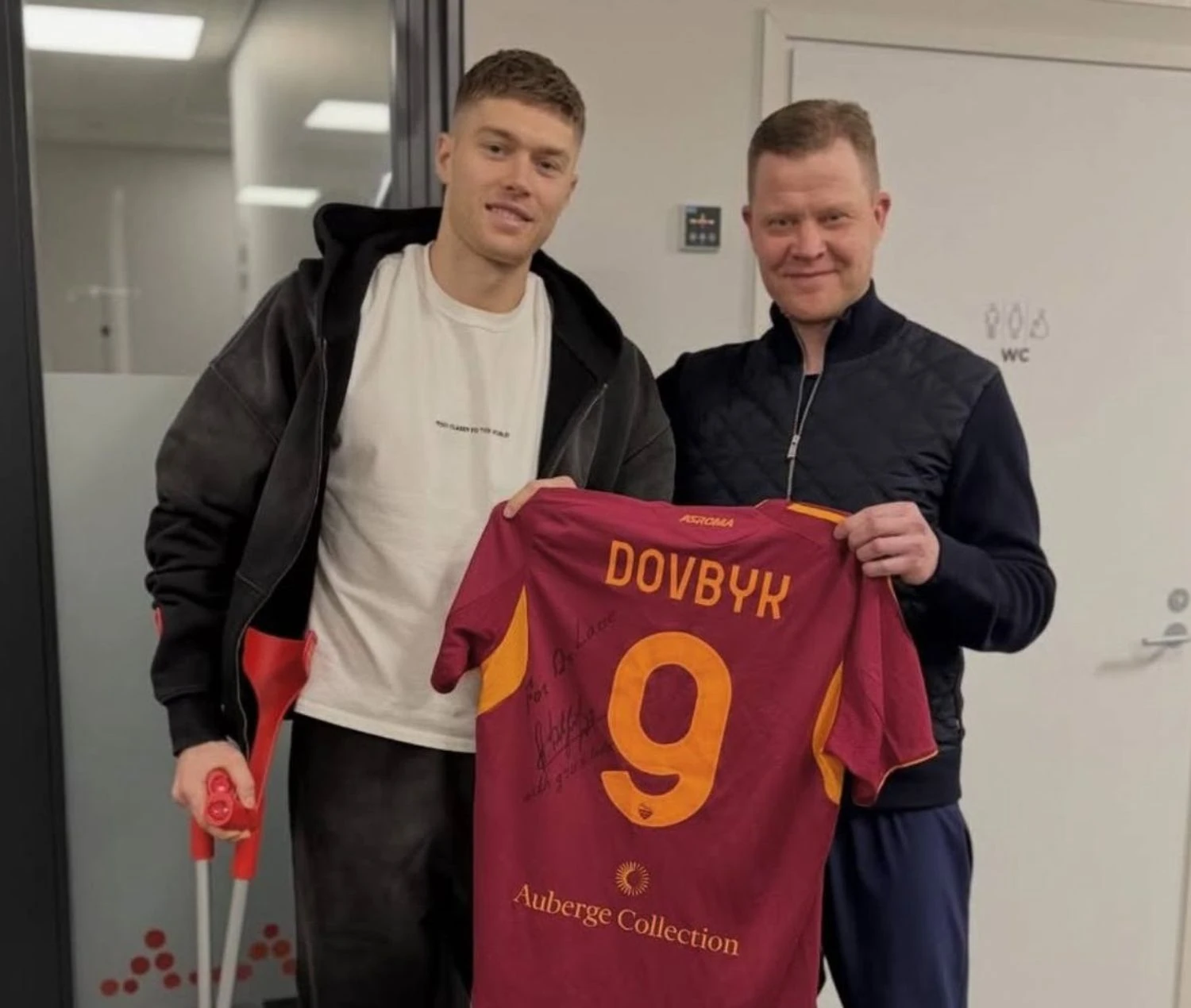
Pivotal moment for the national team: Dovbyk underwent surgery, participation in match vs. Sweden in doubt
Ukraine forward and AS Roma striker Artem Dovbyk underwent surgery after an injury sustained on January 6 in the 19th-round Serie A match against Lecce. The player himself announced the intervention on Instagram; the information was also reported by UNN. Dovbyk came on in the 60th minute, scored a goal and was substituted in the 86th minute.
“Injuries are part of the game. Focused on recovery and returning stronger. Thank you for all the support — it means a lot. See you soon.”
— Artem Dovbyk, Ukraine national team forward and AS Roma player
The Ukrainian Association of Football (UAF) welcomed the news and wished the player a speedy recovery. At the same time, differing assessments of the recovery timeline have emerged, which directly affect the national team’s preparation for the World Cup 2026 qualifying playoffs.
Recovery timeline: two versions from medics and insiders
Italian journalist Gianluca Di Marzio, citing his sources, reported a minimum two months out — an estimate that already calls Dovbyk’s participation in the qualifying matches into question. In contrast, sports doctor Dmytro Babelyuk emphasizes a cautious approach to rehabilitation:
“Now the main thing for Artem is not to rush and to recover properly. Traditionally, recovery from such an injury takes about 4–5 months, so we will see Artem fit for action in the next season.”
— Dmytro Babelyuk, sports doctor
The divergence in assessments is explained by the nature of the injury, the individual reaction of the body to treatment and how aggressively the club will push the rehabilitation. The fact remains: uncertainty — and because of it the coaching staff must prepare alternative attacking options.
Practical consequences for the national team
The playoff semi-final against Sweden takes on a different dimension if the leading forward is absent. The UAF has already designated a potential home venue — the Spanish city of Valencia — which gives the team stable logistics. But football is decided not only by location and atmosphere: it’s a matter of rotations, tactical adjustments and the ability of other attackers to replace Dovbyk’s key role.
Experts point to two realistic scenarios: an optimistic one — Dovbyk’s return closer to the end of the current club season (under the milder prognosis of “at least two months”); and a realistic one — a return in 4–5 months, which would rule him out of the playoffs. The national team leadership and medical staff have a priority — a full recovery over the risk of a premature return to the field.
Conclusion
Artem Dovbyk’s status is important but not decisive for the national team. The key now is not to create panic but to act according to plan — follow the medical protocol, make tactical adjustments and maintain supporters’ backing. Experts advise awaiting official conclusions from club and national medical staff; meanwhile the team is preparing for scenarios without its forward.
Sources: Artem Dovbyk’s Instagram, UNN, Gianluca Di Marzio, comments from sports doctor Dmytro Babelyuk, official statements from the UAF.