Kyrgios defeated Aryna Sabalenka in Dubai — exhibition match with new rules that tested players' adaptability
Nick Kyrgios defeated Aryna Sabalenka 6–3, 6–3 in the exhibition "Battle of the Sexes" in Dubai — more than a show, it was a test of tactics and stamina under modified rules. We examine why the result matters beyond mere spectacle.

By Tetiana Suchkova-Ladik
December 30, 2025 · 2 min read
Briefly
Nick Kyrgios defeated Aryna Sabalenka 6:3, 6:3 in the exhibition "Battle of the Sexes" match held at Coca-Cola Arena in Dubai. The match was played under modified rules — with one serve per rally and a slightly reduced "equalizing" court on the world No. 1's side — according to reports from Reuters and UNN.
"Kyrgios managed to adapt to the slightly smaller 'equalizing' court... and earned the victory after an intense and entertaining match played under modified rules."
— Reuters (match report)
Course of the match and key moments
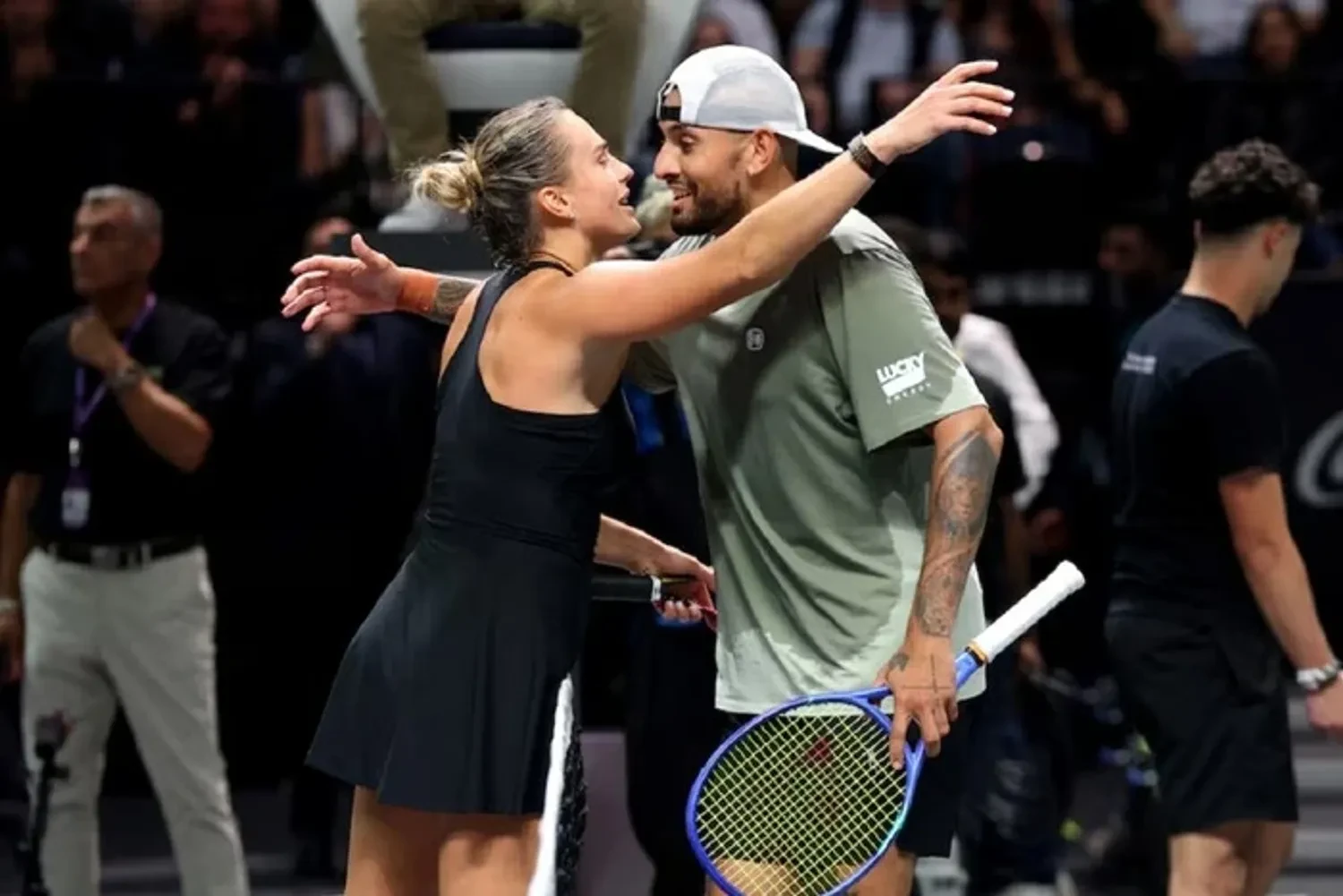
The match took place before a full arena: spectators witnessed tension in both sets. Under the one-serve system both players made errors at crucial moments, but it was Kyrgios's break in the first set (he was up 4:3) that proved decisive. In the second set Kyrgios recovered from 1:3 to 3:3, then used serving variations and drop shots to consolidate his advantage. After the final rally the players exchanged warm embraces at the net — an almost ritual recognition of the contest as a spectacle rather than a rivalry.
Why this matters
At first glance — it's a show. But the format with one serve and a compensatory court tests something else: how quickly a player can adapt tactics and how well their shot arsenal works under atypical conditions. For the viewer — it's entertainment; for the analyst — a test of versatility. Reuters and several sports commentators have already noted that such experiments influence how televised formats and commercial events in tennis are shaped, without affecting official rankings.
Ukrainian context
While the show continues in Dubai, Ukrainian women's tennis is also sending signals: Lyudmyla and Nadiia Kichenok have again entered a tournament together — a sign that Ukrainian players remain visible on the international stage and seize opportunities when they arise. This is important for the image and development of sport in Ukraine: visibility on big stages creates more chances for sponsors, matches and preparation for high-level tournaments.
Summary
The exhibition match in Dubai is not a rehearsal for big tennis, but an important indicator: who can quickly change tactics and keep emotions under control in unusual conditions. For the Ukrainian TV viewer and sports fan the main thing is that such events increase interest in tennis in the region and create new opportunities for our athletes. Whether similar formats will become a regular part of the calendar depends on how interesting they prove to be for audiences and how profitable they are for organizers in the long term.