IPC bans uniform with map of Ukraine — how will this affect the Paralympic team
The International Paralympic Committee has ruled that a print of the map of Ukraine is political, so the team will appear at the opening ceremony in a backup kit. We examine why this is more important than it seems and what should happen next.

By Tetiana Suchkova-Ladik
March 3, 2026 · 3 min read
Decision and rapid replacement
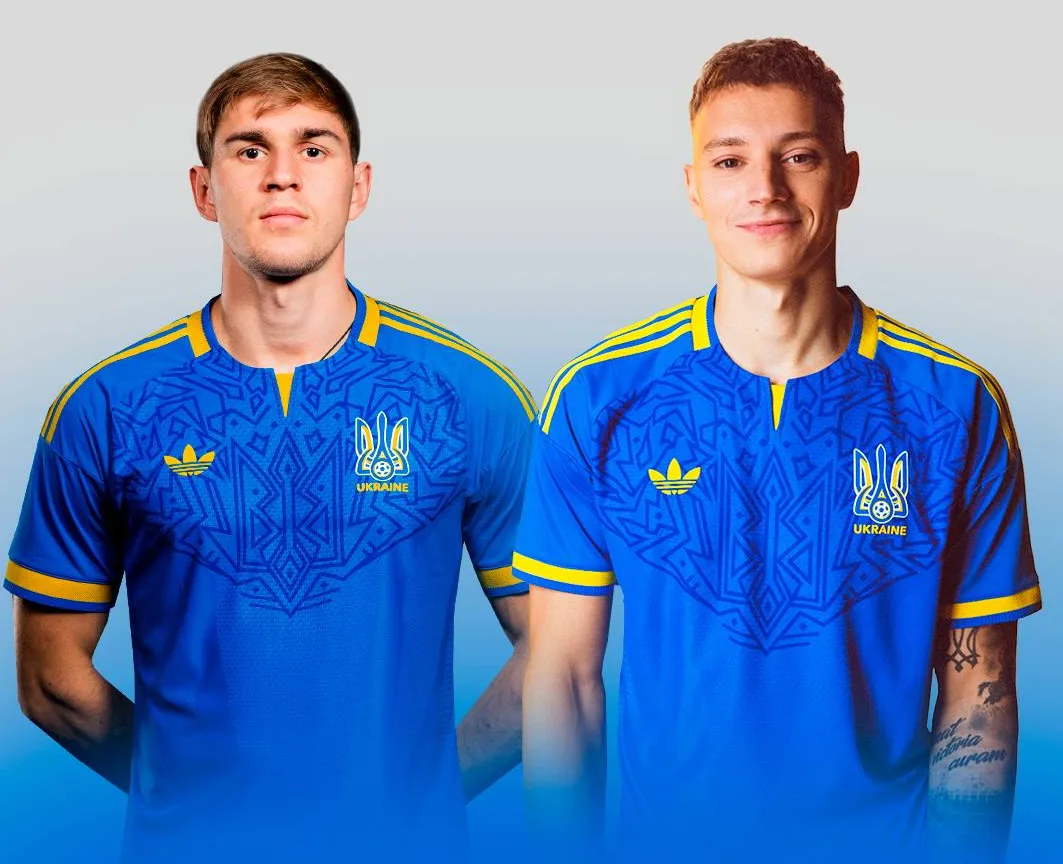
The International Paralympic Committee (IPC) did not approve the Ukrainian team's uniform set, in which the designer included an image of the map of Ukraine as of 1991. This was reported in an interview by Valeriy Sushkevych, president of the National Paralympic Committee (NPC), as quoted by UNN. Because of this, the team will enter the opening ceremony in different clothing: an alternative set was urgently delivered to Italy, where the delegation is based.
Why the IPC called the print "political"
Institutions that organize international competitions try to avoid elements that could be interpreted as political or provocative. According to the NPC, this element was not a separate print but part of the overall design concept. Previous cooperation with designer Viktor Anisimov during the 2024 Paralympics in Paris was also accompanied by difficult approvals, but at that time the set was permitted. Now the IPC's stance proved to be firmer — and that influenced the final decision.
"No, no, no — that's not acceptable! They said this uniform is political. And they said no one would allow us to come out in such a uniform"
— Valeriy Sushkevych, president of the National Paralympic Committee
Logistics and image
Due to the refusal, a backup kit will have to be used: the ready set with the map was set aside, and a new one was ordered and delivered urgently. According to Sushkevych, the uniform was driven by bus to Italy so the team could compete without delays.
"We urgently transported this new uniform by bus to Italy, where our entire team is already located. We could have dressed the men and women here in the uniform that was already ready, but they forbade us"
— Valeriy Sushkevych, president of the National Paralympic Committee
Why this matters for Ukraine
At first glance — a technical decision about design. But on the international stage symbols carry weight: for Ukrainians the map is not just a graphic element but a reminder of territorial integrity. At the same time institutions like the IPC seek to distance sport from overt politics. In this dispute, the balance between the right to a national symbol and the neutrality rules of international competitions is important.
Another important point: the team did not resort to a boycott and will still be represented — the NPC secured 25 quota places, 35 athletes will compete in four sports, including nine debutants. This is the best result in the history of Ukraine's Paralympic movement, and the athletes have the opportunity to show results despite the political controversies around the symbolism.
Brief conclusion
The IPC's decision illustrates a broader dilemma: international bodies seek neutrality, while for Ukraine symbols are part of a security and moral agenda. The next steps fall to the NPC and diplomats: to explain the context of the symbolism, negotiate acceptable formats, and push for clearer rules for approving designs. Whether it will be possible to find a format that makes Ukraine's identity visible without blocking athletes' participation is a question whose answer will determine future tactics on international platforms.
"And now we were more radical. Our radicalism is explained by the fact that after Paris this escalation of loyalty to 'rasha' occurred with renewed force, a new wave"
— Valeriy Sushkevych, president of the National Paralympic Committee