Neutral athletes from Russia and Belarus allowed at the closing ceremony of the 2026 Olympics — what this means for Ukraine
BBC reports: individual neutral athletes (AIN) from Russia and Belarus will be able to attend the closing ceremony in Verona — without flags or national symbols. We examine why a technical decision is turning into a political symbol.

By Tetiana Suchkova-Ladik
February 21, 2026 · 2 min read
Briefly
According to the BBC, Individual Neutral Athletes (AIN) from Russia and Belarus will be able to take part in the closing ceremony of the 2026 Winter Olympic Games in Milan–Cortina (Verona), even if they were not present at the opening. This allows them to enter the stadium as part of the general group — since at the closing ceremony participants are traditionally not divided by country.
What exactly was allowed and what are the restrictions
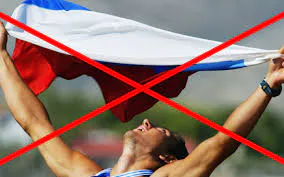
According to BBC and UNN, AIN athletes are allowed to be present at the closing, but with clear restrictions: they may not display flags or national colors, and their results are not reflected in the official medal table. At the opening, Russian and Belarusian athletes were not represented in the parade of nations.
"Individual Neutral Athletes (AIN) will be able to be present at the closing ceremony of the Milan–Cortina Winter Olympic Games if they were not present at the opening... However, at the closing ceremony athletes are traditionally not separated by country, and instead they will enter the stadium in Verona as a group"
— BBC (report)
Why this matters for Ukraine
The decision appears technical, but it has a political dimension. First, the presence of AIN — even without symbols — gives Russian and Belarusian media material for an internal narrative about a 'return to sport.' Second, for the international community it is a signal: sanctions against state participation remain, but exceptions for individuals allow a thin line between sporting neutrality and normalization.
Experts in sports diplomacy note that it is precisely the format of the ceremony (entering as a group, absence of national identification) that is the procedural hook allowing the combination of principles of athlete inclusion and restrictions on state promotion. This is the International Olympic Committee's compromise approach, which may not suit some states and communities.
Reaction and consequences
Sources report that Ukraine plans to boycott some ceremonies at certain sporting events in 2026; this is part of diplomatic pressure that combines policy with positions on security and symbolism. For Kyiv it is important that such technical decisions do not become an instrument for softening the aggressor's responsibility without political consequences.
Short forecast
This case is an example of how in high diplomacy and sport it's not the loud gestures but the procedural details that matter. Ukraine and its partners should monitor how these formats are used in the media space and domestic information markets, and develop clear responses: from diplomatic demarches to information campaigns that emphasize a principled refusal to normalize state aggression.