"Memory is not a violation": Zelensky presented the Order of Liberty to Vladyslav Heraskevych after IOC disqualification
The president awarded a skeleton racer who had been disqualified ahead of the 2026 Olympics over a "helmet of remembrance." This is not just a gesture of support — it is a signal of how the war is affecting international sport and the principles of remembrance.

By Tetiana Suchkova-Ladik
February 14, 2026 · 2 min read
Why this matters
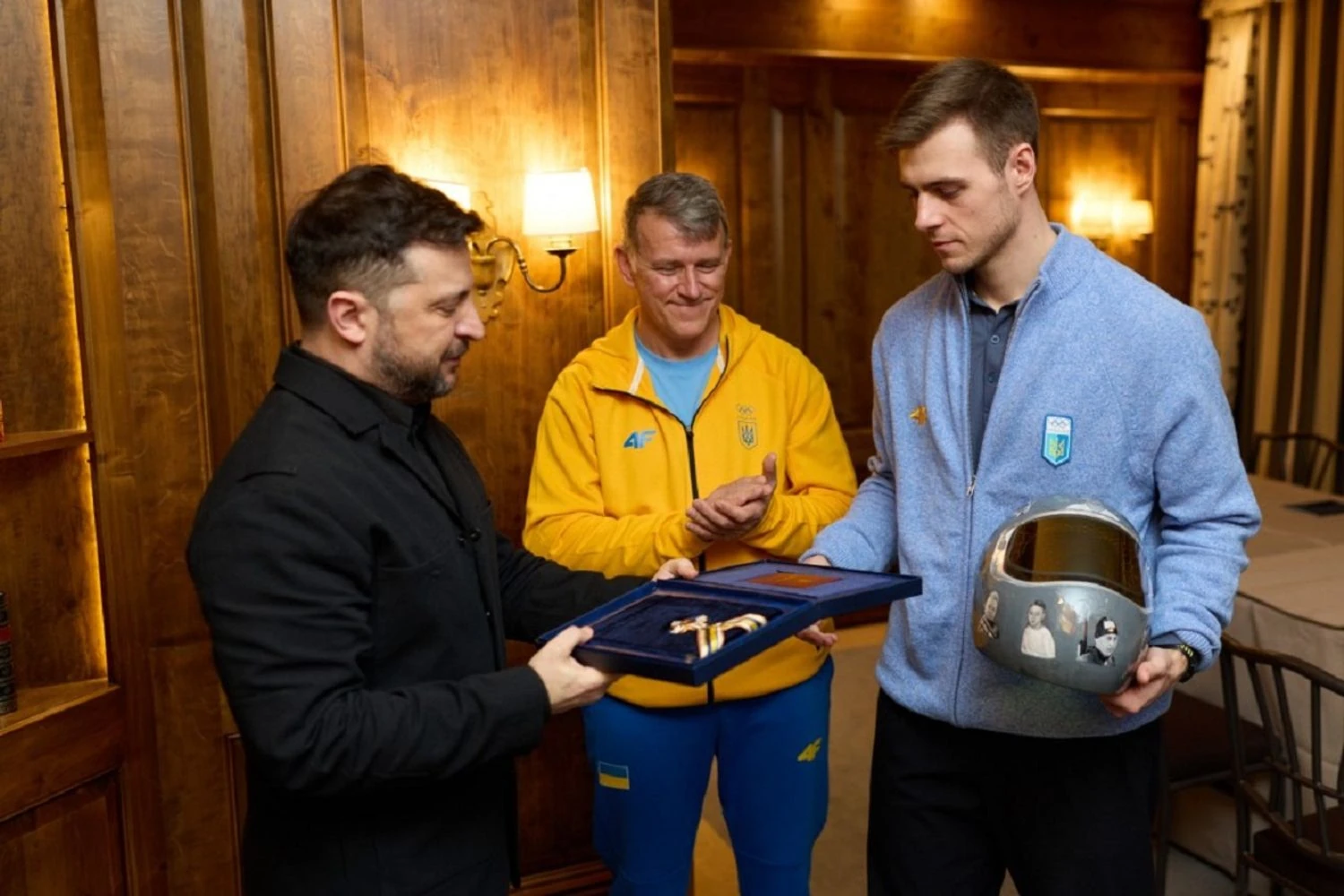
President Volodymyr Zelenskyy met with Ukrainian skeleton athlete Vladyslav Heraskevych and his father and coach Mykhailo Heraskevych, and presented the athlete with the Order of Liberty. The event takes place against the backdrop of a high-profile dispute between the Ukrainian athlete and international sporting institutions — the IOC and the IBSF — over a "memory helmet" intended to honor Ukrainian athletes and war heroes killed in the conflict.
What happened
The IOC disqualified Vladyslav Heraskevych before the first run of the skeleton event at the 2026 Olympics after deciding not to allow him to compete wearing a helmet bearing symbols commemorating fallen Ukrainians. Heraskevych announced his intention to appeal the suspension to the Court of Arbitration for Sport (CAS). According to reports, an expedited procedure at the CAS was held and on 13 February 2026 the claim was dismissed.
"Ukraine will have champions and Olympians. But the most important thing Ukraine has is its people — those for whom truth and the memory of the athletes who were killed by Russia, and who will never again be able to take part in sporting competitions because of Russian aggression, matter."
— Volodymyr Zelenskyy, President of Ukraine
"The IOC didn't suspend me, they suspended Ukraine."
— Vladyslav Heraskevych, skeleton athlete
IOC position and the CAS decision
The official arguments from the IOC and the IBSF related to regulations on political messages or symbols on athletes' equipment during competitions. As the CAS decision of 13 February 2026 shows, Heraskevych's appeal was dismissed under the expedited procedure. In practice, this means the athlete remained barred from competing at the 2026 Olympics.
Significance for Ukraine
The award from the head of state is not only recognition of the athlete's personal stance. It is a signal to the international community: the memory of those killed during Russian aggression is part of national identity and should not automatically be classified as "political" in sport. More broadly, the case raises questions about the limits of international federations' regulations during wartime and about how sporting organizations respond to the moral demands of societies suffering from aggression.
What next
Heraskevych has spoken of an appeal — and even if the CAS has already considered the case in an expedited procedure, further steps are possible: public pressure, diplomatic appeals, or initiatives to change the rules of international federations. For the Ukrainian side, the key is to turn symbolic support into practical tools to protect athletes and uphold the norms of international sport.
This episode raises a simple but important question: how to reconcile universal sporting rules with demands for memory and justice from countries experiencing aggression? The answer will shape not only the fate of individual athletes but also the reputation of international institutions.