Verona, blue-and-yellow and 1,500 steps: how freestyle skiers represented Ukraine at the closing ceremony of the 2026 Olympics
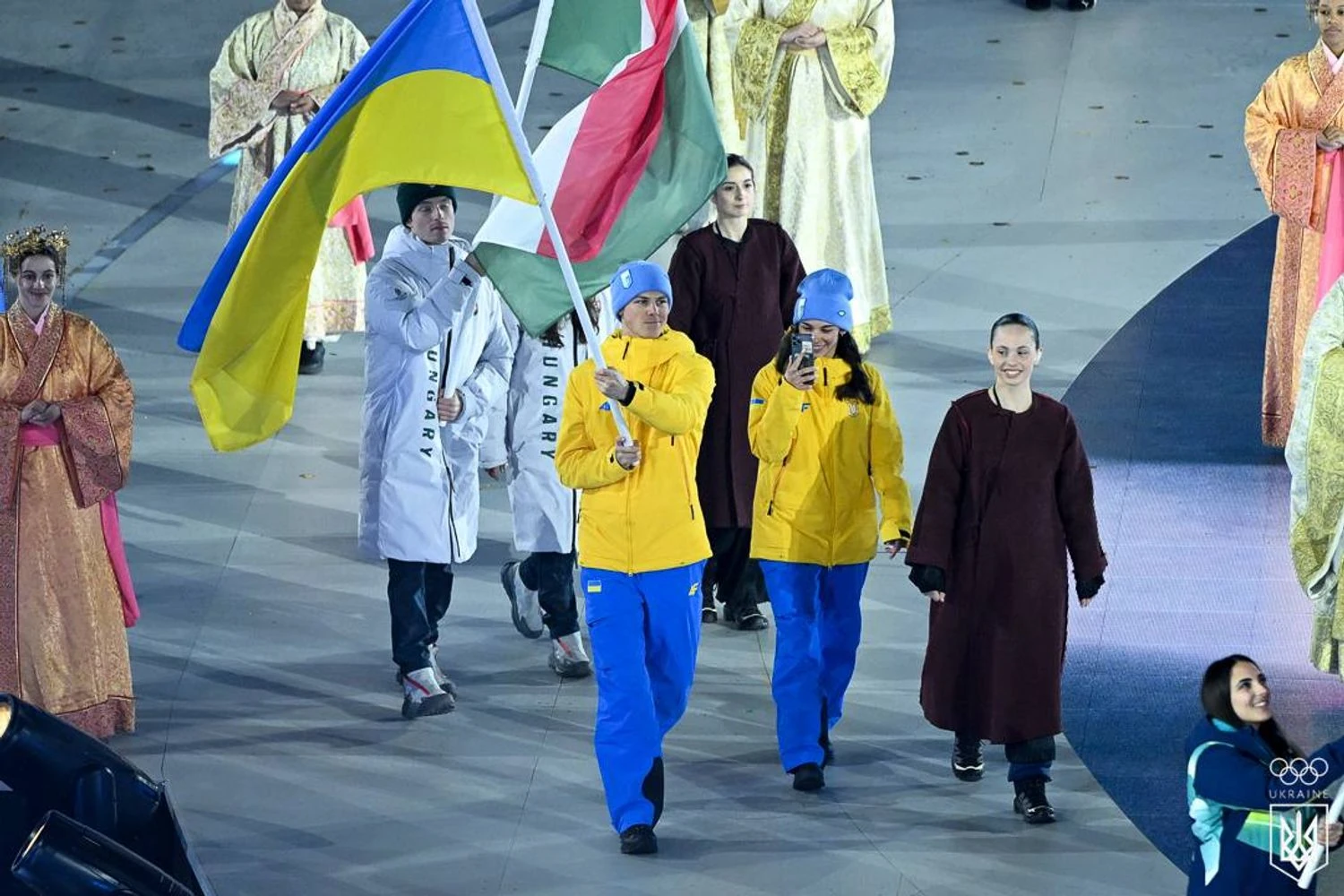
Dmytro Kotovskyi and Angelina Brykina carried the Ukrainian flag through the Verona Arena — not merely a symbolic gesture, but a significant act of international visibility at a time when global attention carries strategic importance.

By Tetiana Suchkova-Ladik
February 22, 2026 · 2 min read
Closing parade: a brief moment, big significance
In Verona, at the closing ceremony of the 2026 Winter Olympic Games, Ukraine's delegation was represented by aerial skiers Dmytro Kotovskyi and Angelina Brykina, who marched the arena carrying the blue-and-yellow flag. According to the NOC and reports by UNN, approximately 1,500 Olympians entered together — the traditional final march that symbolizes peace and unity.
Tradition and context
The practice of marching together at the closing ceremony dates back to the 1956 Olympics in Melbourne and became an outward signal: the competition is over, and sport beyond medals demonstrates solidarity. For Ukraine, this shot in the international media is not just an emotional episode but an element of soft power that strengthens our presence in the global discourse.
"Ukraine's flag-bearers — aerial skiers Dmytro Kotovskyi and Angelina Brykina — walk the Verona arena, blue-and-yellow flag in hand, during the closing ceremony of the XXV Winter Olympic Games. Proud. Confident. In a Ukrainian way."
— NOC of Ukraine
Why it matters
The brief march under the flag is not only a photo op. It works on several levels: first, it sustains the morale of Ukrainians and athletes; second, it reminds global audiences of our country in the context of international events; third, it creates an additional platform for diplomatic and humanitarian signals. Sports and international analysts note that such visual messages often reach public opinion faster than dry statements.
Context of events at the Games
On the final day of the Olympics there were also sporting climaxes: in men's hockey the USA defeated Canada 2–1 in overtime — a moment that also drew media attention. But for Ukraine the key image was the stands and the delegation's march with the flag: amid the flow of sporting events it creates a lasting symbol.
Conclusion — what comes next
This episode does not resolve strategic questions, but it amplifies our visibility where attention forms quickly and endures. The task now is to turn this impulse of attention into concrete results: support for athletes, diplomatic contacts, and broader media presence. Whether we can seize this chance for a lasting effect is a question for the next steps of partners and state institutions.