GoPro is no longer just an action camera: Mission 1 Pro ILS — the first "action" with Micro Four Thirds bayonet
Mission 1 series is not a Hero update, but GoPro's attempt to enter the compact cinema camera market. The key bet is Mission 1 Pro ILS with support for any MFT lenses and HyperSmooth in a true mirrorless body.

By Tetiana Suchkova-Ladik
April 15, 2026 · 2 min read
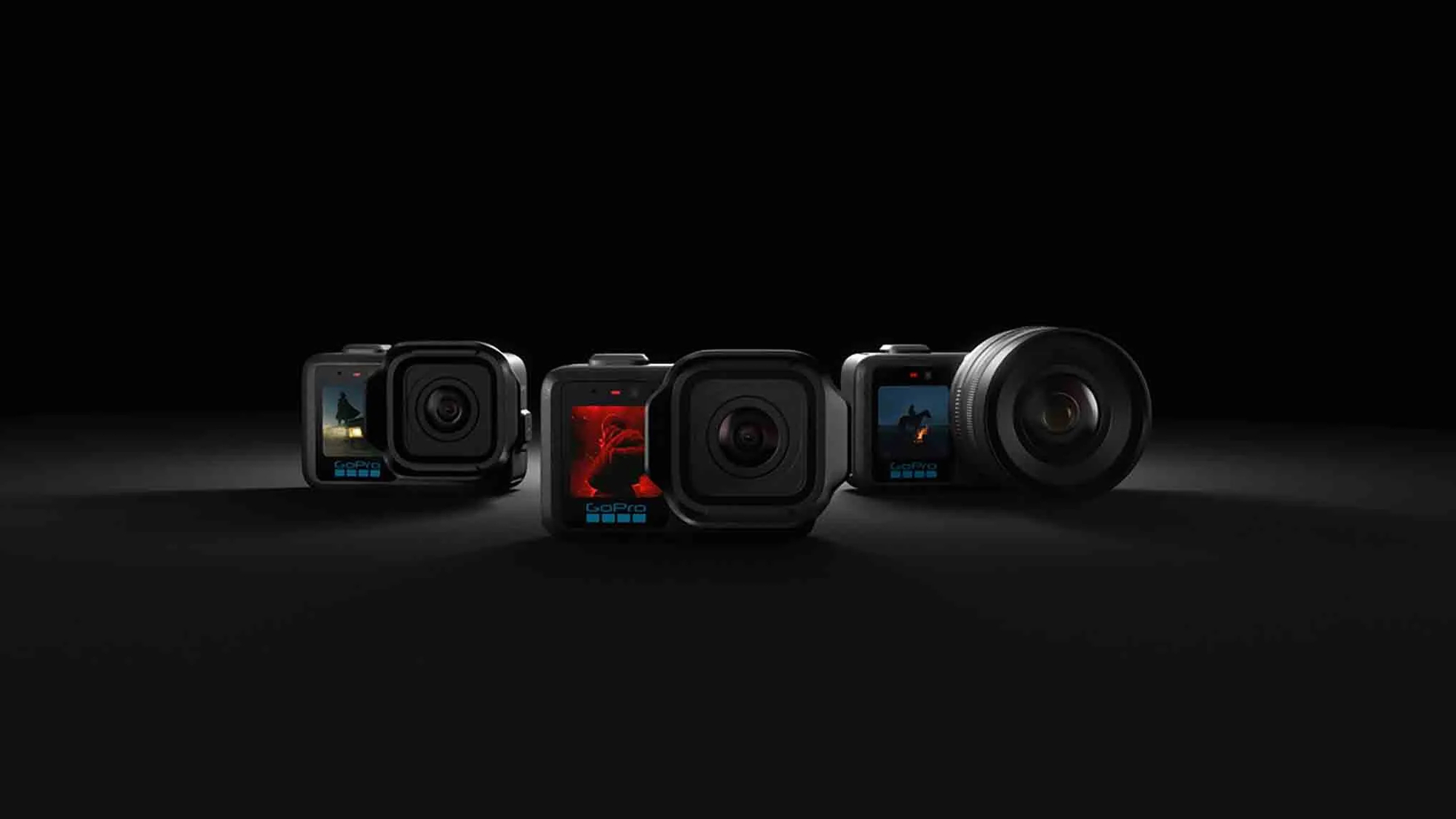
On April 14, 2026, GoPro announced the Mission 1 series — three models with a 1-inch 50 MP sensor and a new 5nm GP3 processor. But if you read between the lines of the press release, the real news isn't about megapixels.
What's really happening: GoPro is changing categories
For ten years, GoPro sold one idea — fixed angle, maximum durability, minimal settings. The Mission 1 Pro ILS breaks this logic: the camera received a Micro Four Thirds bayonet and is compatible with any MFT reflex lens. As Engadget notes, this is the first action camera with an MFT bayonet, and HyperSmooth stabilization works with any prime lens without a fisheye effect.
This is not a cosmetic change. MFT is a mature ecosystem with hundreds of lenses from Panasonic, Olympus, Sigma, and Voigtländer. Someone who already shoots on a Panasonic G9 or OM System can simply put their telephoto lens on GoPro and go snowboarding.
Three models — three audiences
- Mission 1 — basic: 8K/30, 4K Open Gate/120, 1080p/240. Price not yet announced.
- Mission 1 Pro — flagship: 8K/60, 4K/240, slow-motion 1080p/960. Fixed lens.
- Mission 1 Pro ILS — mirrorless version with MFT bayonet, same sensor and GP3. Available from Q3 2026.
All three have a four-microphone system with 32-bit float recording and support for a wireless microphone via the new Wireless Mic System — a direct answer to the DJI Mic Mini.
Where the pitfall lies
GoPro directly warns investors in the press release: success depends on "consumer demand and adoption of the new premium product" — phrasing that typically appears when a company is uncertain about its audience. The price for the Pro ILS hasn't been announced even approximately, and availability is delayed until Q3 2026.
"The combination of our new 50 megapixel one-inch sensor and ultra-efficient GP3 processor sets a new performance bar"
— GoPro, official press release
Competitors are not standing still: the DJI Osmo Action 5 Pro and Insta360 Ace Pro 2 already have 1-inch sensors and aggressive pricing. GoPro is entering the premium segment precisely when there are already players with more resources than a company that has reported losses in recent years.
What this means in practice
For an amateur, the difference between Mission 1 and Hero is a matter of budget. For a serious operator, Mission 1 Pro ILS is potentially an interesting tool: a rugged body, stabilization, 8K, and the ability to attach a favorite lens. The question is whether the price can compete with used Blackmagic Pocket or Sony ZV-E10 with the same MFT bayonet.
If GoPro prices the Mission 1 Pro ILS above $800, it will be competing not with action cameras, but with full-fledged cinema cameras, where its brand doesn't carry the same weight as it does on mountain slopes.