128th Brigade Evacuated 12th-Century Stone Babas from Under Fire in Zaporizhzhia Region
Fighters of "Dyke Pole" quickly evacuated museum exhibits from Novomykolaivka, risking their lives under fire. It is an example of how the army defends not only the front but also the country's historical memory.

By Tetiana Suchkova-Ladik
March 3, 2026 · 2 min read
What happened and why it matters
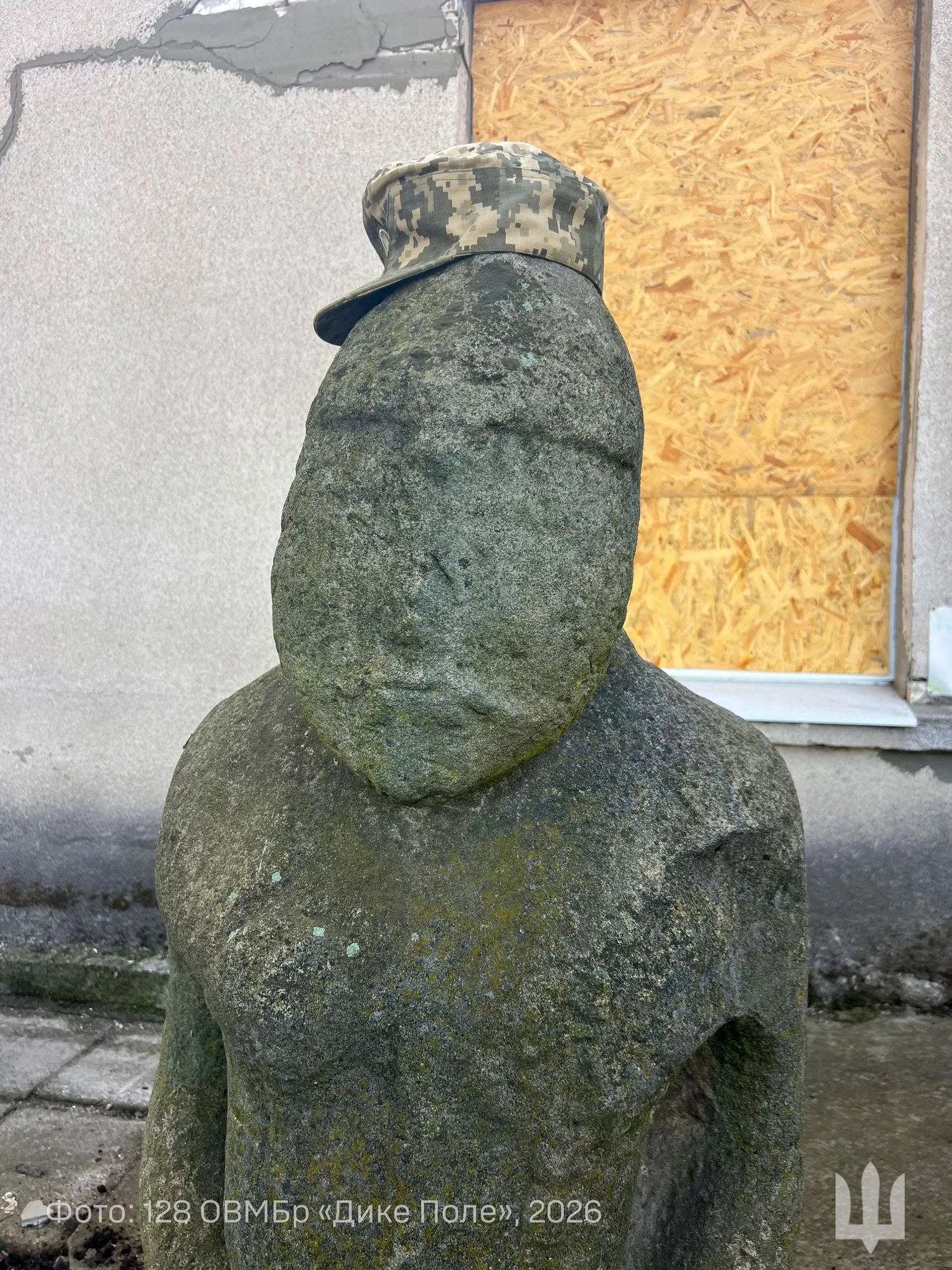
According to the 128th Separate Heavy Mechanized Brigade "Dyke Pole" and UNN, servicemen evacuated 12th‑century stone babas from the history and local lore museum in Novomykolaivka in Zaporizhzhia. The exhibits were removed due to the threat of strikes by Russian guided aerial bombs (KABs), after which they were transferred for safekeeping to one of the cultural institutions.
The military’s position: protecting culture is part of defense
The initiative grew out of practical necessity: buildings near the museum had already been destroyed, and the likelihood of irreversible loss of unique artifacts was increasing. For the army this is not a theatrical gesture — it is a preventive action that preserves material evidence of history and minimizes long‑term cultural losses.
"By the efforts of the warriors of the 128th Separate Heavy Mechanized Brigade 'Dyke Pole', an evacuation of 12th‑century stone babas was carried out from the history and local lore museum of Novomykolaivka in Zaporizhzhia"
— 128th Separate Heavy Mechanized Brigade "Dyke Pole", statement
How the operation was organized
The initiative was started by one of the servicemen, who contacted the museum after noticing destruction in the area. Among those involved was historian and serviceman Dmytro Kaiuk, who had been preparing an exhibition for the brigade's anniversary and discovered that the exhibits had not yet been removed. The brigade commander agreed to allocate equipment and personnel for the safe evacuation.
"It turned out that my former student works at that museum. She confirmed that the exhibits had still not been evacuated. I appealed to the brigade commander — and he gave permission to save the stone babas, even allocating equipment"
— Dmytro Kaiuk, historian and serviceman of the 128th Brigade
The operation was accompanied by Zaporizhzhia historian Petro Boiko to ensure proper acceptance and conservation of the valuables. In addition to the stone babas, paintings and other finds were evacuated and are now in secure storage.
"We really had to work hard with shovels to dig these babas out. One was very large"
— Dmytro Kaiuk, participant in the operation
Context and consequences
Against the background of reports about damage to museum collections in other regions (including cases involving the Odesa Art Museum), such evacuations are part of broader efforts to protect cultural heritage during the war. It shows that when civilian institutions face threats, swift coordination with the military can save artifacts from irreversible loss.
What’s next
This story underscores the need for systematic procedures for evacuation and preservation of cultural values in at‑risk areas — from proactive inventorying to coordination among museums, local administrations and defense forces. While culture is being protected on the ground, the question remains: will there be enough resources and planning to scale up such operations when needed?
"We are protecting not only the territory of the state, but also its history, culture and the memory of generations"
— 128th Separate Heavy Mechanized Brigade "Dyke Pole"