264 people, 261 weapons and 201,000 rounds: how declaring weapons strengthens security in Kyiv region
The voluntary declaration campaign in Bucha district is gaining momentum — the figures make it possible to assess how effectively law enforcement is bringing arsenals under state control and reducing risks to the community.

By Tetiana Suchkova-Ladik
March 28, 2026 · 2 min read
Declaration in Bucha district: what’s happening
Since the start of the campaign, 264 citizens have contacted the Bucha District Police Department. This is not just statistics — it is part of systematic work to bring the civilian circulation of weapons into the legal field, which directly affects the safety of local communities.
What exactly was declared
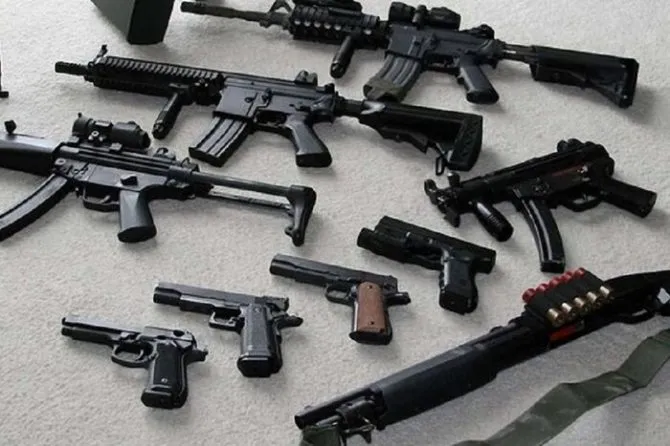
Citizens declared a total of 261 units of firearms: among them 144 automatic weapons, 26 rifled carbines and rifles, 54 smoothbore shotguns, 36 pistols and several combination models. Separately declared were over 201,000 rounds of ammunition. These volumes show how substantial the civilian arsenal can be after the start of hostilities — and why its legal registration is important.
What was turned in voluntarily, without declaration
In addition to official declarations, some residents handed weapons to the police without formal registration: 3 assault rifles, 1 rifled carbine, 3 smoothbore shotguns, 2 pistols and more than 800 rounds. This is further evidence that part of the population is ready to cooperate for the sake of public safety.
“We remind you that voluntary declaration of weapons exempts from criminal liability and allows you to lawfully keep them in your possession.”
— Kyiv Regional Police
Why this matters
Control over civilian arms circulation has several practical effects: it reduces the risk of accidental incidents, allows verification of the origins of arsenals and the adaptation of preventive measures. Security analysts note that the very fact of broad citizen involvement in the procedures is social proof of trust in the initiative and the work of law enforcement agencies.
Where to go
In Bucha district, declaration and surrender of weapons takes place at the addresses: Irpin, Mineralna St., 7 and Boyarka, Khreshchatyk St., 88. If you have weapons or ammunition — this is a simple mechanism to legalize them and reduce risks for your community.
Summary: this is not an episode of a one-off action, but an element of large-scale work to stabilize safety at the local level. The next step is to turn declarations and voluntary turn-ins into permanent procedures of control and inspection, so that the numbers work for order and safety rather than remaining mere statistics.