300 damaged objects, 'Oreshnik' and three days of cleanup: what the May 24 attack left behind in Kyiv
Russia delivered one of the largest strikes on the capital since the full-scale war began — 690 attack weapons, including the Oreshnik ballistic missile. Two killed, 87 wounded, and 300 destroyed and damaged facilities in Kyiv alone.

By Tetiana Suchkova-Ladik
May 25, 2026 · 2 min read
On the night of May 24, Russia launched 690 air attack weapons — 90 missiles and 600 drones of various types. The main strike targeted Kyiv: approximately 300 objects were damaged, the majority of which are residential buildings. According to President Volodymyr Zelensky, 87 people were injured, with 21 hospitalized.
What and where was hit
According to the Air Force, air defense neutralized 604 targets: 549 drones, 44 cruise missiles of the Kh-101/Iskander-K/Kalibr type, and 11 ballistic missiles. An additional 19 missiles, according to preliminary data, failed to reach their targets. Meanwhile, 16 missile hits and 51 strike drone hits were recorded across 54 locations throughout the country.
The Air Force separately confirmed the use of Oreshnik — an intermediate-range ballistic missile. This is already the third use of this weapon against Ukraine: the first strike was against Pivdenmash in Dnipro in November 2024, the second against a critical infrastructure facility in Lviv region in January 2026. The missile reaches speeds of approximately 13,000 km/h and splits into six guided warheads. Ukraine's air defense currently has no means to intercept it.
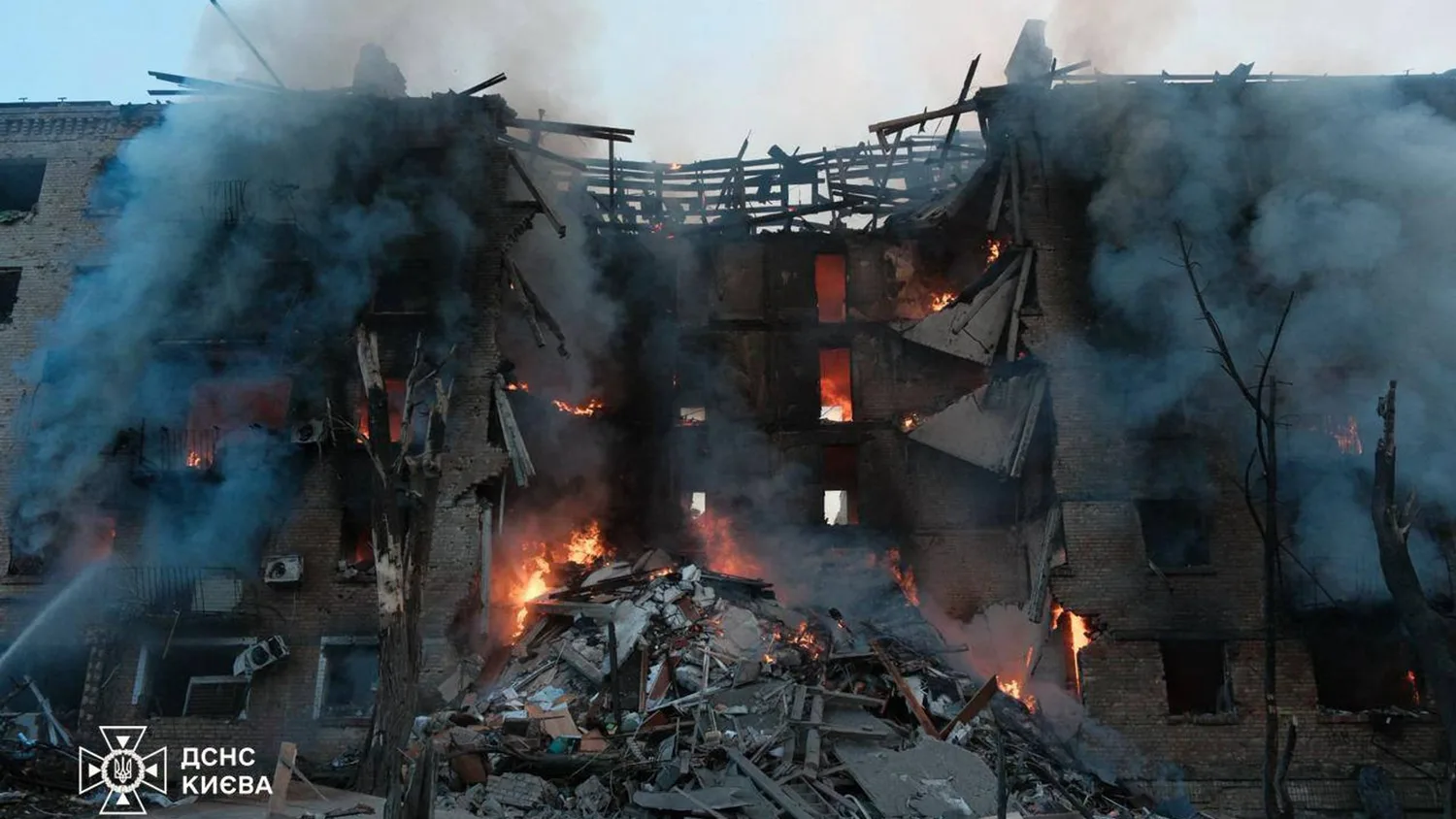
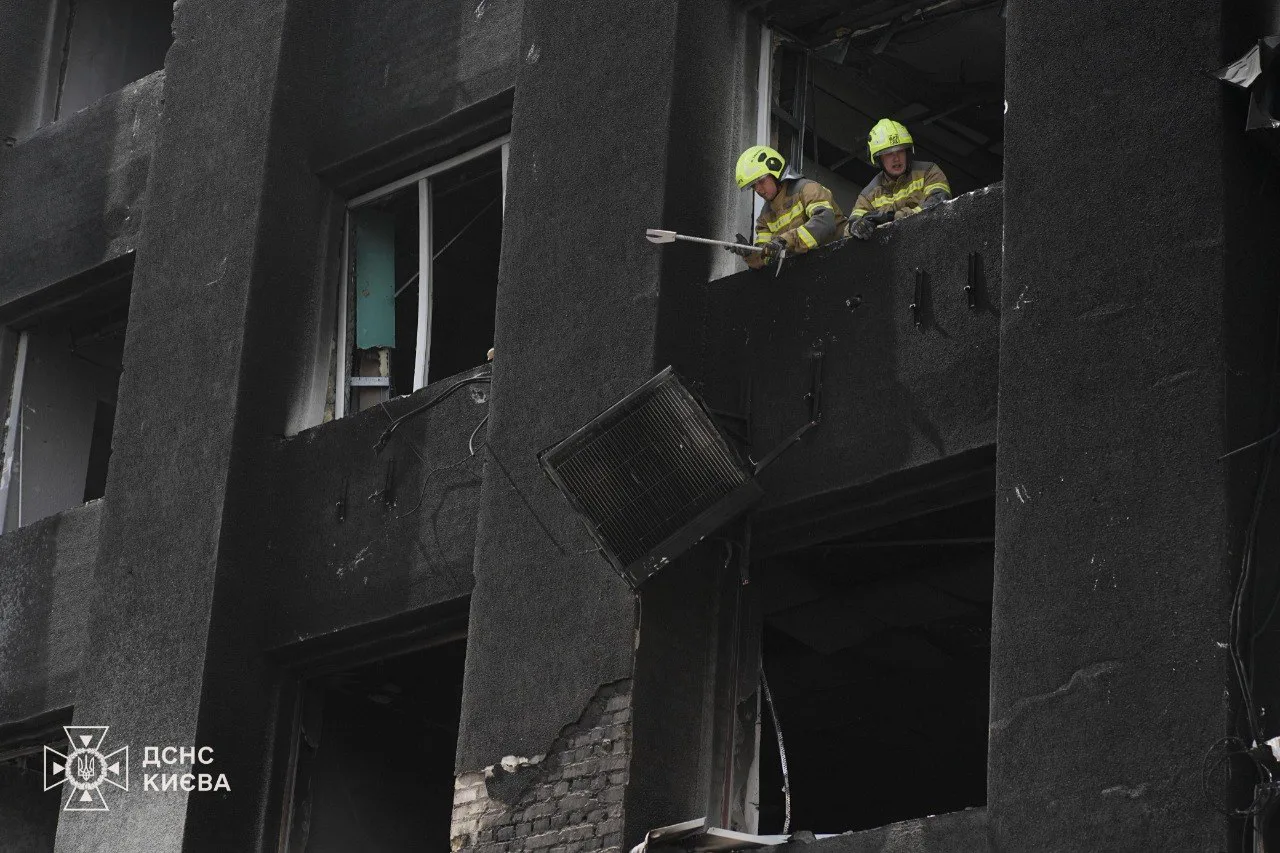
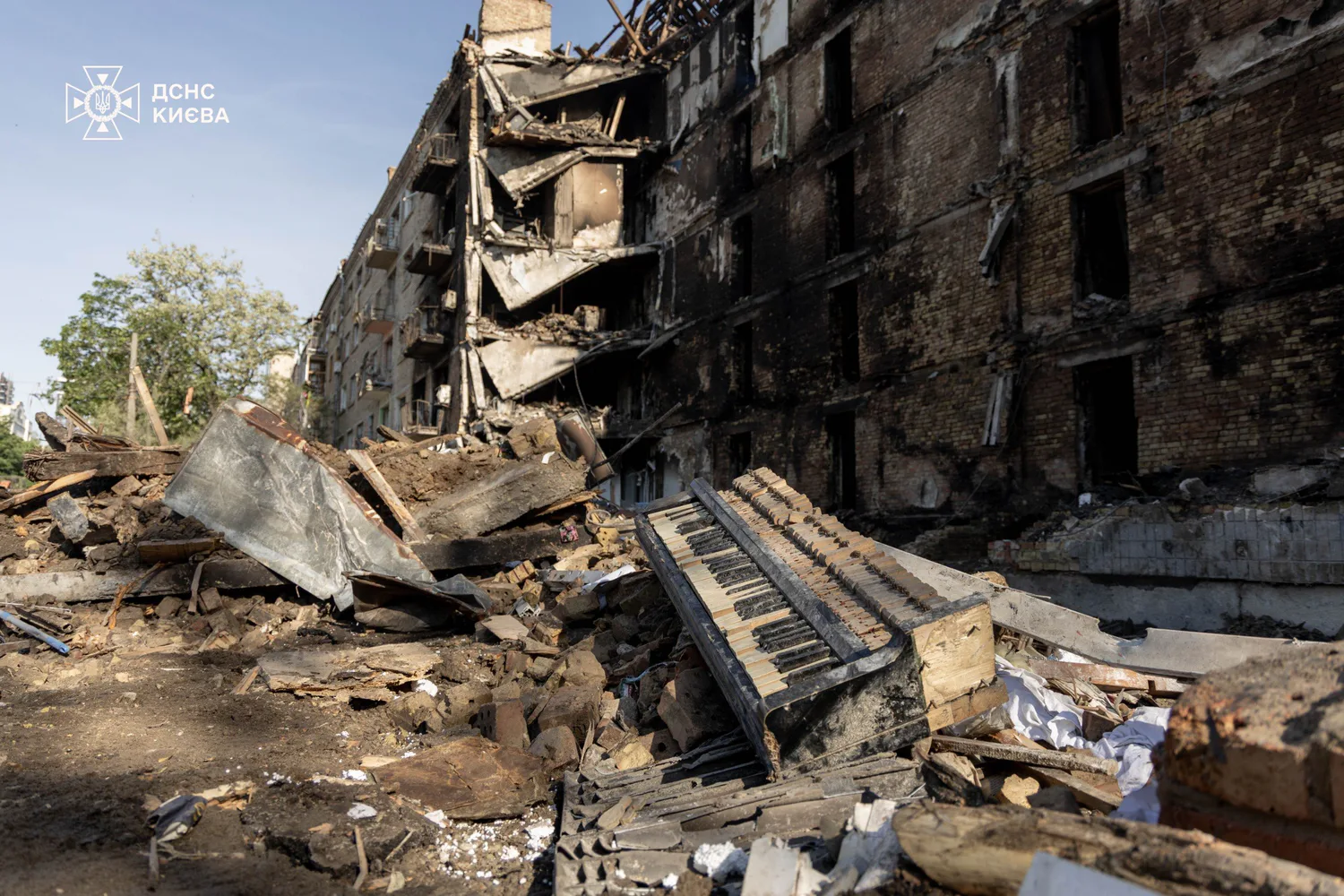
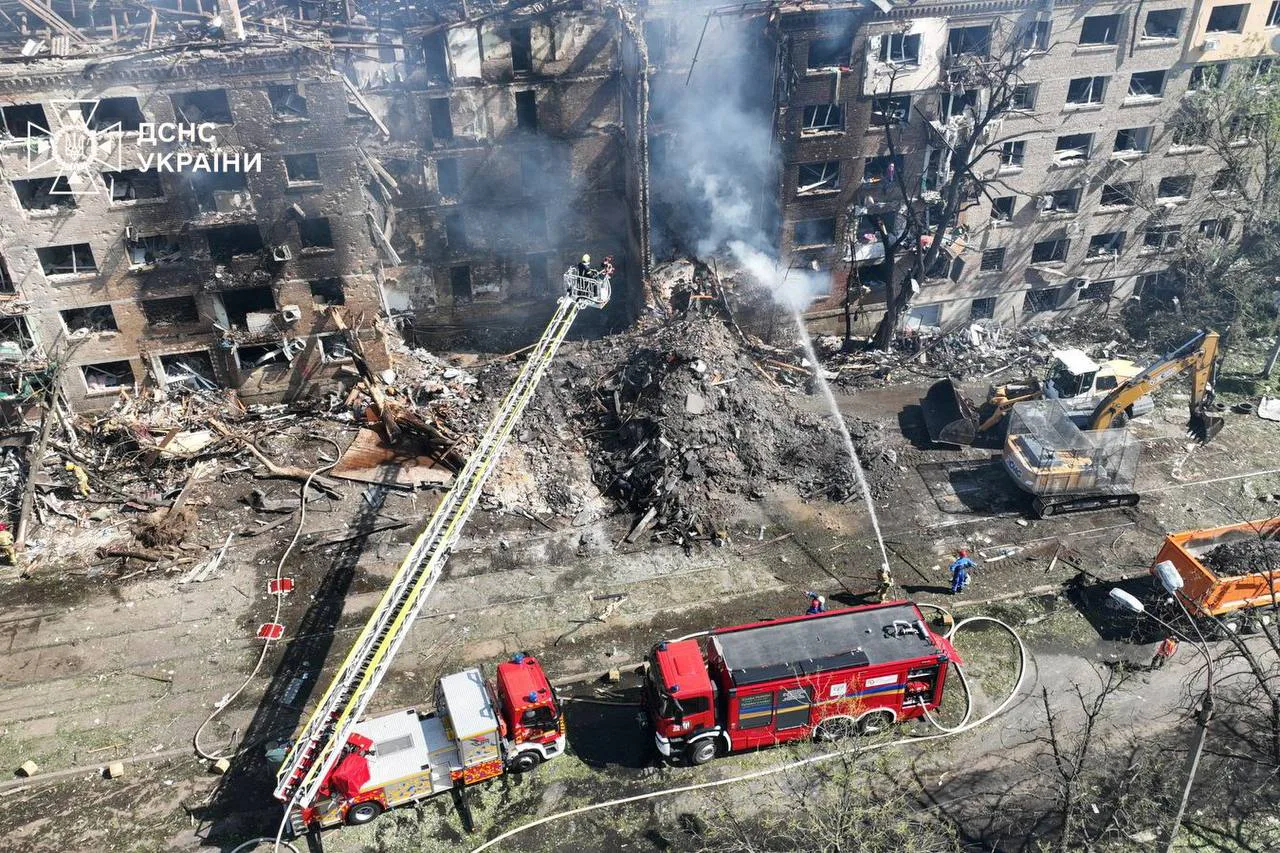
Work continues in the Shevchenkivskyi and Podilskyi districts of Kyiv to eliminate the consequences of yesterday's strikes. Nearly 100 emergency service workers have been engaged in the work. In total, approximately 300 objects were damaged in Kyiv. The majority of these are residential buildings — throughout the day, reports were received about varying degrees of damage to nearly 150 private and multi-story buildings.
President Zelensky, Telegram
Where the greatest destruction occurred
According to Kyiv Mayor Vitali Klitschko, damage was recorded in every district of Kyiv. In the Shevchenkivskyi district, a direct hit on a five-story residential building caused a fire and partial destruction — one person was killed, three wounded. In the Obolonsky district, a business center caught fire after a missile strike. In total, the capital's rescue services received over 40 emergency calls.
Cleanup operations are ongoing in six regions. In addition to Kyiv, strikes were recorded in Zhytomyr, Khmelnytsky, Cherkasy, and other regions.
Scale in context
According to Forbes Ukraine, citing the Air Force, the May 24 attack is one of the largest throughout the entire full-scale war. For comparison: according to the UN, in 2025 the number of civilian deaths from long-range weapons increased by 26%, and the number of wounded increased by 75% compared to the previous year.
Of the 150 damaged buildings, some suffered critical damage. The damage assessment is not yet complete — the city administration promises a full report after the completion of emergency rescue operations.
Zelensky emphasized that strengthening air defense remains an absolute priority. But if Oreshnik continues to be used alongside massive drone waves — is the current air defense architecture capable of withstanding the next strike of this scale without significantly higher civilian casualties?