'7'YA Online': How Druha Rika's New Music Video Turns Emotion into Aid for the Front Lines
A new song and video — about families, calls that break the silence, and a concrete goal: raising UAH 15 million for a boat, drones and servers for evacuation operations.

By Tetiana Suchkova-Ladik
March 27, 2026 · 2 min read
About the music video and its concept
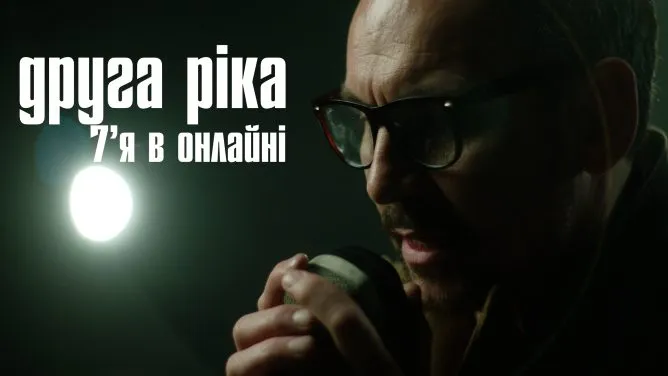
The band "Druha Rika" premiered a video for the track “7’YA Online” — one of the key singles from the upcoming album. The video does not stage fictional narratives: it features the reactions of people hearing the song for the first time, as well as cameo appearances by friends and public figures. Participants include paramedic and servicewoman Yuliya "Taira" Paievska, volunteer Tata Kepler, writer and musician Serhiy Zhadan, TNMK frontman Oleh "Fagot" Mykhailyuta, actress Darya Tregubova and directors Semen Horov and Viktor Pryduvalov. The video was directed by Viktor Skuratovsky — his first video with the band in eight years.
What the song is about
“7’YA Online” is about families, about the connection that today often exists only through a phone call or video link: about words left unsaid, about parents and loved ones who are waiting. This is not a loud declaration — it is a reminder with a simple, practical aim: to prompt action here and now.
"We hope that those whom this video and song truly touch will be prompted to act. Maybe someone will dare to call and say, 'I still love you'... I would like this video to serve as a useful tool for relationships."
— Valeriy Kharchyshyn, lead singer of "Druha Rika"
Art that mobilizes resources
This video is not only emotion. The band's anniversary tour has a clear charitable aim: to raise UAH 15 million for a boat for evacuation missions, MAVIC 3T drones and server equipment for the GUR of the Ministry of Defense of Ukraine. A portion of the proceeds from each ticket is automatically directed to the fund; the organizers also urge people to join with donations. According to the band, most of those invited to the shoot agreed to support the project — social proof that the cultural community is mobilizing for practical assistance.
"The song is always primary. The video is the visual part of the audio work that helps the listener feel and understand what it's about. If the song is honest, there's no need to invent complicated stories — it's enough to show the reactions of people who live it."
— Viktor Skuratovsky, director
The tour and where to see it
The album is due in spring, and the tour starts on March 28. The band will perform in more than twenty cities across Ukraine and Europe — Ukrainian stops include: Khmelnytskyi, Chernivtsi, Ivano‑Frankivsk, Uzhhorod, Lviv, Truskavets, Vinnytsia, Kremenchuk, Kropyvnytskyi, Kryvyi Rih, Mykolaiv, Ternopil, Lutsk, Rivne, Chernihiv, Cherkasy, Zaporizhzhia, Zhytomyr, Poltava, Dnipro, Odesa and Kharkiv. Details on tickets and the fundraising mechanics are available on the band's official channels.
What this means
This is an example of culture not staying confined to galleries and broadcasts, but becoming an instrument of support — from emotion to concrete equipment that saves lives. At a time when the front depends not only on hardware but also on logistics and evacuation capacity, such initiatives carry practical weight.
In short: if the song moved you — call your loved ones. If you want to help the front — buy a ticket or donate. Music here works as a bridge between what we feel and what we can do.