World War II artillery shell near Irpin: a reminder why humanitarian demining is a community safety issue
During humanitarian demining operations near Irpin, sappers discovered an artillery shell dating from World War II — an incident that underscores that past wars continue to affect everyday safety and require systematic clearance of affected areas.

By Tetiana Suchkova-Ladik
March 6, 2026 · 2 min read
Details of the incident
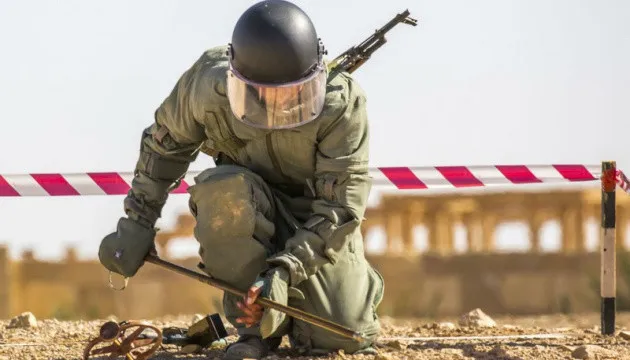
During scheduled humanitarian demining near Irpin, sappers discovered an artillery shell from World War II. The munition was located in the ground and posed a potential threat to residents and recreation-goers. The information was confirmed by the first deputy mayor of Irpin.
"Such incidents repeatedly prove that even after decades dangerous objects can remain in the ground. That is why systematic humanitarian demining is extremely important — it makes it possible to gradually clear territories and make forests and recreational areas safe for community residents."
— Oleksandr Pashchynskyi, first deputy mayor of Irpin
Why this matters for the community
This incident is not an isolated anecdote about the past. It shows that old munitions remain a real risk to life and health, especially in forests and recreational areas where people are returning. Systematic demining works provide safety, allow the restoration of spaces for living and recreation, and reduce the burden on emergency services.
Who is carrying out the work and what they are responsible for
Demining in the Irpin community covers 33 hectares of forest territory. The work is carried out by LLC «Ukrainian Demining Agency» with the support of the United24 initiative. This combination of local coordination and international financial support is a typical model: technical units make the work visible on the ground, donors provide the resources for its continuation.
Consequences and prospects
The discovery of the artillery shell during the current works is also an indicator of the process's effectiveness: finding and removing such items means that field survey and search methods are working. At the same time, it is a reminder of the need for stable funding, long-term coordination, and community outreach — so that people know how to behave in potentially dangerous places.
Whether current efforts and support are sufficient for the complete safety of the community's territories is a question that requires answers from local and national authorities, donors and the public. For now, the work continues, and cleared areas are returning to people what the war took away: space for living and recreation.