Tortured and killed a woman in Kyiv region: commander of Russia’s 37th Motor Rifle Brigade suspected
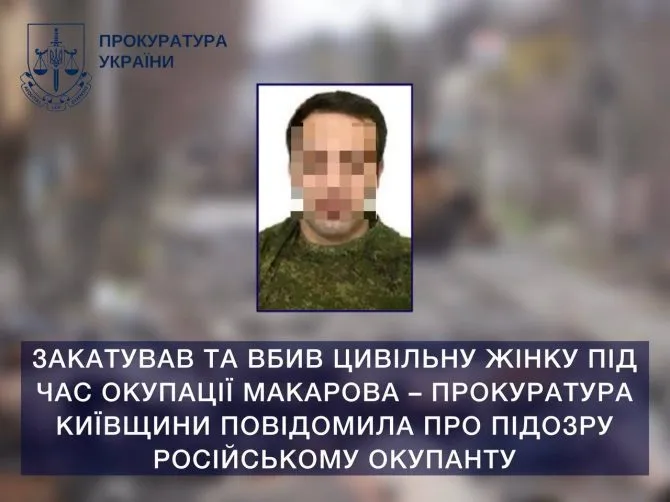
The Kyiv Regional Prosecutor's Office has notified a Russian serviceman of suspicion of torturing and deliberately killing a civilian on March 7, 2022 — another documented incident important for future trials and the aggressor's international accountability.

By Tetiana Suchkova-Ladik
March 12, 2026 · 2 min read
Prosecutor's position
The Kyiv Regional Prosecutor's Office has notified a serviceman of the Russian Armed Forces of suspicion for violations of the laws and customs of war, combined with the intentional killing of a civilian (part 2 of Article 438 of the Criminal Code of Ukraine).
"A serviceman of the Russian Armed Forces has been notified of suspicion for violations of the laws and customs of war, combined with the intentional killing of a civilian."
— Kyiv Regional Prosecutor's Office
What happened
According to the investigation, on 7 March 2022 the commander of a motorized rifle platoon of the 37th Separate Motorized Rifle Brigade of the Russian Armed Forces, together with other servicemen, arrived at one of the cottage settlements in temporarily occupied Makariv in the Kyiv region. Threatening an automatic weapon, he forced a civilian woman to enter one of the houses.
Inside the premises the occupier brutally beat the 39-year-old victim and inflicted numerous injuries on her with blunt and sharp objects. The woman died at the scene from the sustained injuries.
Why this matters
This suspicion is not only about an isolated crime, but about the systematic recording of violations of international humanitarian law in liberated territories. Documenting such episodes is necessary to bring perpetrators and potentially their commanders to account, as well as for international legal proceedings and political-legal measures against the aggressor. Human rights defenders and analysts note that the more solid the evidentiary base, the higher the likelihood of a just verdict.
What happens next
The investigation continues: investigators are collecting testimony, ordering expert examinations, and building the evidentiary base. If the charge is proven in court, this may lead to criminal liability in Ukraine and strengthen material for international tribunals. For society and the families of the victims, it is a signal: mechanisms for holding perpetrators accountable are working, but resources and international support are needed to bring cases to a conclusive end.
The remaining question: will there be enough political will and international coordination to ensure such cases do not remain only on paper, but become a basis for real justice?