Major Volodymyr Buchanets Returns from Russian Captivity — a Story Highlighting the Role of Prisoner Exchanges and the Community
After months of uncertainty, an ATO veteran and National Guard fighter returned to his home neighborhood. This is not just a personal victory — an episode that carries significance for families, prisoner-exchange systems, and community support.

By Tetiana Suchkova-Ladik
March 25, 2026 · 2 min read
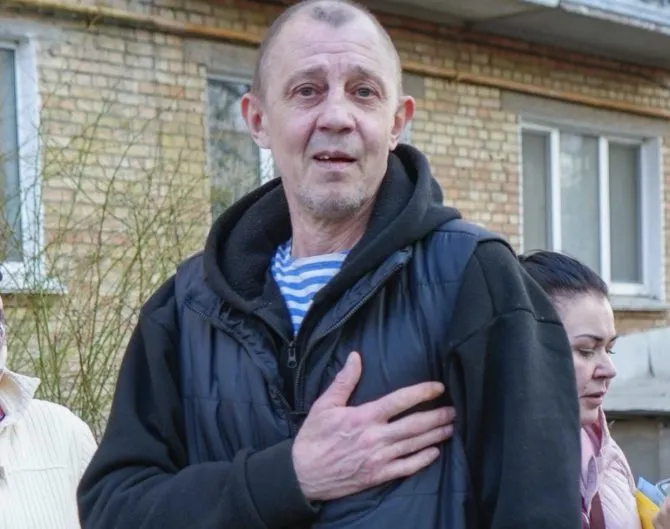
Return to Sklozavod
In his native neighborhood of Sklozavod, Major Volodymyr Buchanets was greeted by dozens of residents — a quiet but palpable wave of support for a man who had been through captivity and rehabilitation. Such a welcome becomes not only a personal moment of return, but also a signal to the families of other captives: people are coming back.
The road to liberation
Volodymyr served as a volunteer as early as 2015 during the ATO, and with the start of the full-scale invasion he again joined the ranks of the National Guard. In July 2024, during fighting near Makiivka, he was taken prisoner. Months of uncertainty and waiting accompanied his family; his name appeared on lists for exchange.
"In July 2024, during fierce fighting near Makiivka, he was taken prisoner. Ahead lay long months of uncertainty and painful waiting. Volodymyr’s name appeared more than once on exchange lists — and now, finally, that day has come. After the necessary rehabilitation he returned home"
— Bucha City Council
What this means
First, it confirms that exchange mechanisms work, albeit slowly and painfully — and every returned fighter increases public trust in these processes. Second, Volodymyr’s story reminds us of the importance of rehabilitation and social support: returning from captivity is only the beginning of the road back to a full life.
Experts and relatives of captives have long stressed: exchanges are not only diplomacy, but also the work of medical professionals, lawyers and local communities who help pull a person out of isolation and return them to society. It is precisely this comprehensive support that makes the return sustainable.
Brief summary
The return of Major Buchanets is an important human story with broader consequences: a signal to families, a test of exchange mechanisms, and a reminder of the need for systematic assistance to those who have been through captivity. The next stage is to ensure Volodymyr receives full medical, psychological and social reintegration. Whether there will be enough resources and coordination at the local level is a question that remains open.