"Arson of a Cabinet - as a 'Test.' Loyalty Test Before an Attack on a Military Recruitment Center Cost a Russian FSB Agent 15 Years"
A 25-year-old unemployed man from the Bucha district initially carried out "test" assignments from his recruiter — arson of railway infrastructure — and only after that received a task to blow up a military enlistment office. The SBU has systematically documented this recruitment algorithm.

By Oleg Bazylewicz
April 6, 2026 · 2 min read
The sentence is 15 years of imprisonment with confiscation of property. But in this case, what matters more than the verdict itself is how the person got there: step by step, through a series of increasingly serious tasks that gave them no opportunity to back out.
The recruitment scheme: from arson to explosives
According to SBU materials, a 25-year-old unemployed resident of the Bucha district became an agent of Russian special operations forces. Counterintelligence detained him in May 2025 — at the moment when he was preparing a homemade explosive device to blow up a local Territorial Recruitment Center.
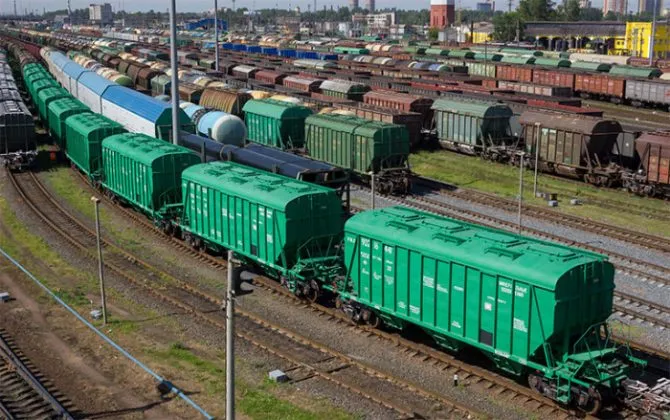
However, the case began much earlier and much more quietly. First, the handler gave a "test" assignment: to set fire to a relay cabinet on one of the railway lines in the capital region. This is not simply sabotage — it is a test of the executor's willingness to act. After the arson, the agent received the next stage: instructions for independently manufacturing explosives and the geolocation of the target — the TCC building.
"Test" assignments are an established practice of Russian special services: the executor first does something that seems insignificant, and then finds themselves in a situation where refusal already means exposure.
According to SBU investigation data
What was documented during detention
Upon detention, components for a homemade explosive device and a smartphone with evidence of correspondence with the handler were seized from the suspect. The court qualified the actions under Part 2 of Article 28, Part 2 of Article 113 of the Criminal Code — sabotage committed by prior agreement by a group of persons under martial law. The investigation was conducted by SBU officers in Kyiv.
Not an exception — a trend
This case is not isolated. Throughout 2025, the SBU has documented at least several similar schemes: an FSB agent in Kherson — also first set fire to Ukrzaliznytsia relay cabinets, and then received an assignment to plant a bomb near a TCC. An agent in Khmelnytsky manufactured explosives for attacks near military facilities. What is common in all cases: recruitment through social networks or Telegram, phased escalation of assignments, unemployed executors with no prior connection to special services.
The railway in this case acts not as the final target, but as a testing ground for verifying the agent — a relatively accessible facility where failure is not catastrophic for the handler, but serious enough to "bind" the executor to the scheme.
The verdict and what it does not resolve
15 years is the maximum under this article without aggravating circumstances. But the issue is not the length of the sentence: if recruitment is being conducted through anonymous Telegram channels among people "looking for easy money," how many such cases never reach detention at the stage of a "test arson" — and does the state monitor this gap between recruitment and the first action?