Security Service of Ukraine detains former Opposition Platform — For Life lawmaker in Kyiv region over equipment supplies that funded Russia's budget
The detention at an office near Kyiv shows how business in temporarily occupied territories, through legal manipulations, was turned into a source of revenue for the aggressor country — and why this is a matter not only for law enforcement but also for economic security.

By Tetiana Suchkova-Ladik
March 10, 2026 · 2 min read
What happened
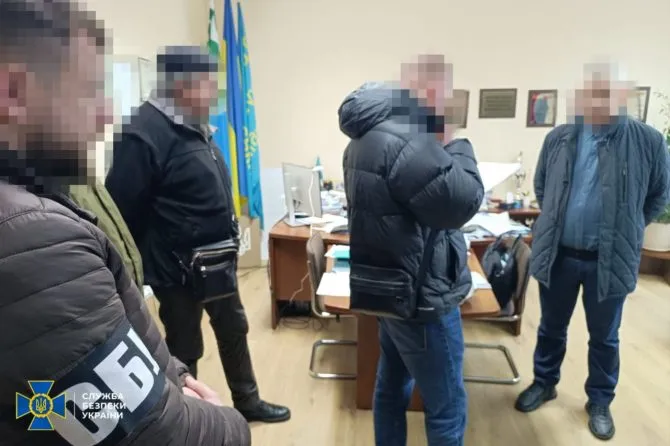
The Security Service of Ukraine reported the detention of a former deputy from the banned OPZZh party, suspected of providing material support to the aggressor state. The arrest took place in his office in the Kyiv region; the investigation alleges that the suspect is the owner of an industrial complex in the temporarily occupied part of eastern Ukraine.
How the scheme worked
According to the investigation, in 2022 the enterprise under his control was re-registered under Russian law. Despite the ban on economic ties with Russia, he continued to make purchases from Russian companies. In particular, secret supplies included the purchase of technological equipment from Naberezhnye Chelny worth over 1 million euros. To hide direct links with Russian suppliers, an affiliated Belarusian company was listed as the buyer — a mechanism that ultimately provided financial inflows into Russia’s budget.
"Networks of enterprises that re-register under Russian jurisdiction and continue purchases in the aggressor country effectively finance the war against Ukraine."
— Security Service of Ukraine
Evidence and legal consequences
During searches of the office, law enforcement seized smartphones, computer equipment, seals and documents which, according to the investigation, confirm the scheme and the transfer channels. He has been notified of suspicion under articles related to aiding the aggressor state. The suspect is in custody; he faces up to 12 years in prison with confiscation of property.
Why this matters
This case is not an isolated incident but an example of how economic operations in occupied territories and complex supply chains can become sources of funding for aggression. For readers, this is a matter of security and money: each such scheme strengthens the adversary's resources and undermines Ukraine's economic resilience.
Experts in economic security and analysts note that holding individual perpetrators accountable must become systemic work: from tightening control over cross-registrations to international coordination on supply chains.
Now the question for partners and domestic institutions: are there enough resources and legal instruments to systematically shut down such channels of financing the aggressor?