Three Times a Volunteer — Three Times He Returned. There Won't Be a Fourth Time
On April 3, 37-year-old Vadym Rybalko from Vorzel, a village that experienced Russian occupation in 2022, was killed in Kharkiv region. He voluntarily enlisted three times and never returned home to his wife and three children.
By Oleg Bazylewicz
April 9, 2026 · 2 min read
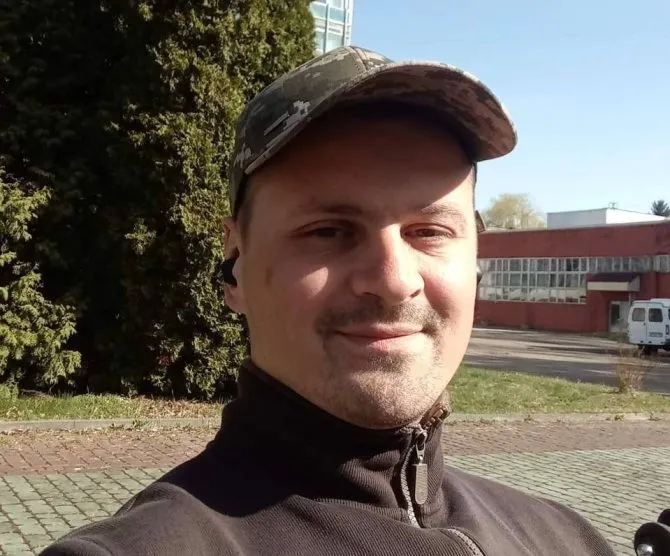
Vadym Ribalko lived his entire life in Vorzel — a dacha village 30 kilometers from Kyiv, which fell under Russian occupation in March 2022. When the occupation was lifted, he went to fight. Then again. Then once more.
On April 3, 2025, during a personnel inspection at a company's deployment location in the Kharkiv region, the 37-year-old soldier was killed. This was reported by the Bucha City Council.
Kharkiv region in April 2025
At the time of Ribalko's death, the Kharkiv direction remained one of the most tense sections of the front. The Kupiansk hub, according to Ukrainian commanders, was under constant pressure: Russians were restoring crossings over the Oskil River after damage by the Armed Forces, and the situation near Kupiansk itself was characterized as critical. Combat clashes in the Kharkiv region have been occurring almost continuously since spring 2024.
The person
Vadym Ribalko was 37 years old. In Vorzel, everyone knew him — a small village where there are almost never strangers. His wife was Kateryna. Three children — Anna, Ivan, and Stefania.
He voluntarily enlisted three times.
Bucha City Council
This is not a formula from an obituary. It means: he came three times, signed three contracts or underwent three rotations, returned three times. And went again. This choice — personal, not forced — is being made by an increasingly smaller number of people across the country.
Vorzel: a city that already knows the price
Vorzel is part of the Bucha community — the same one where documented war crimes were committed in March–April 2022. Klenovaya Street, where Ribalko lived, is just a few hundred meters from the places that made the front pages of world newspapers back then. People from here need no explanation for why to fight.
The farewell will take place on April 10 at 11:15 outside the house at Klenovaya Street, 78. Vadym Ribalko will be buried in the cemetery on Semeniivska Street at 12:00.
For Vorzel since the start of the full-scale invasion, this is not the first such loss — and, given the current dynamics of the front in the Kharkiv region, it is almost certainly not the last. The question is not whether there will be a next one — but whether Vadym Ribalko's children will receive the state for which he went to the front three times.