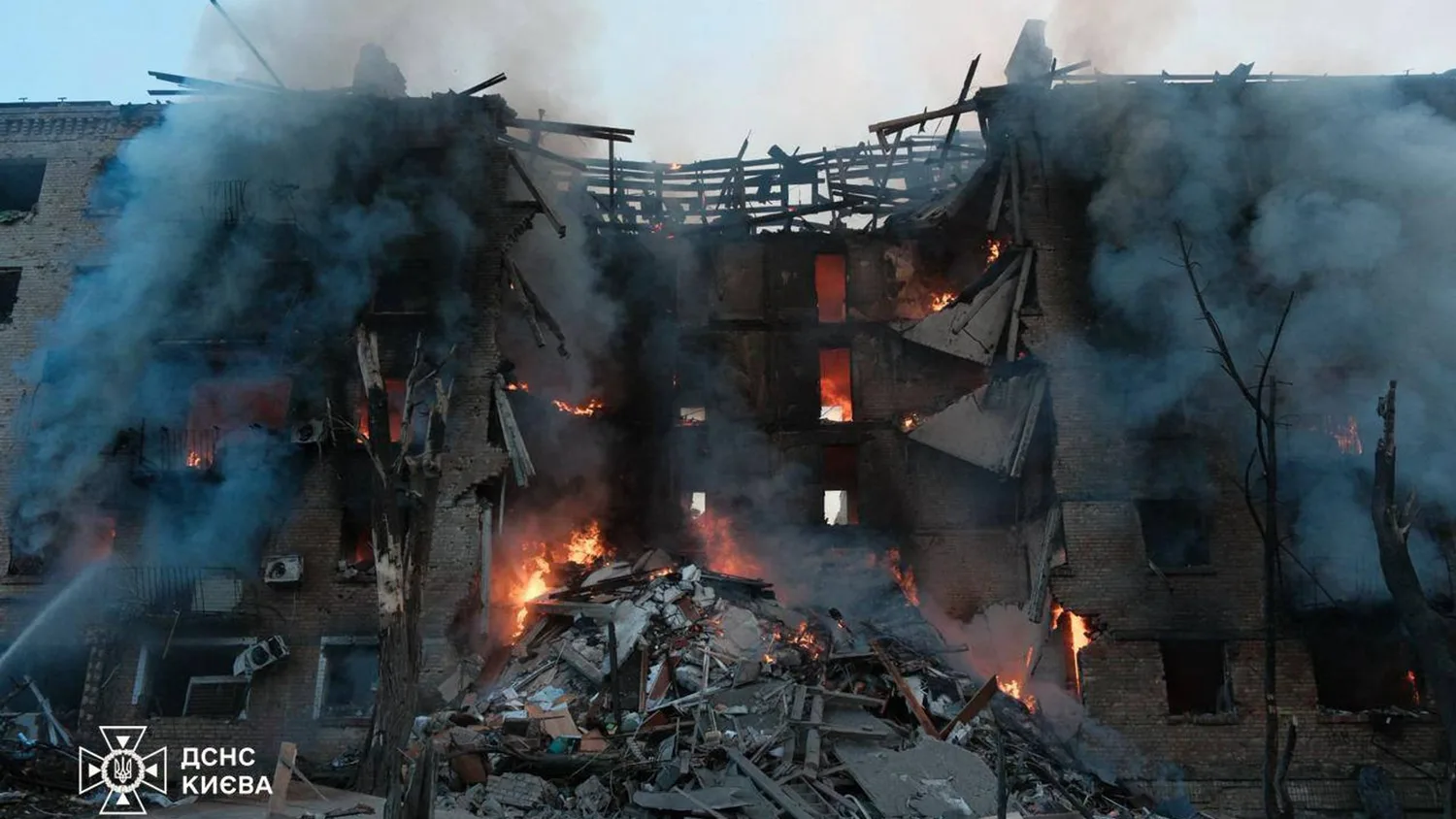
In Shevchenko District, a drone hit a five-story building: one person killed, 21 wounded in Kyiv
On the night of December 27, Russia launched one of the largest combined strikes of 2025 — 519 drones and 40 missiles. Kyiv sustained direct hits on residential buildings, a National Aviation University dormitory, and a building of the Ministry of Education; one-third of the city was left without heat.

By Tetiana Suchkova-Ladik
May 25, 2026 · 2 min read
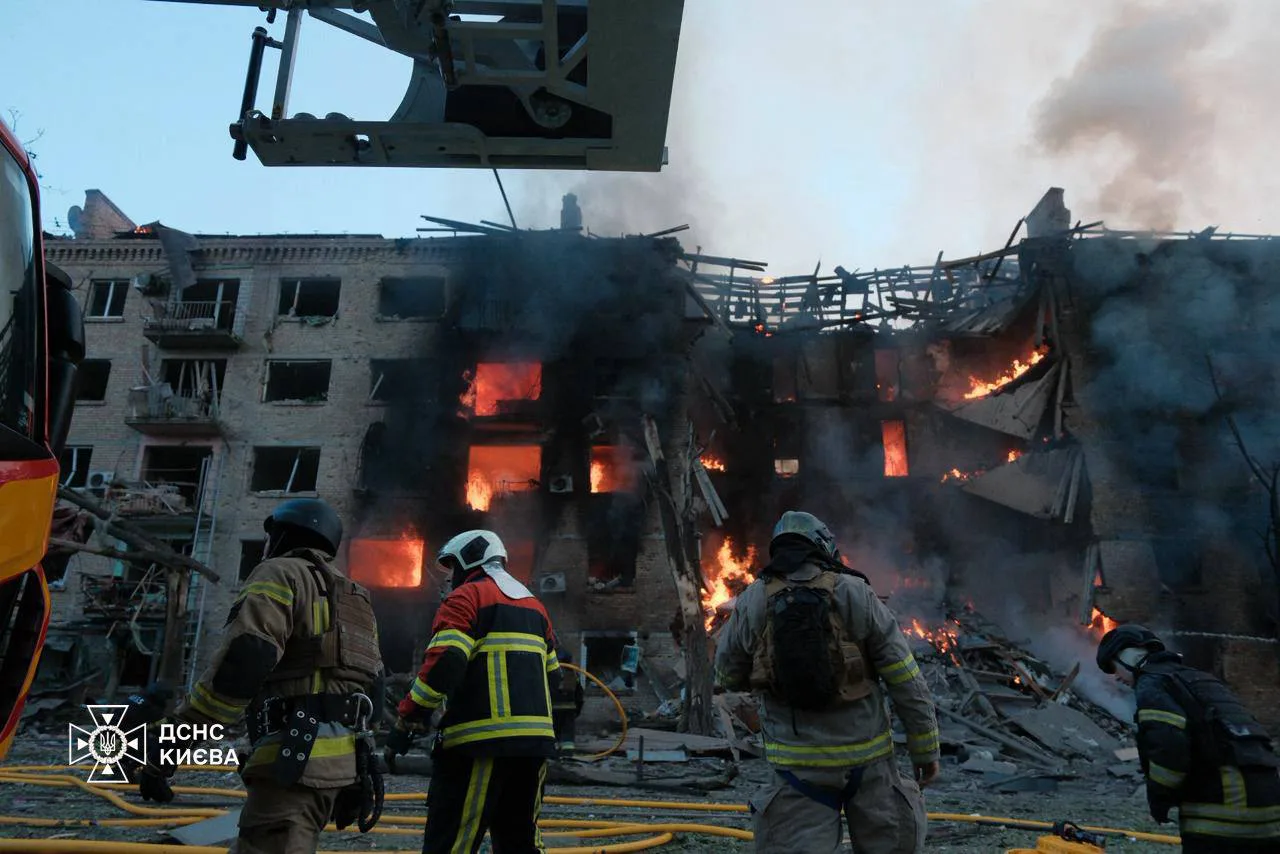
On the night of December 26-27, Russia delivered a massive combined strike on Ukraine — 519 attack drones and 40 missiles of various types, with Kyiv and the region as the main targets. According to the Command of the Air Force of the Armed Forces of Ukraine, air defense forces shot down or suppressed 503 air targets, however 10 missiles and 25 drones hit 30 locations.
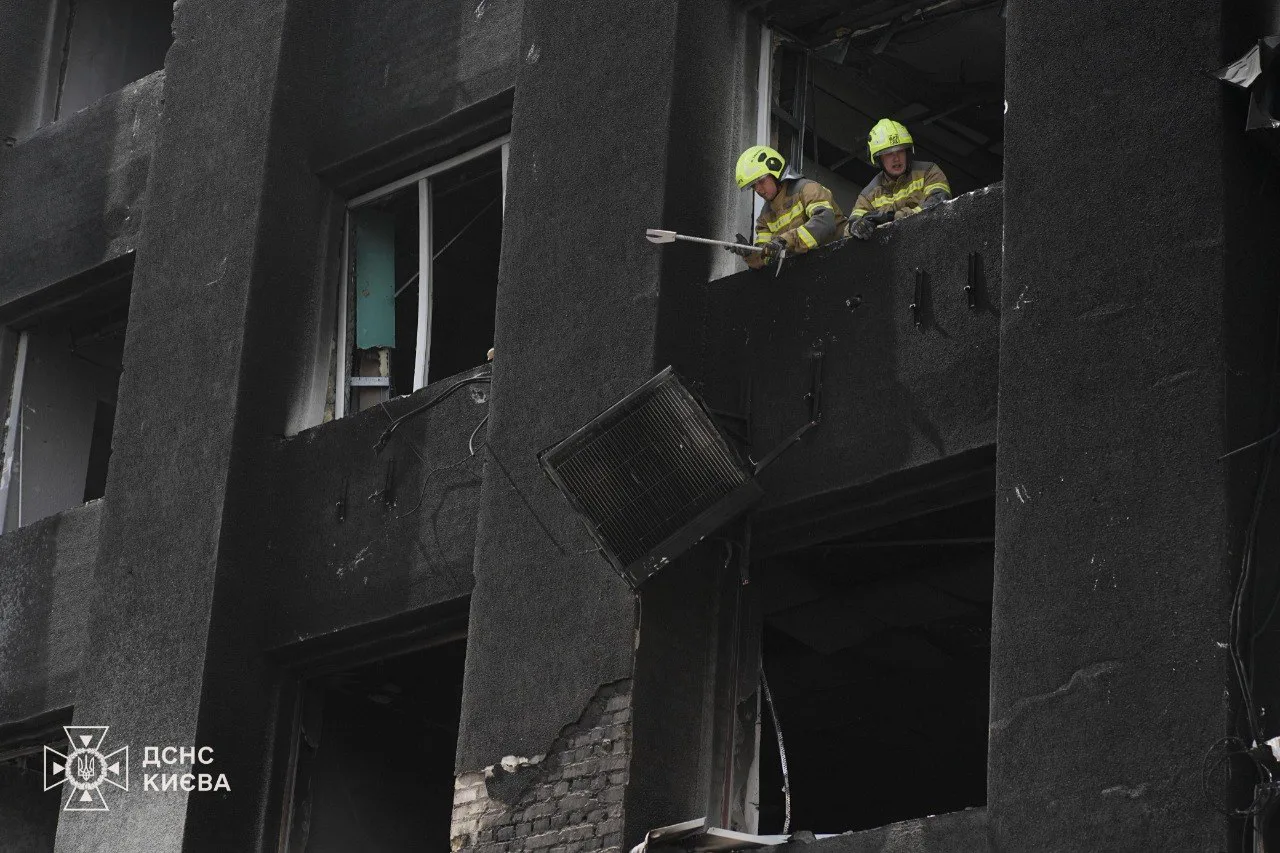
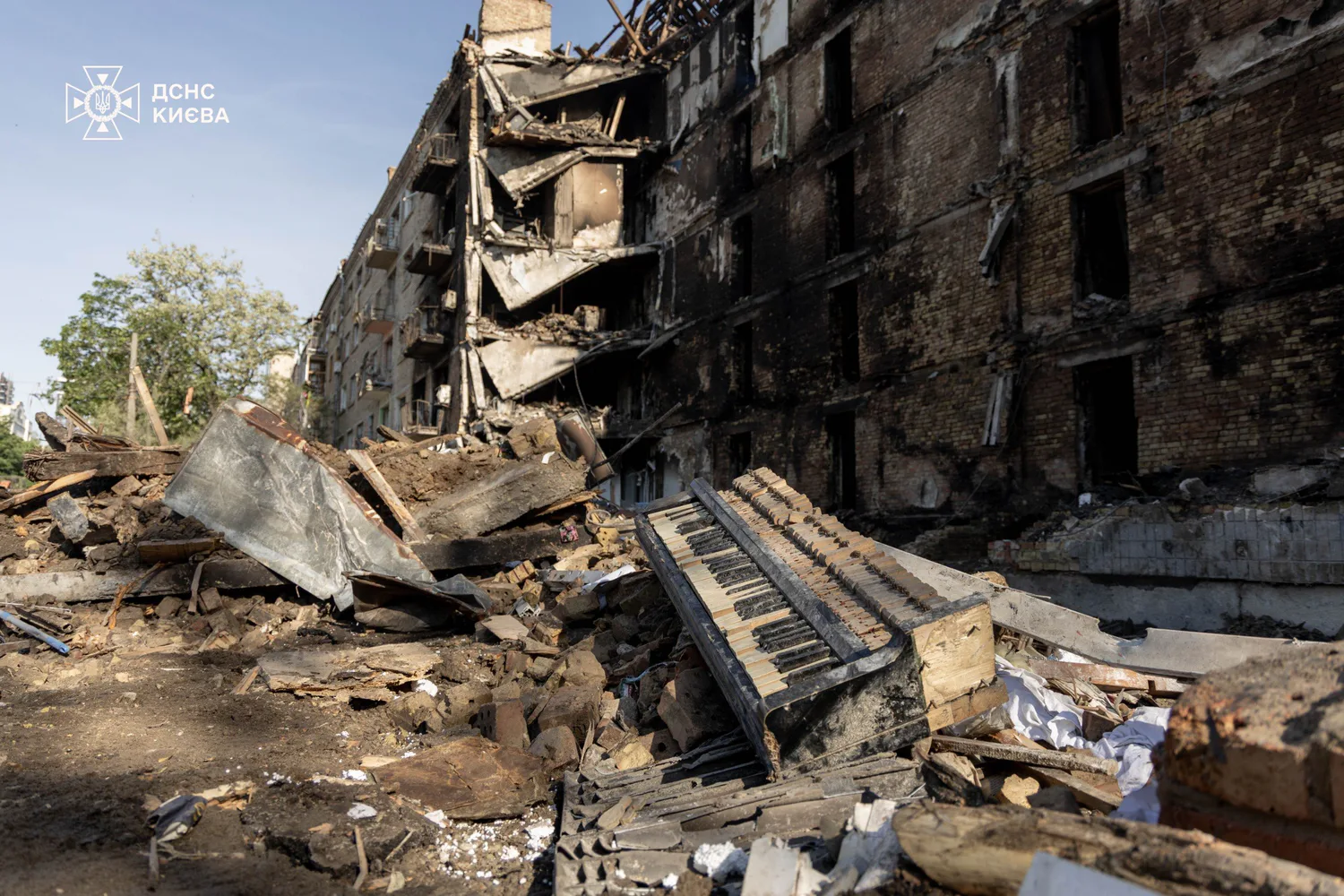
One person was killed in Kyiv. According to Kyiv Mayor Vitalii Klitschko, the death was confirmed in the Shevchenkivskyi district — where a drone struck a five-story residential building and destroyed the fourth and fifth floors. 21 people were injured, including a 15-year-old teenager; 13 were hospitalized, three in serious condition.
What and where was damaged
Destruction was recorded in all seven districts of the capital. Key sites:
- Shevchenkivskyi District — A drone hit a five-story building (4th-5th floors destroyed), an administrative building was damaged; the building of the Ministry of Education and Science also sustained damage — reported by Deputy Minister Andrii Vitrenko.
- Darnytskyi District — A drone hit a multi-story building at the 7th floor level; debris damaged a hostel, a car service, non-residential premises, and vehicles; there was a threat of fire spreading to a nursing home.
- Holosiivskyi District — A fire at a car service, parked vehicles burned.
- Solomyanskyi District — Windows of a multi-story building were damaged.
- Desnianskyi District — Debris fell on garage cooperatives.
"Over 2,600 residential buildings, 187 kindergartens, 138 schools, and 22 social institutions in the capital are currently without centralized heating"
Vitalii Klitschko, Mayor of Kyiv
Additionally, due to strikes on thermal infrastructure, almost a third of Kyiv was left without heating. On the left bank, entire neighborhoods lost electricity, trolleybuses were not running. Utilities and energy workers began restoration work.
NAU and Ministry of Education: strikes on non-combatant facilities
Among the damaged sites was the dormitory of the National Aviation University: a drone attacked a building where students live. A hit on the administrative building of the Ministry of Education was recorded separately — in both cases, these are civilian infrastructure facilities without obvious military value.
Scale in context
According to the Air Force, approximately 300 of the 519 drones were "Shaheds", launched from the directions of Kursk, Orel, Millerovo, Shatalovo, and from occupied Crimea. Ballistic missiles — "Iskanders-M" and "Kinzhals" — were launched from Ryazan and Bryansk regions. This is one of the largest attacks on Ukraine in terms of the number of weapons used in 2025.
In the Kyiv region from the same attack, a woman was killed in the Bilotsierkivskyi district, and 14 more residents of the region were wounded.
If strikes on the capital's thermal infrastructure go unrepaired before the New Year frosts — how many of the 2,600 buildings without heating will manage to restore heat supply by the end of the week?