China Buys — But Cheap: How Russia Lost Europe's Gas Market and Failed to Find an Adequate Replacement
Reorientation toward China has allowed to maintain export volumes of gas and coal, but not revenues: discounts, subsidies and mounting losses show that the "pivot to the East" turned out to be significantly more expensive than Moscow promised.

By Tetiana Suchkova-Ladik
June 10, 2026 · 3 min read
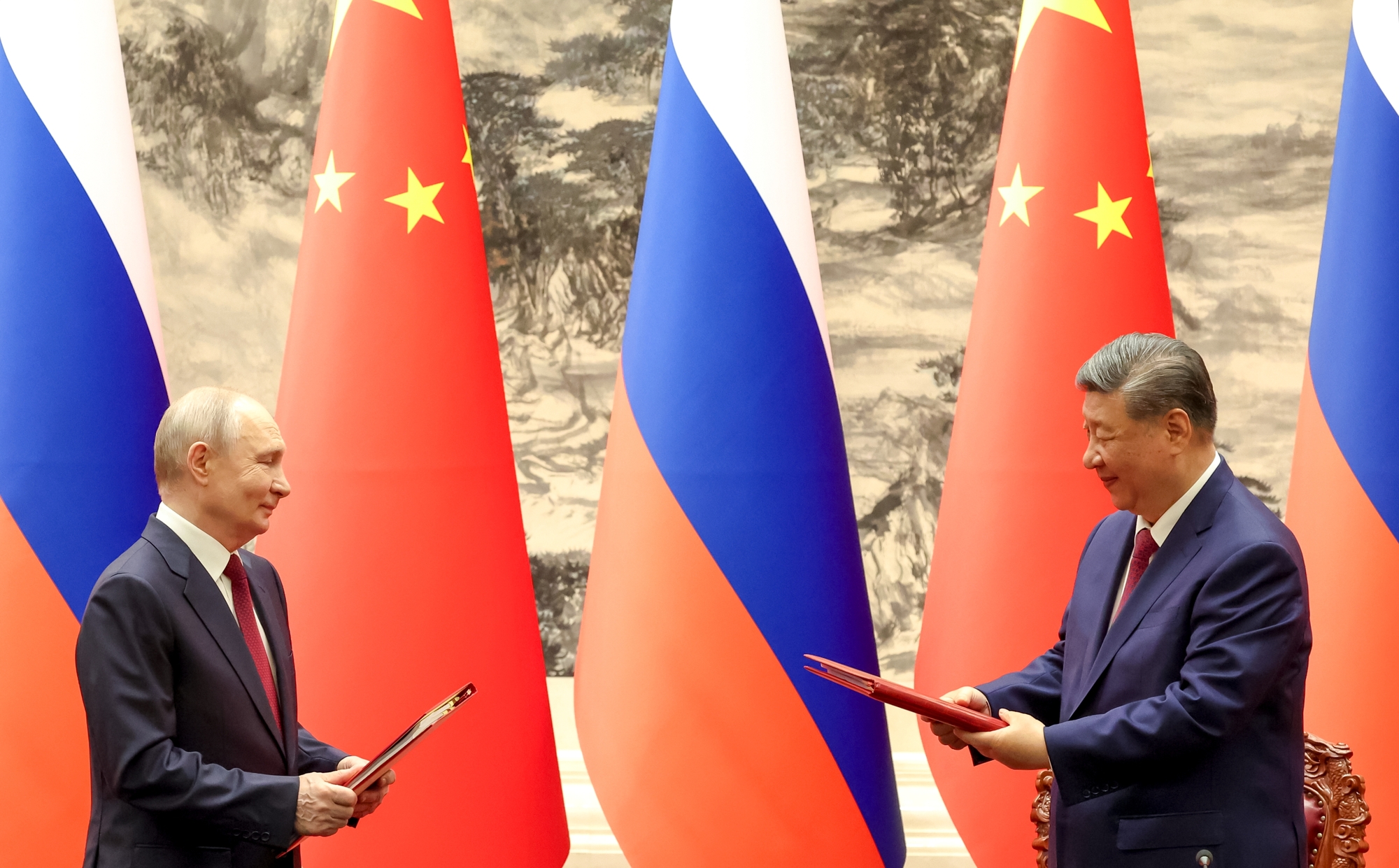
When Russia lost most of its European gas market in 2022, the Kremlin presented a "turn to the East" as a strategic success. Three years later, the numbers tell a different story.
Gas: The pipe exists, but the price doesn't
The only real gas route to China — "Power of Siberia" — reached its designed capacity of 38 billion cubic meters per year in 2025. But the price at which Russia sells this gas is painful: according to Russia's Ministry of Economic Development, China pays approximately $248 per thousand cubic meters — 38% less than Gazprom's other customers. As Reuters reports citing industry sources, even if a deal on "Power of Siberia 2" is signed next year, a substantial increase in supplies would require at least a decade.
"Prices for China are objectively lower" — this was acknowledged by Gazprom head Alexei Miller. Putin characterized the conditions as a "competitive advantage" for Beijing.
Reuters / Bloomberg
For comparison: in 2020, the EU received 14.7 billion cubic feet per day of Russian gas. By 2024, this figure fell to 4.4 billion — a reduction of more than two-thirds, according to the U.S. Energy Information Administration (EIA). No Asian alternative is physically capable of absorbing such volumes in the coming years.
Coal: A crisis that cannot be hidden
The situation with coal is even more acute. Three-quarters of Russian coal producers operated at a loss in 2024 — each ton brought an average loss of 1,000 rubles (~$12). According to The Moscow Times, the industry's cumulative losses for 2024–2026 are projected at over 1 trillion rubles ($12.25 billion).
China, which has become the largest buyer of Russian coal, has consistently reduced imports for three consecutive years: from 102 million tons in 2023 to 88.8 million in 2025. The reason is not sanctions, but market competition: Australian coal increased its market share in China by 59% in 2024, Indonesian coal by another 8%.
Moscow is attempting to stop the decline through subsidies: Vice Prime Minister Alexander Novak proposed discounts on coal transportation of up to 60% for distant routes. However, Finam analyst Yaroslav Kabakov warns that these measures are "insufficient to pull the industry out of crisis" — Russia's energy ministry estimates that the coal sector faces a "prolonged recession."
The logic of subsidized survival
The joint conclusion of research by the analytical center GreenThinkTank.life comes down to one thing: Russia has preserved physical export volumes — but at the cost of continuously declining revenues and growing dependence on state subsidies. In essence, the budget that finances the war simultaneously subsidizes loss-making exports to maintain the appearance of economic stability.
- Gas revenue from China — 38% lower than market rates
- Coal industry: 75% of companies in the red, record losses
- China's imports of Russian coal falling for the third consecutive year
- "Power of Siberia 2" — even under an optimistic scenario — minimum a decade to full capacity
For ordinary Russians, this means cuts to regional budgets in coal-mining areas — particularly Kemerovo Oblast, where coal production fell by 7% in the first quarter of 2026 alone — and reduced oil and gas revenues, which still form approximately one-third of the federal budget.
If negotiations on "Power of Siberia 2" do not conclude with a deal at an acceptable price for Moscow before moving into the construction phase, the "turn to the East" will be permanently fixed as trading at the buyer's prices — not the seller's.