"Future Economy Strategy": World Bank — author of the concept, Gdansk — deadline, private sector — main character
Zelenskyy and Prime Minister Syrydenko presented a framework for post-war transformation, developed jointly with the World Bank. However, there remains an open question between the ambitious title and the implementation mechanisms.

By Tetiana Suchkova-Ladik
May 20, 2026 · 3 min read
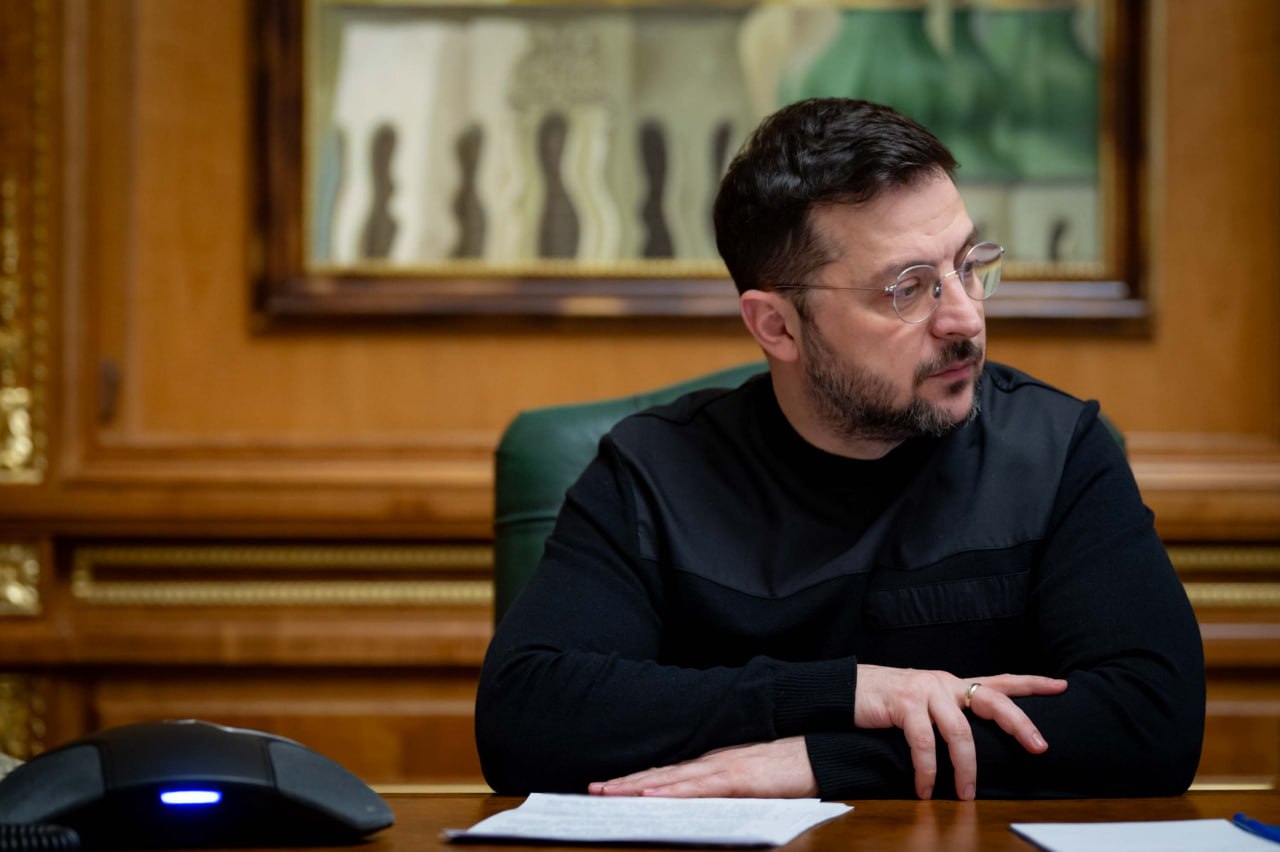
On May 19, President Volodymyr Zelensky held an online meeting of the International Advisory Group on Investment Attraction and Economic Development of Ukraine — a body moderated by Chrystia Freeland, an unpaid adviser to the head of state and former Canadian Deputy Prime Minister. On the agenda were the "Economy of the Future" strategy and preparations for the Reconstruction Conference in Gdańsk, scheduled for June.
What is this strategy and who authored it
"Economy of the Future" is not purely a government document. According to the World Bank website, it is this organization that is helping Kyiv formulate a post-war economic strategy, described as an "economy driven by the private sector, ready for EU membership."
Speaking at the Reconstruction Conference in July 2025, World Bank Managing Director of Operations Anna Bjerde outlined the strategy's architecture through "fours": four opportunities, four challenges, four reform areas. Among the opportunities are EU integration, the IT and defense technology sectors, massive reconstruction investments, and international community support. Among the challenges, Bjerde cited capital destruction and a acute labor shortage, as well as macroeconomic imbalances — primarily a large budget deficit.
"We are supporting the government in shaping its post-war economic strategy — the 'Ukrainian Economy of the Future' — an economy where the private sector is at the center, ready for EU accession."
Anna Bjerde, Managing Director of Operations, World Bank, Reconstruction Conference, July 2025
What Zelensky said specifically
According to Zelensky, the May 19 meeting discussed "two important things": the preparation of a comprehensive economic strategy and preparations for Gdańsk. "We need exactly such steps that will give Ukraine more economic growth and allow us to create more opportunities so that our people stay in our country," he wrote on Telegram. Prime Minister Yulia Svyrydenko also participated in the meeting alongside the president.
The Gdańsk Conference, which Zelensky mentioned, will serve as a platform where Ukraine is to present concrete investment results. According to Interfax-Ukraine, the deadlines for preparing strategic documents are tied to this conference.
Figures that define the scale of the challenge
- Total reconstruction cost — approximately $524 billion according to 2025 estimates by the government, World Bank, EU, and UN — three times Ukraine's nominal GDP.
- As of May 2025, nearly two-thirds of Ukrainian enterprises were operating at full or near-full capacity, according to IFC data.
- At the same time, state debt is approaching 95–100% of GDP, and the budget deficit stands at about 18% of GDP, according to Scope Ratings agency.
This contradiction between operational business resilience and structural state imbalances is the main intrigue of the strategy.
Where the problem lies
Economist Maksym Samolyuk from the Center for Economic Strategy (CES) notes in comments to international media: private sector investments during the war remain limited, although they are critically necessary for productivity growth in a labor market with severe constraints. As long as the state cannot give investors a signal about security and rules of the game after the active phase of the war ends, the declared "private sector orientation" remains a framework slogan.
The OECD in its 2025 review of Ukraine directly states: "Various strategies and reforms are being implemented, but a unified and consistent policy framework is needed" — without it, even correct documents do not form stable market economy institutions.
If Kyiv presents a strategy with tied KPIs and an independent monitoring mechanism at the Gdańsk conference, this will be a qualitative leap from previous reconstruction plans. If the document remains a framework without specific accountability instruments, investors with experience working in Ukraine already know how to read such signals.



